

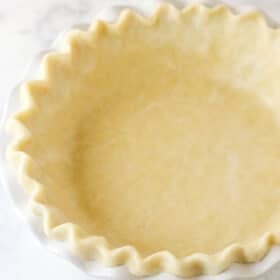
Learn how to make the perfect all-butter pie crust with this easy recipe! This simple method produces a flaky pie crust using your food processor or by hand! You’ll never need another pie crust recipe.
Everyone needs a failproof homemade pie crust. I use this flaky crust in all my favorite pie recipes, from homemade apple pie and Dutch apple pie during the fall, to this creamy chocolate hazelnut chess pie during the holidays!
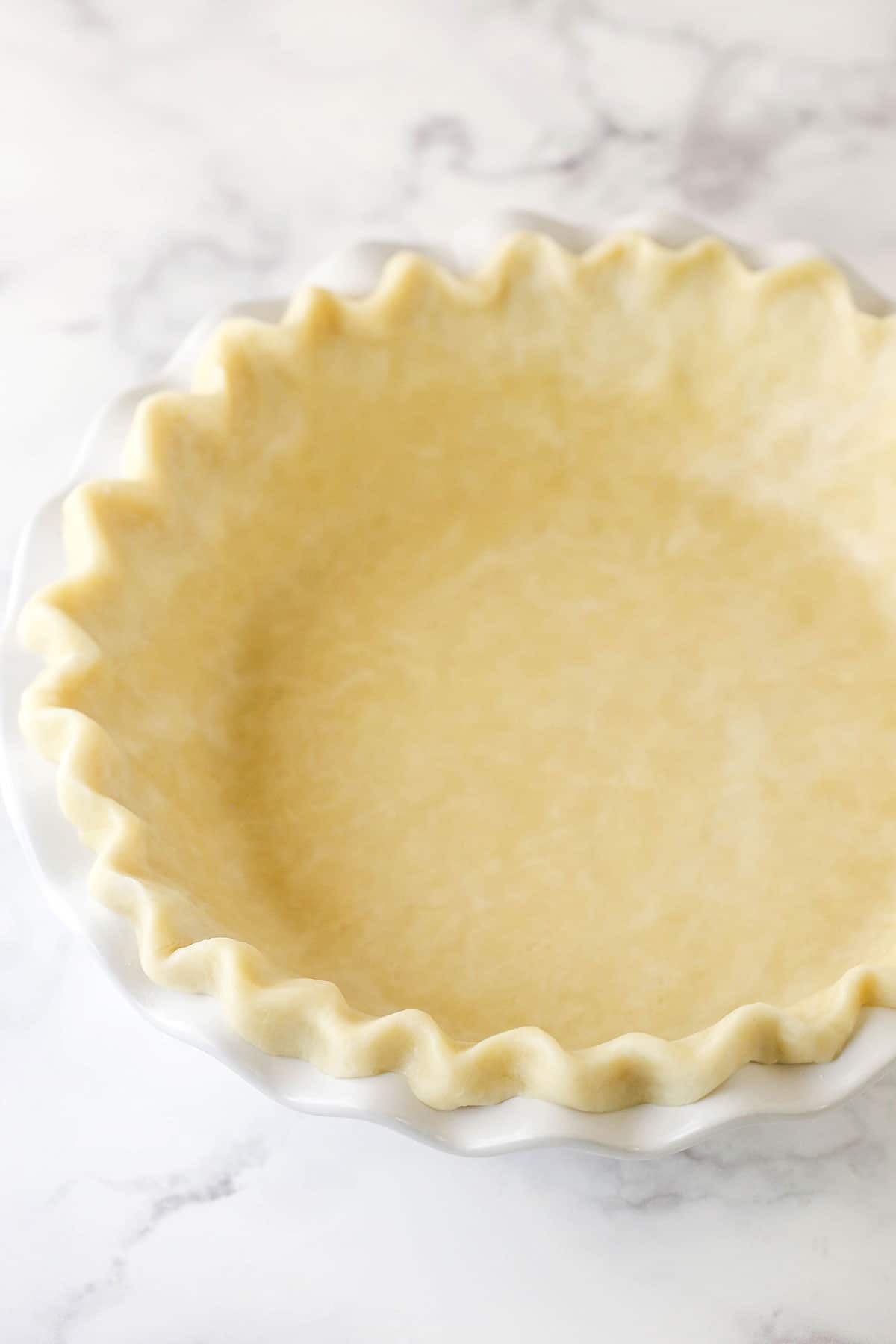
There’s something very satisfying about making a flaky, all-butter pie crust from scratch. With all the classic pumpkin pie and maple pecan pie about to make an appearance for Thanksgiving, I thought I’d share my easy, fail-proof flaky pie crust recipe. Using a food processor or blender to mix the dough is the ultimate easy method that works great every time. I’m a fan.
The Only Flaky Pie Crust Recipe You’ll Need
- 100% homemade (the easy way!). I’ve often relied on the convenience of a refrigerated pie crust to save time during the holidays. However, once I discovered that I could make perfect pie dough in the food processor, I’ve never looked back. It’s SO quick and easy. There’s also the option to mix the dough by hand, though, if you don’t have a blender.
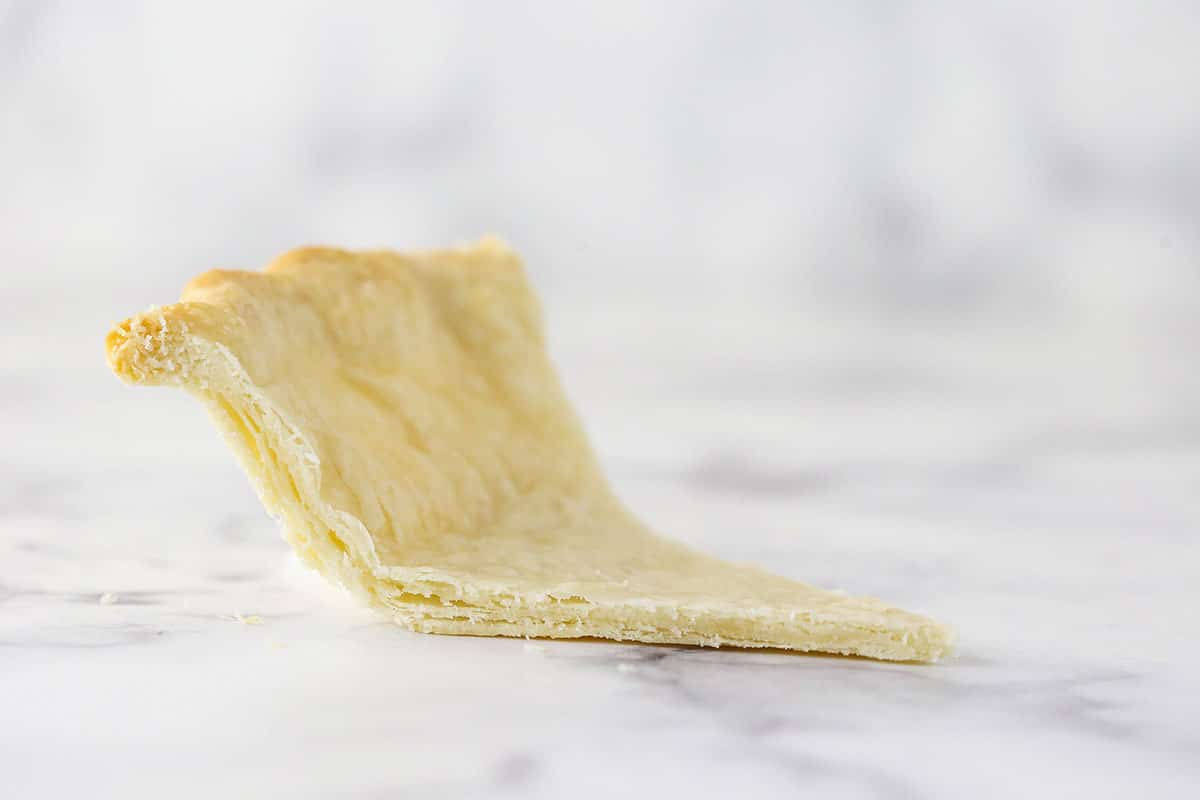
- Ultra-tender and flaky. My method adds the flour to the butter in two steps. First, the butter gets coated in flour, and then the rest of the flour is incorporated without overmixing. Overall, you get smaller bits of butter throughout the crust, which I believe leads to a flakier crust as well.
- Rich, buttery flavor. There’s something to be said for making the entire pie from scratch, and the great flavor it gives. We’re using only butter in this pie crust, no shortening.
- Make it in advance. Plus, pie crust can be made a couple of days ahead and refrigerated (so can the pie, usually!).
Recipe Ingredients
You only need four ingredients to make a homemade all-butter pie crust. These are some important notes to get you started. Scroll down to the printable recipe card for the full list with amounts.
- All-Purpose Flour – The better quality flour you use, the better your crust will be, but any all-purpose flour should work just fine. I don’t recommend substituting whole wheat flour, cake flour, bread flour, or others.
- Salt
- Butter – Be sure the butter you use to make your pie dough is COLD. You can even pop it in the freezer for 10-15 minutes. You can use salted or unsalted butter (you can skip the added salt if you’re using salted butter). Cut it into cubes before you start.
- Ice Water – To keep the butter from warming up as we make our dough. As the crust bakes, the cold butter melts, and the steam separates the crust into layers. Cold pockets of butter in the dough are the key to a crisp, flaky crust.
Butter vs. Shortening In Pie Crust
This all-butter crust recipe lives up to its name and uses all butter. I’m certainly not opposed to shortening in pie crust! Vegetable shortening, like Crisco, has a higher melting point than butter, which can produce a flakier crust. Upon testing both options, however, I preferred the taste of an all-butter crust in the end. I find this crust bakes up tender and flaky all the same.
How to Make an All-Butter Pie Crust
I use a food processor because I find it easiest and it saves my arm, but you can make this flaky pie crust by hand as well. To avoid overmixing and to get plenty of small butter pockets in the crust, I add the flour in two parts. Cutting the butter with the flour gradually allows it the chance to blend into smaller pieces, without running the risk of forming too much gluten in the process. It’s worth the extra step if you ask me! Here’s how to do it:
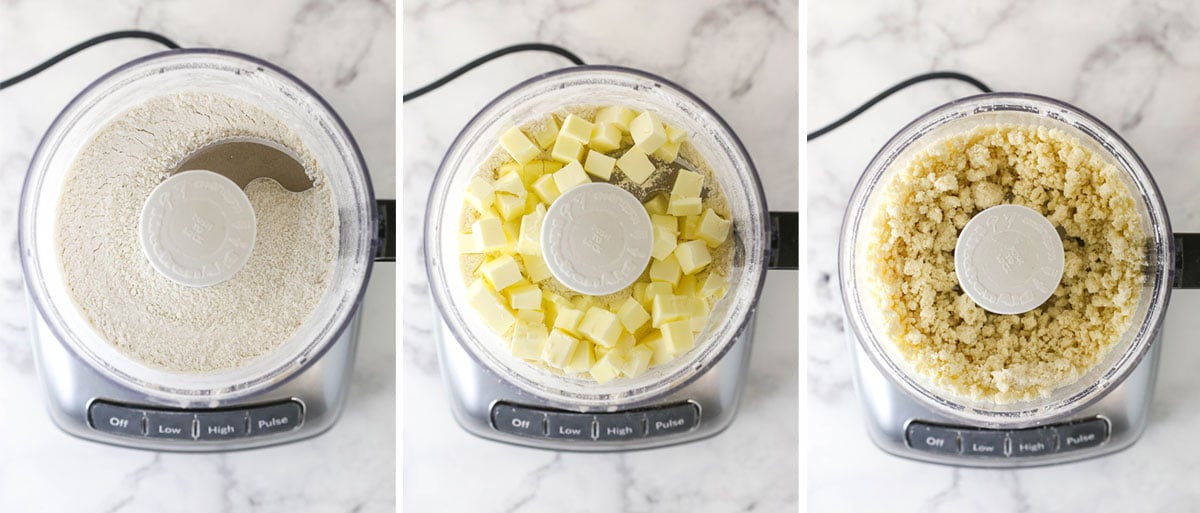
- Combine the flour and salt. Start by adding 1 1/2 cups of flour with the salt to a large food processor (or bowl, if you’re not using a food processor). Pulse that together 2 to 3 times.
- Add butter. Next, scatter cold, cubed butter over the flour mixture and process until a crumbly dough forms, about 15 seconds. You’ll have some larger and smaller pieces, but all the flour should be coated. No dry flour should remain.
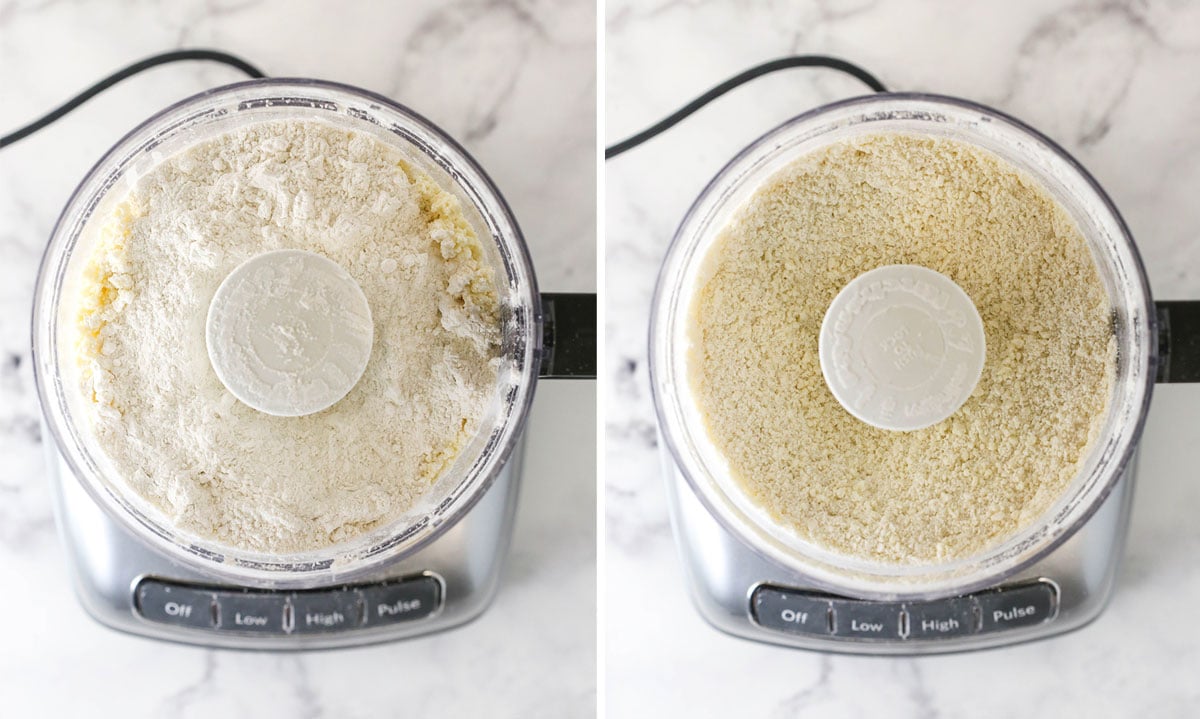
- Add the remaining flour. Add the remaining 1 cup of flour and pulse a few times until everything is evenly distributed. The doughy pieces should break up, and it should look sandy. There shouldn’t be a bunch of big pieces remaining. A few are fine, but it should be mostly evenly distributed.
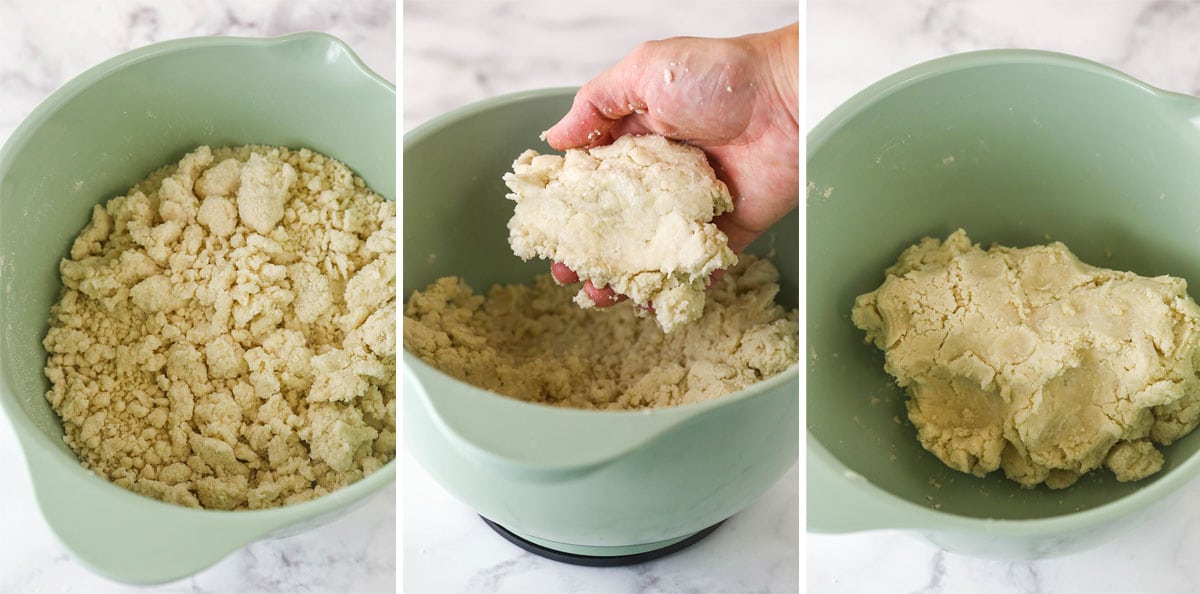
- Add ice water. Next, transfer the mixture to a mixing bowl. Add 4 tablespoons of ice water, and, using a rubber spatula, gently fold everything together. The crumbs should begin to form larger clusters. If you pinch some of the dough and it holds together nicely, it’s ready. If the dough falls apart, add 1-2 more tablespoons of water and continue to press until the dough comes together.
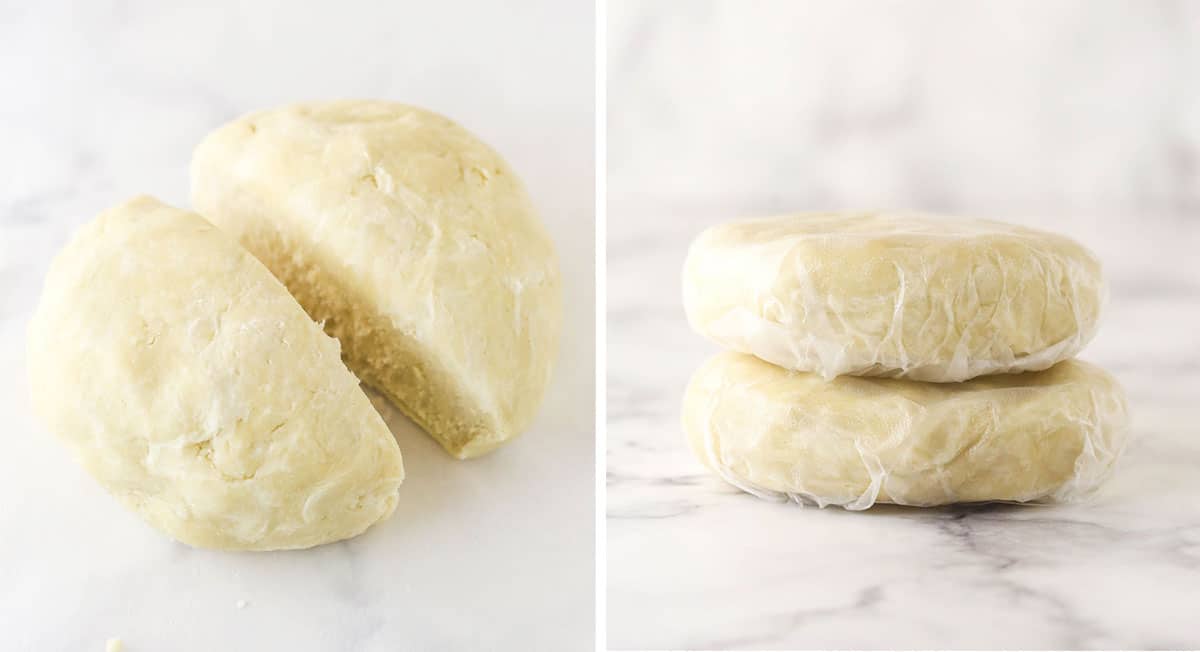
- Refrigerate. Turn the dough out onto a piece of parchment paper and work the dough just enough for it to come together and form a ball. Then, cut the ball in half and shape each into a disc. You should be able to see flecks of butter throughout the pie dough. Those will create your flaky layers! Wrap each disc in plastic wrap and refrigerate for at least an hour or up to 2 days.
How to Roll Out Pie Crust
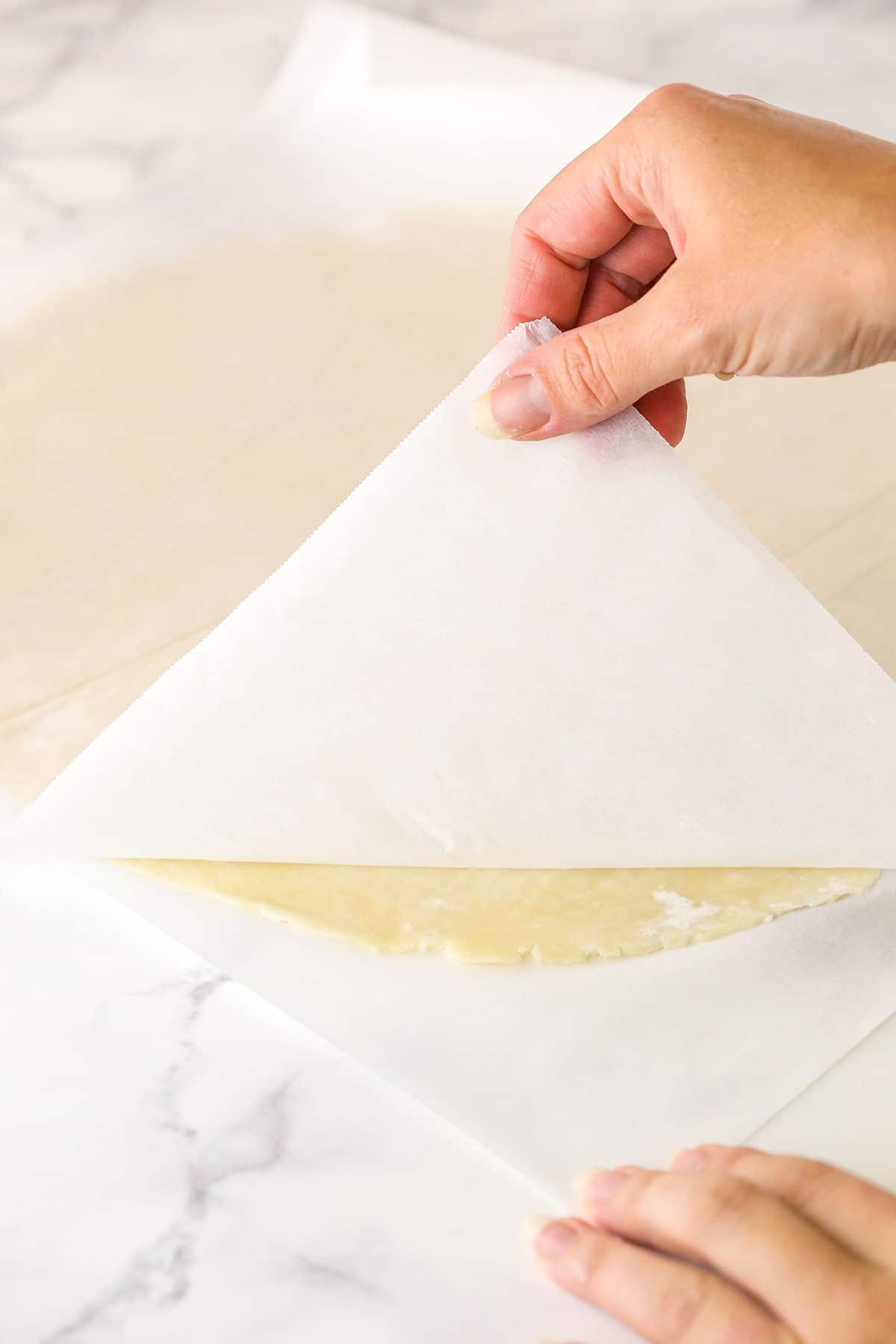
I’ve found that the best way to roll out pie dough is to put the dough between two pieces of parchment paper for rolling: one on top and one on bottom. Parchment or baking paper is non-stick and eliminates the need for extra flour, for a cleaner work surface. Plus, the parchment paper makes it MUCH easier to transfer the rolled-out pie crust to your pie plate!
- Prep. Place the dough over a piece of parchment paper. Then, place a second piece over the dough. Get your rolling pin and start rolling.
- Roll out the dough. Do this gently, starting from the center and rolling outwards in each direction. You want to roll it out big enough that it’ll fit your pie plate and have some extra around the edges for forming a pretty edge.
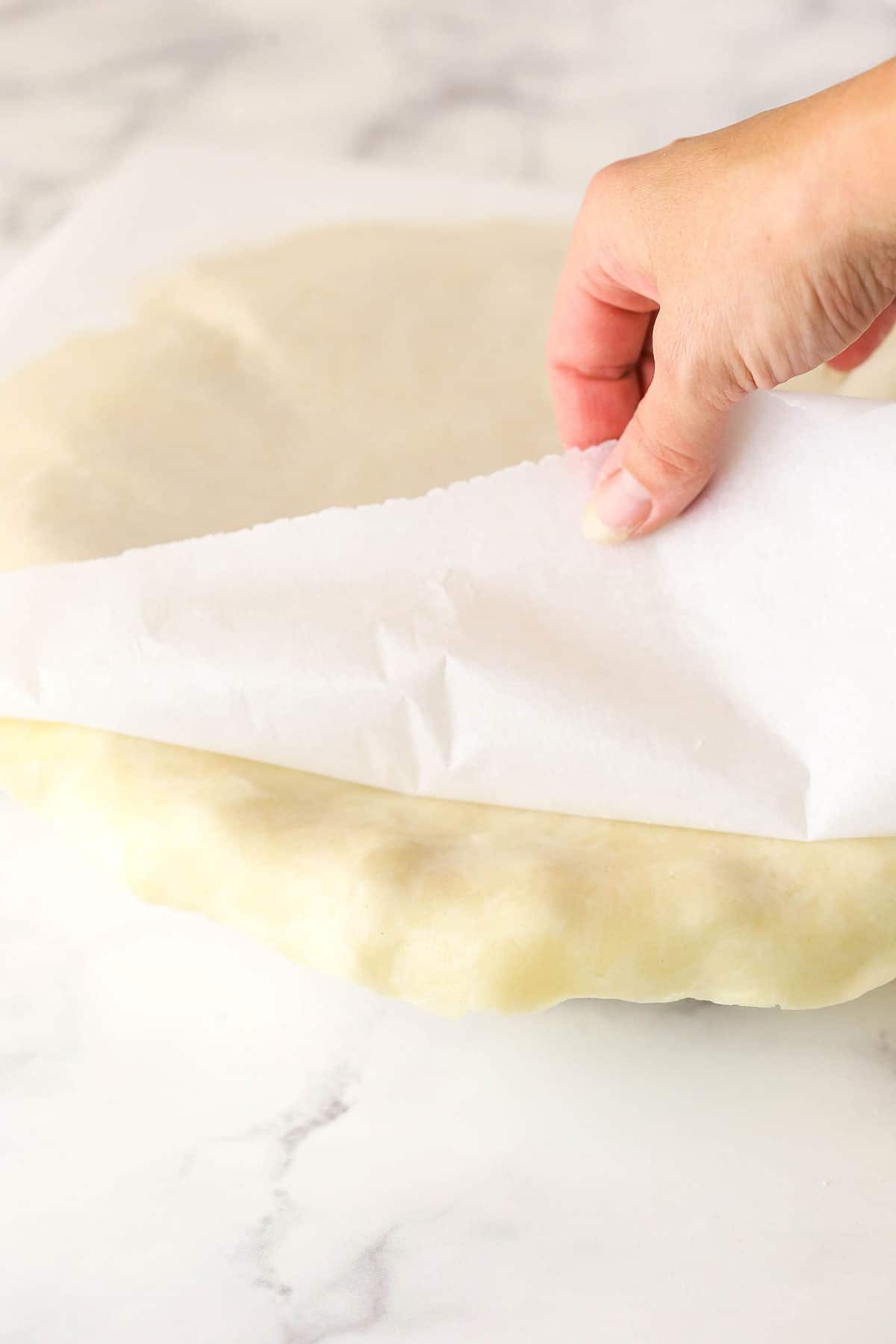
- Transfer the crust to the pie plate. After the dough is rolled out, remove the top piece of parchment paper. Then use the bottom piece to move the crust around. Flip it over onto your pie plate, then peel the second piece of parchment paper off.
Trim, flute, and beautify your crust as desired. From there, make your pie.
Blind-Bake the Crust
Some recipes call for a partially or fully baked pie crust. If you want to blind bake your crust, add pie weights and bake at 350ºF for 20-25 minutes, or until it’s just starting to brown for a partial bake (like you’d use for a sweet potato pie). For a fully baked crust (like you’d use to make coconut cream pie), remove the pie weights just after it starts to brown, then bake for 3-5 more minutes. See my full tutorial for how to blind bake pie crust.
Why Is My Pie Crust Tough?
The likely culprit is too much gluten formation. Gluten in pie dough is a good thing, as it gives the crust structure, but when too much gluten forms, usually due to overmixing, the crust can turn out tough. So, we want less gluten formation for a tender and flakier pie crust.
- Don’t overmix. Overmixing is the #1 cause of tough, dense baked goods, and this includes pie crust. Whether you’re combining the ingredients in a blender or by hand, stir gently and only mix until the ingredients are just combined. When it comes to pie dough, clumps of butter are a good thing!
- Add vodka to the dough. I’ve seen recipes that use vodka in the pie crust. This is a tip from Cook’s Illustrated, and the theory is that vodka discourages gluten formation for a more tender crust. You’d end up with half vodka and half water in the recipe (the alcohol does evaporate as it bakes). Personally, I don’t feel like it’s necessary, but if you have a tendency to overwork things, it could be helpful.
Tips for Success
- Keep things cold. You want the butter nice and cold, the water super cold, and you want to keep the pie dough cold once made. After you add it to your pie plate, keep it in the fridge until the filling is ready to go.
- Use pie weights. These help with blind baking the crust (see above). Without them, the dough will puff up when baked and create issues. There are ceramic balls, single-piece metal weights, or you could even use dry rice or beans. I typically add parchment paper underneath my pie weights for easy removal later.
- Use a pie crust shield. This protects the crust from browning too much. This adjustable one is quite helpful. Otherwise, you can cover the edges of the pie crust with aluminum foil to protect them from overbrowning.
- Make your crust ahead of time. You can make this pie crust up to 2 days ahead of time or freeze it for up to 3 months. Just thaw it overnight in the fridge before using it.
Ways to Use a Flaky Pie Crust
Now that you know how to make the ultimate all-butter crust, it’s time to use it with your favorite pies. This salted honey pie is one of my Top 10 pie recipes, hands down! Of course, you can go wrong with classics like pecan pie and cherry pie. Here are some more of my favorites:
You can use this homemade flaky pie crust for no-bake pies (just blind-bake it first, see above), mini pies, fruit pies, and also quiches! It’s super versatile, and I can’t wait to see and hear how you use it. Also, check out my Oreo cookie crust and graham cracker crust.
Easy Pie Recipes to Try
Flaky All-Butter Pie Crust
- Prep Time: 15 minutes
- Chill Time: 1 hour
- Total Time: 1 hour 15 minutes
- Yield: 2 pie crusts 1x
- Category: Dessert
- Cuisine: American
Description
Learn how to make a perfect all-butter pie crust with this easy recipe! This quick method produces a buttery, flaky pie crust using the food processor or by hand.
Ingredients
- 2 1/2 cups (325g) all-purpose flour, divided
- 1 tsp salt
- 1 cup (224g) cold unsalted butter, cut into 1/2-inch cubes
- 1/4–1/2 cup ice water
Instructions
- Add 1 1/2 cups (195g) flour and salt to a large food processor and pulse together 2 to 3 times.
- Scatter the cubed butter over the flour and process until a crumbly dough forms, about 15 seconds. The flour should all be coated – none of the flour should be dry.
- Add the remaining cup of flour and pulse a few times until everything is evenly distributed. The doughy pieces should break up and it should look sandy. There shouldn’t be a bunch of big pieces remaining. A few are fine, but it should be mostly evenly distributed.
- Move the mixture to a medium mixing bowl and add 4 tablespoons of the ice water. Start with 4 tablespoons and add from there. Using a rubber spatula, gently fold everything together. The crumbs should begin to form larger clusters. If you pinch some of the dough and it holds together nicely, it’s ready. If the dough falls apart, add 1-2 more tablespoons of water and continue to press until dough comes together.
- Pour the dough out onto a piece of parchment paper and work just enough for it to come together and form a ball. Cut the ball in half and shape each into a disc.
- Wrap each disc in plastic wrap and refrigerate for at least an hour or up to 2 days.
- When ready to make the crust, place the pie crust onto a piece of parchment paper. You can add a touch of flour if you like, but you don’t have to. Cover the crust with another piece of parchment paper and roll it out with a rolling pin.
- Peel one piece of the parchment paper off and use the other piece of parchment to lift the pie crust and drape it over the pie plate. Carefully peel off the second piece of parchment paper, then shape your pie crust and bake as instructed for your pie.
- Blind Bake: If you want to blind bake your crust, add pie weights and bake at 350 degrees F for 20-25 minutes or until just starting to brown for a partial bake. For a fully baked crust, remove the pie weights just after it starts to brown, then bake for 3-5 more minutes. See my full tutorial for how to blind bake pie crust.
Notes
Pie Weights: These help with blind baking the crust. Without them, the dough will puff up when baked and create issues. There are ceramic balls, single piece metal weights, or you could even use dry rice or beans. I typically add parchment paper underneath my pie weights for easy removal later.
Nutrition
- Serving Size: 1 pie crust
- Calories: 2765
- Sugar: 1 g
- Sodium: 2359.1 mg
- Fat: 187.2 g
- Carbohydrates: 238.6 g
- Protein: 34.2 g
- Cholesterol: 488.1 mg
This recipe modified from Inspired Taste.













It says to make two discs, but it makes one pie crust? Do I combine them after chilling?
Where does it say it makes one pie crust? I just want to take a look and fix it if I need to. The yield in the recipe card says it makes 2 crusts, which is correct. You’ll divide the dough into 2, for two crusts. I hope that helps!
This recipe has won me a baking competition and some mugs. I would really recommend this!
Woot! Congrats on the win! Glad it was a hit!
Hi!, What can I do if I do not have a food processor?
You can still do it by hand. It just takes a little longer and the butter can soften while you’re working with it. I would just chop the butter up as small as makes sense so that you’re not having to spend as long working the flour into the butter.
Can you use salted butter and omit the salt?
Sure, it just might not be the same amount of salt.
Can you use gluten free flour?
I haven’t tried it to be able to say if it has an effect.
A helpful tip that my grandmother is to add 1 TBSP. of white vinegar to the ice water before rolling out the crust. The vinegar bakes out but makes the crust pliable when rolling so that it doesn’t get tough and stays nice and flaky.
Hello Lindsay, Thank you for this recipe. I am wondering if I could use lard and follow the same directions? My daughter is allergic to milk products. Thank you.
I haven’t tried it, but I’d think it’d be fine.
Do you think King Arthur is a good flour and Kerrygold is a good butter for pie crust? Thank you.
Yes, both should be good. I personally use challenge butter.
Does this work well for a pie with a top and bottom crust?
Yes, it should work great.