

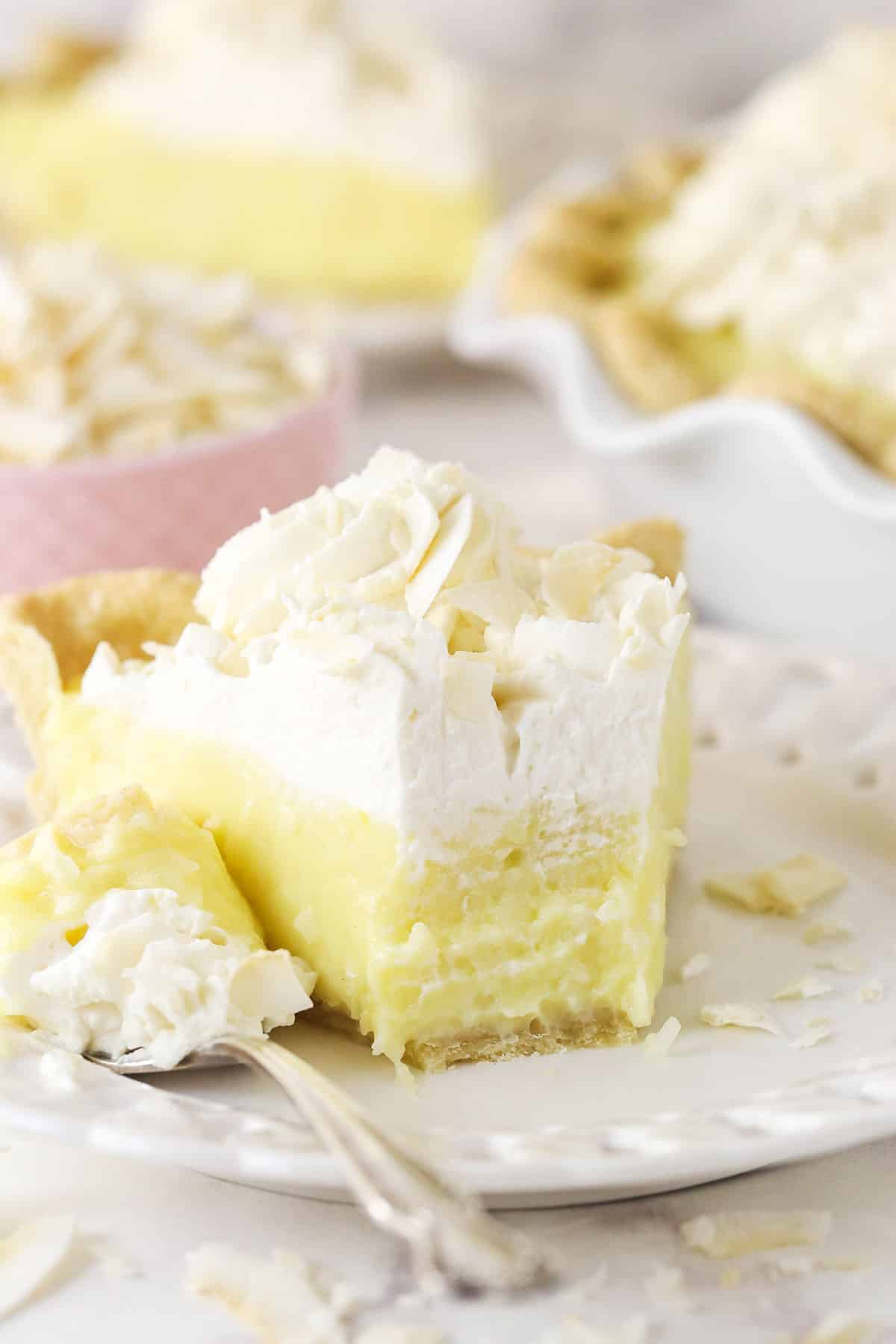
This easy homemade coconut cream pie has a thick, creamy coconut custard filling topped with fluffy whipped cream, all set in a flakey homemade pie crust. It’s easy to make with a blind baked crust and a filling that’s cooked on the stove. The flavor and texture are amazing!
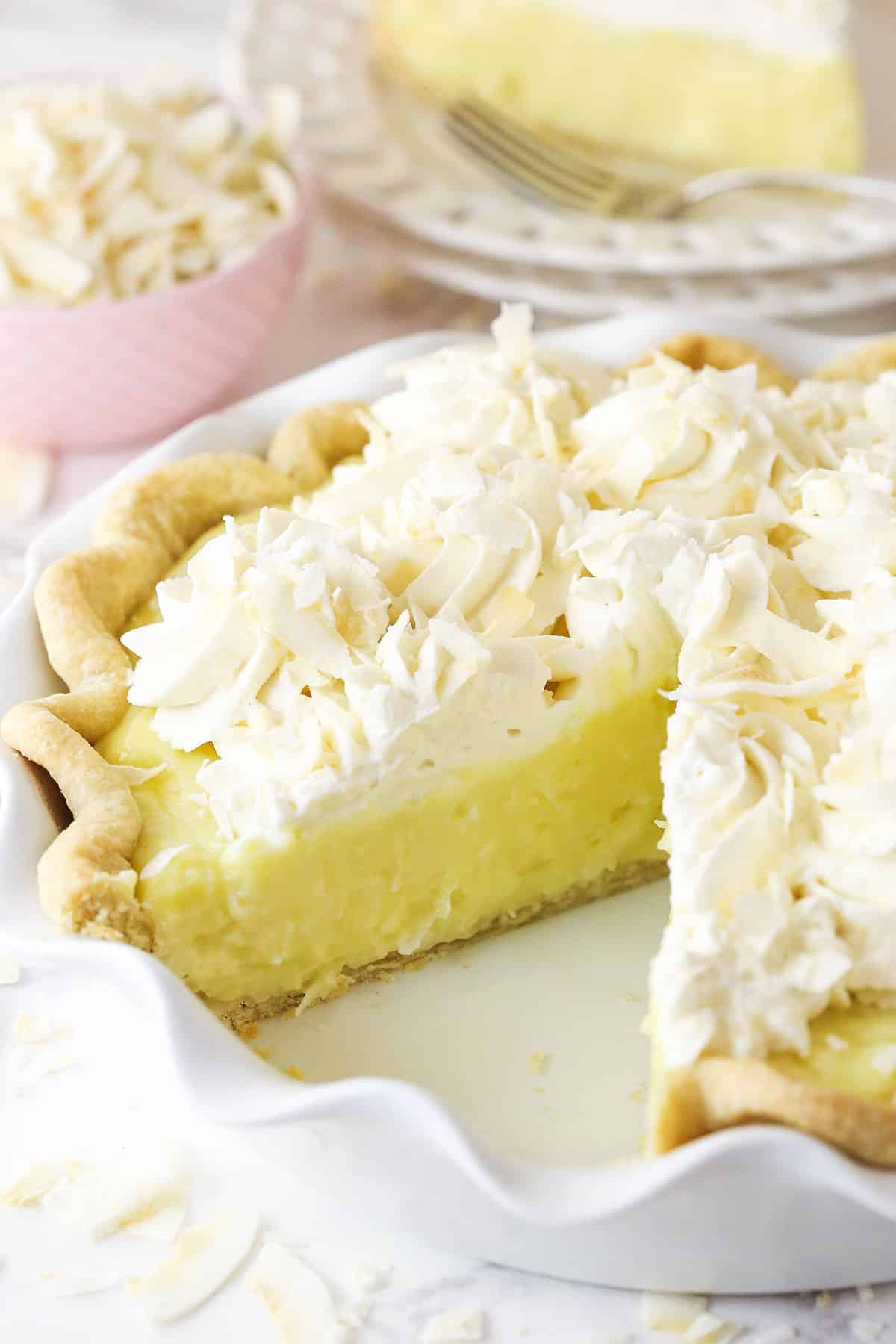
Lovers of banana cream pie, I have a feeling you’ll love this coconut cream pie! It has a super smooth and creamy texture, and the flavor is just right. Why, you ask? While this pie filling could be made with just whole milk and coconut milk, the sweetened condensed milk takes it to another level. The additional flavor and creaminess it adds are truly on point. You get less egg flavor, more sweetness, and more creaminess.
I also chose to use just egg yolks, rather than just whole eggs. After doing a side-by-side comparison, it was clear that the yolks gave the pie a smoother texture and richer flavor. Whole eggs made the filling a bit more gelatinous. Between the sweetened condensed milk and egg yolks, this pie is a winner!

Why This Coconut Cream Pie Is On Repeat
- Texture delight. The custard filling for this pie is luxuriously creamy, and while it’s plenty thick, there is still a lightness to it. I love the added texture of the sweetened flaked coconut that gets stirred in at the end.
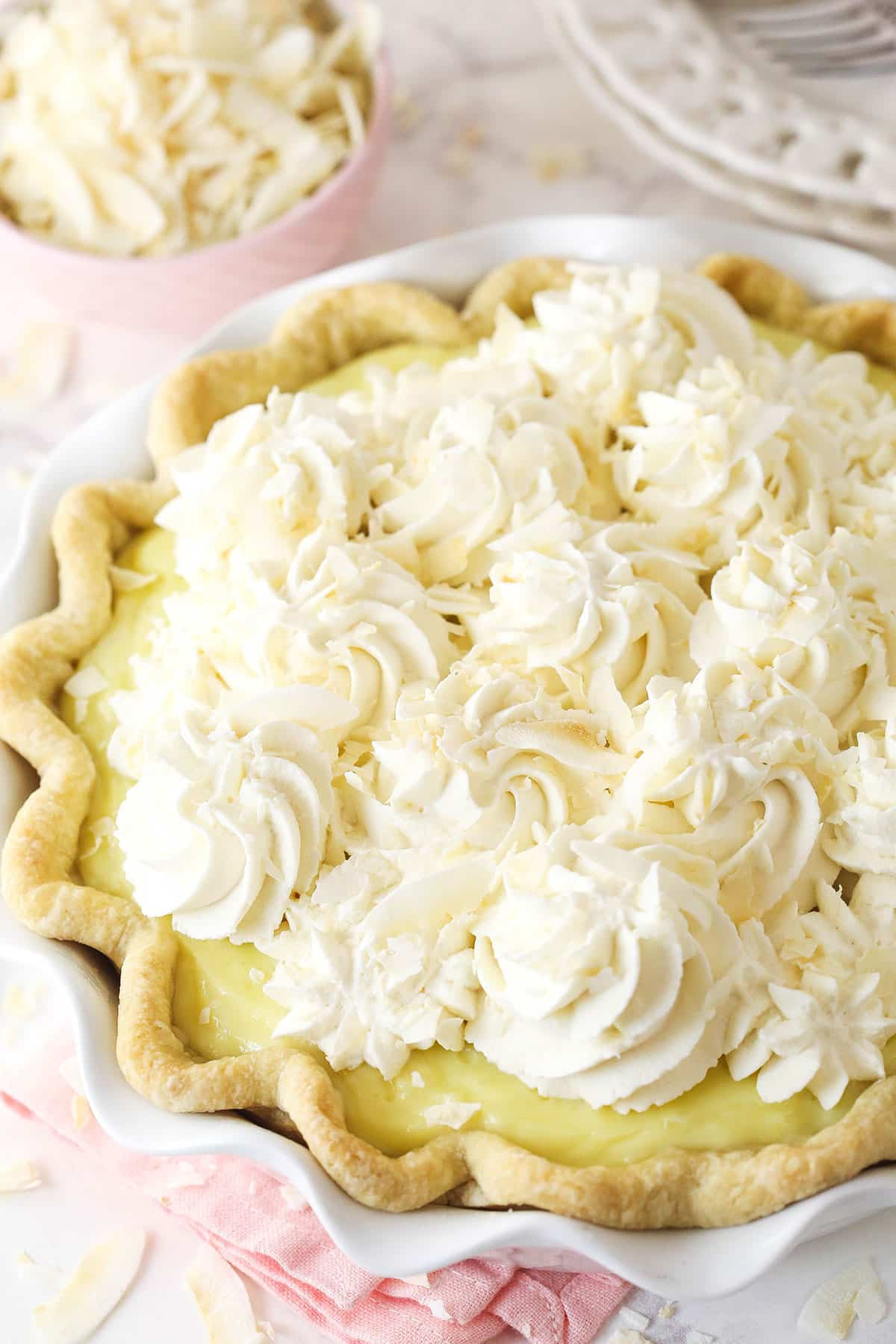
- Layers of bliss. On top of that flakey crust and silky coconut cream filling, you get a light and fluffy homemade whipped cream topping. Finish it off with a generous sprinkle of shredded (or toasted) coconut if you really want to take this pie over the top.
- Easy as pie. The filling for this pie is wonderfully easy to make, taking about 10 minutes on the stovetop. The pie does need to chill in the fridge, but that just makes it a great dessert to make ahead!
Key Ingredients
Here’s what you’ll need for this easy coconut cream pie recipe. You’ll find precise measurements in the recipe card below.
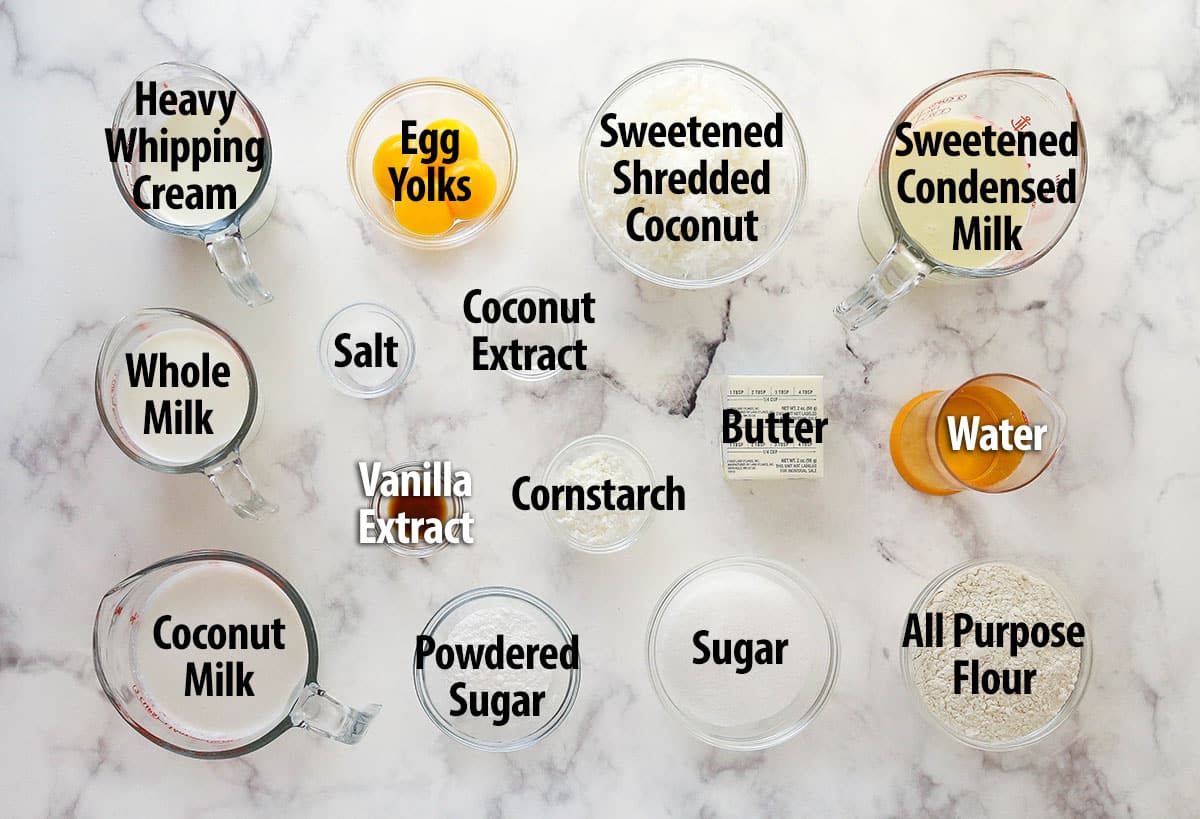
- Flour – For the crust. I recommend using a scale to measure the flour or, if you don’t have one, the spoon and level technique as described in my post on how to properly measure flour. Too much flour will give you a crumbly dough.
- Salt – For flavor!
- Butter – I use only butter in my pie crust, which I explain in-depth in my flaky all butter pie crust recipe (which this crust is based on). The butter must be COLD when starting the crust.
- Ice water – Yes, ice water, not room temperature or cool water. We are trying to keep the butter as cold as possible while making the pie crust dough.
- Egg yolks – Separate the yolks from the whites while the eggs are cold. It’s easiest this way.
- Cornstarch – Cornstarch works to thicken the coconut filling along with the yolks. I prefer it over flour in a custard like this. You’d need twice the amount of flour, which would make it pasty.
- Whole milk – I don’t recommend swapping whole milk for skim or another milk with a lower fat content. The fat makes the filling nice and thick. Lower fat milks will result in a thinner filling.
- Coconut milk – I highly suggest using full-fat coconut milk from a can. Other versions, or low fat ones, will make the filling too thin.
- Sweetened condensed milk – Make sure it’s sweetened and not evaporated milk, which isn’t the same.
- Shredded coconut – I use sweetened shredded coconut. Unsweetened will also work if you prefer a less-sweet pie filling.
- Coconut extract – For more coconut flavor. If you’d prefer, you could also swap it out for vanilla extract for a less intense coconut flavor.
- Powdered sugar – Stabilizes the whipped cream so it won’t wilt, like ever.
- Toppings – Top with more shredded coconut, or even toasted coconut. I used coconut shavings.
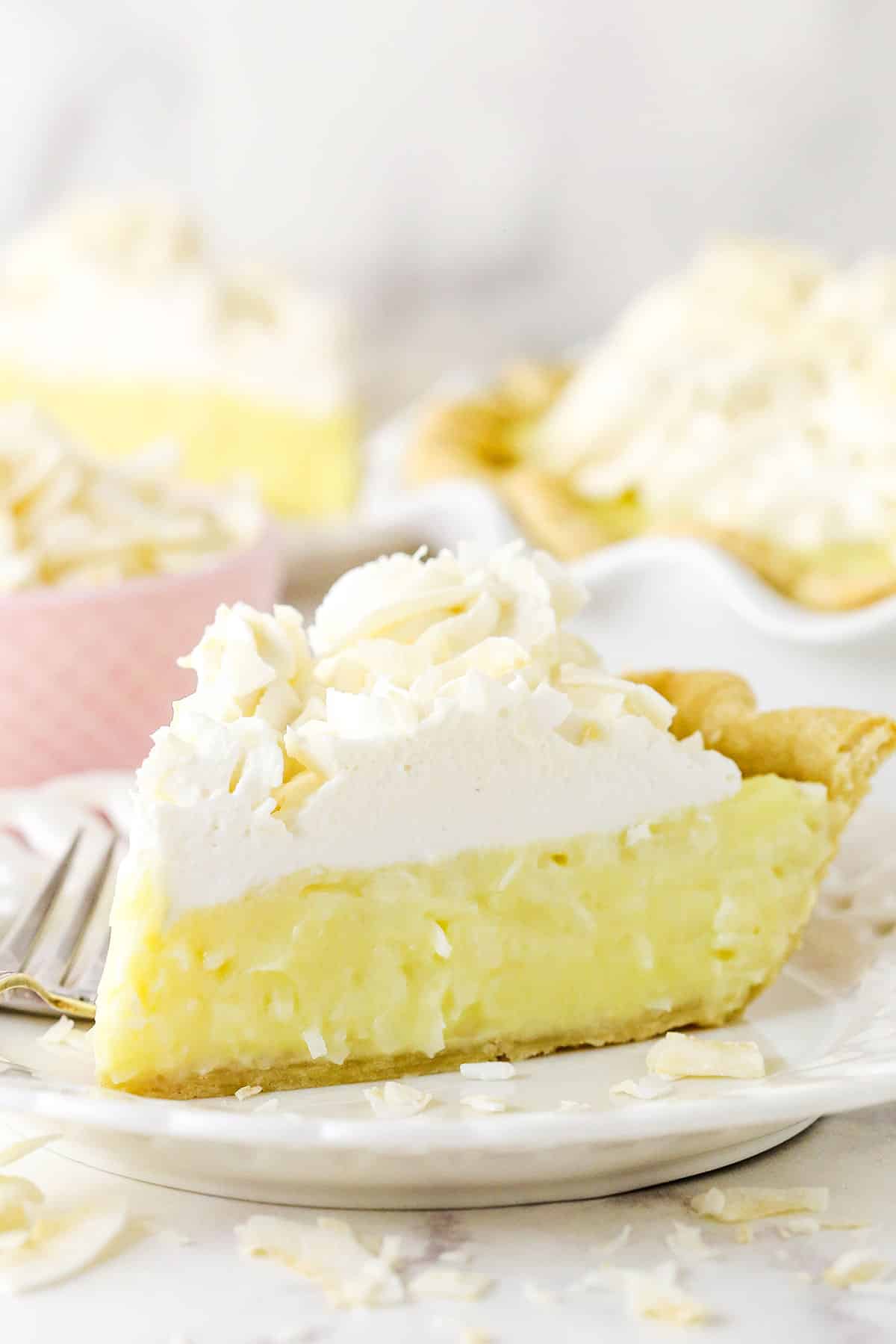
How To Make Coconut Cream Pie
Here is a quick overview of the steps to make a creamy, perfect coconut cream pie from scratch. Be sure to scroll to the recipe card below for more detailed instructions.
Prepare and Blind-Bake the Crust
For more photos and in-depth information on making the pie crust, refer to my flakey homemade pie crust recipe.
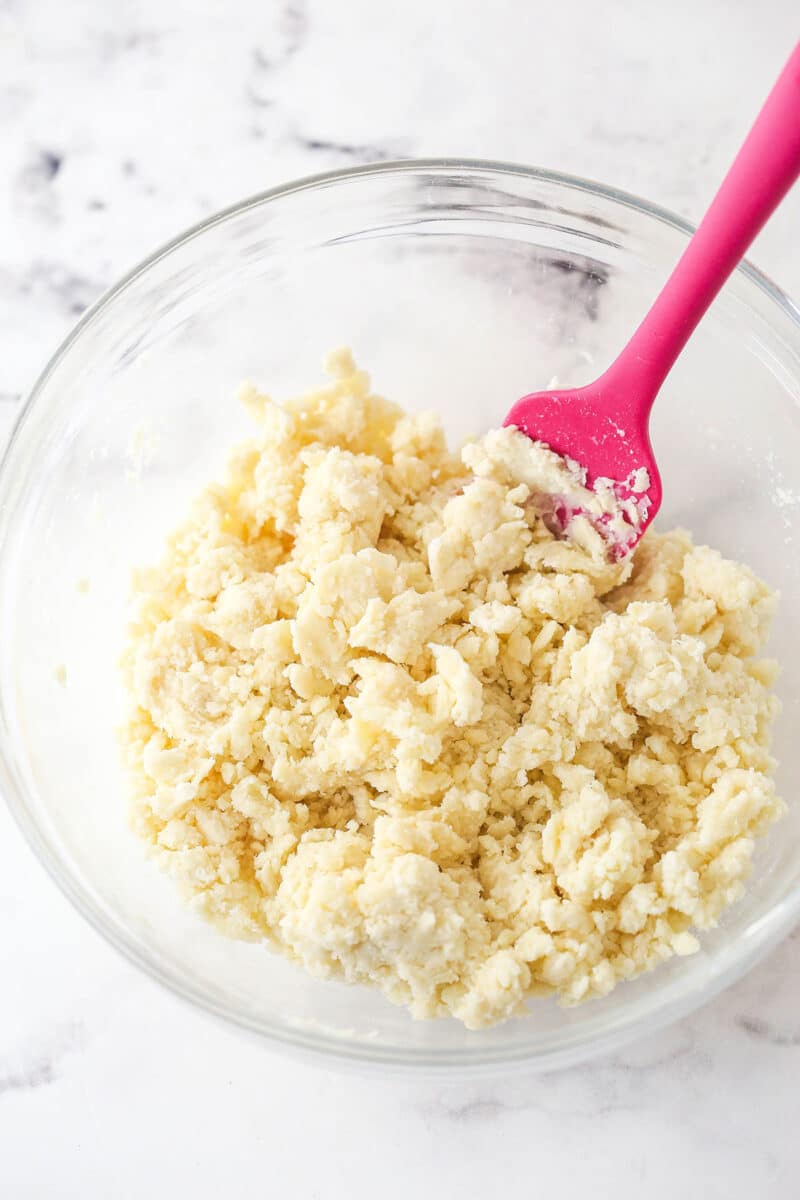
Combine the flour and salt with cold, cubed butter in the food processor. Next, use a spatula to fold in ice water until the dough sticks together when you pinch it between your fingers.
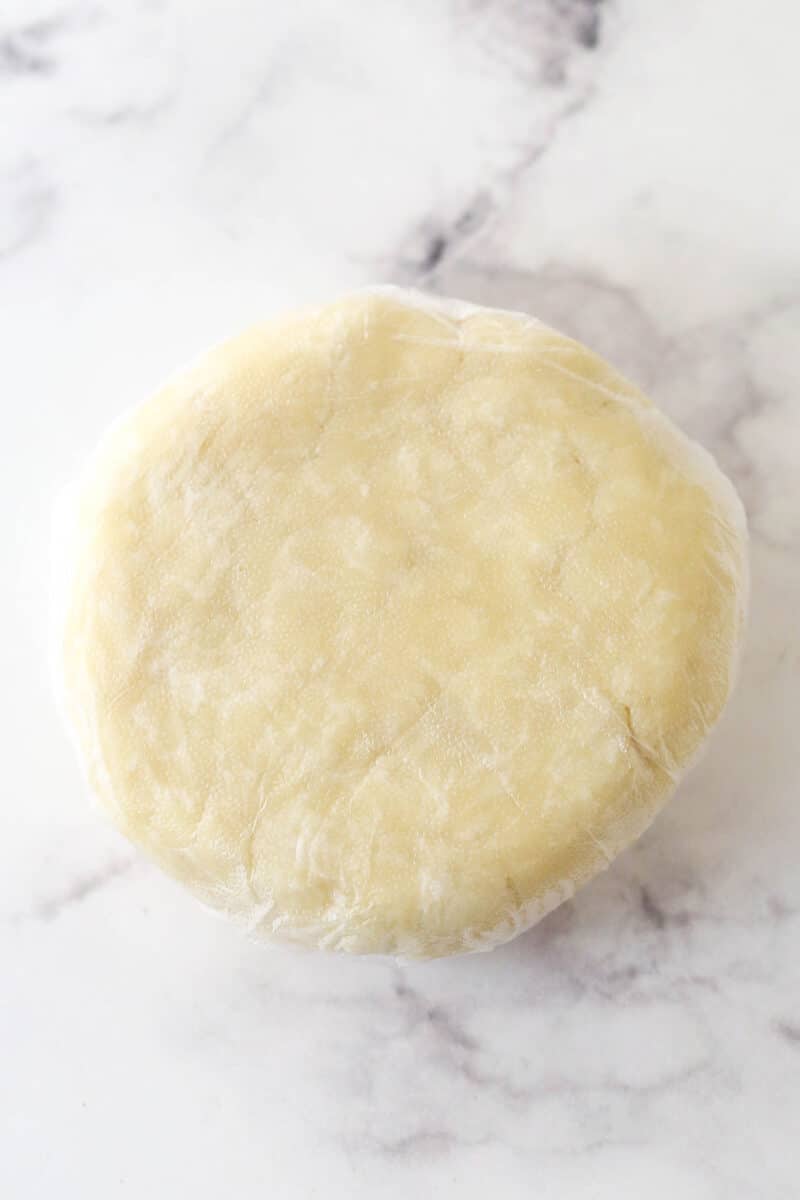
Shape the dough into a disc. Wrap the dough in plastic wrap, and chill it in the fridge for an hour. You can also do this up to 2 days ahead.
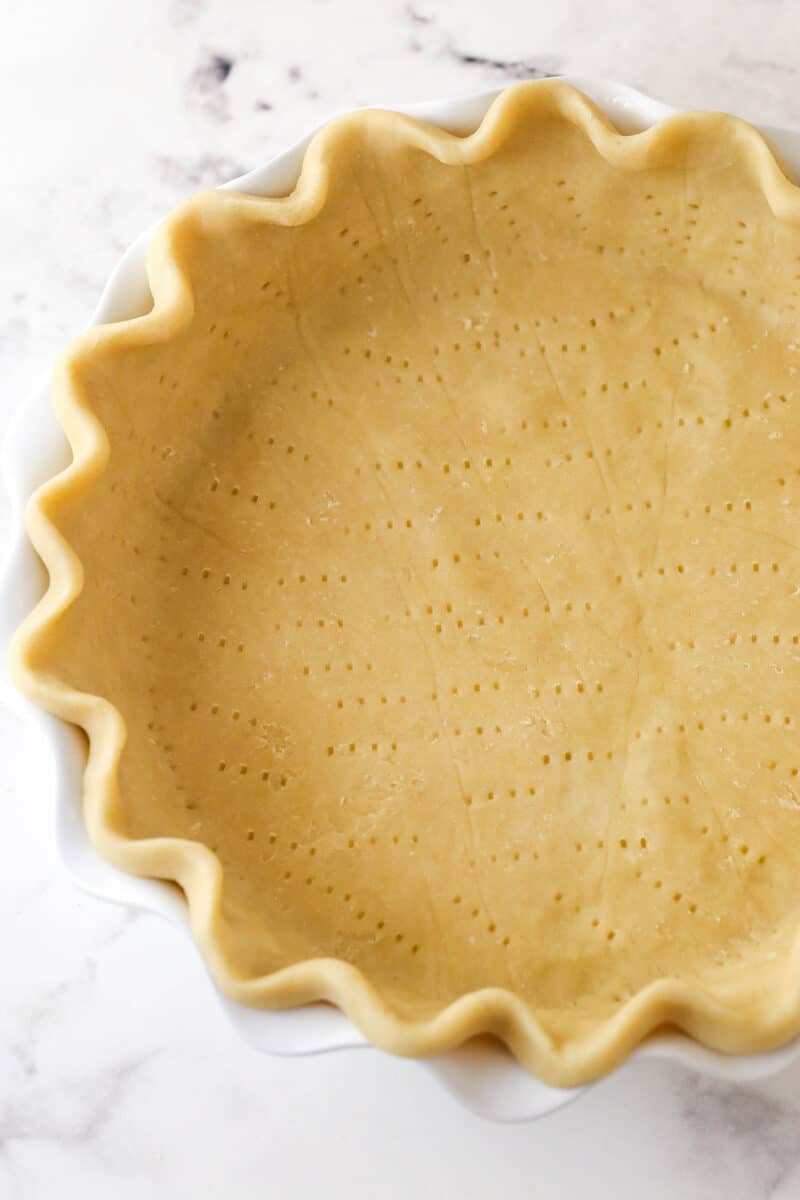
Roll out the dough and transfer the crust to a 9-inch deep-dish pie plate. Dock the crust by pricking the bottom all over with a fork. Next, return the pie crust to the fridge for 2-3 hours, or to the freezer for 20 minutes. The crust needs to be very cold.
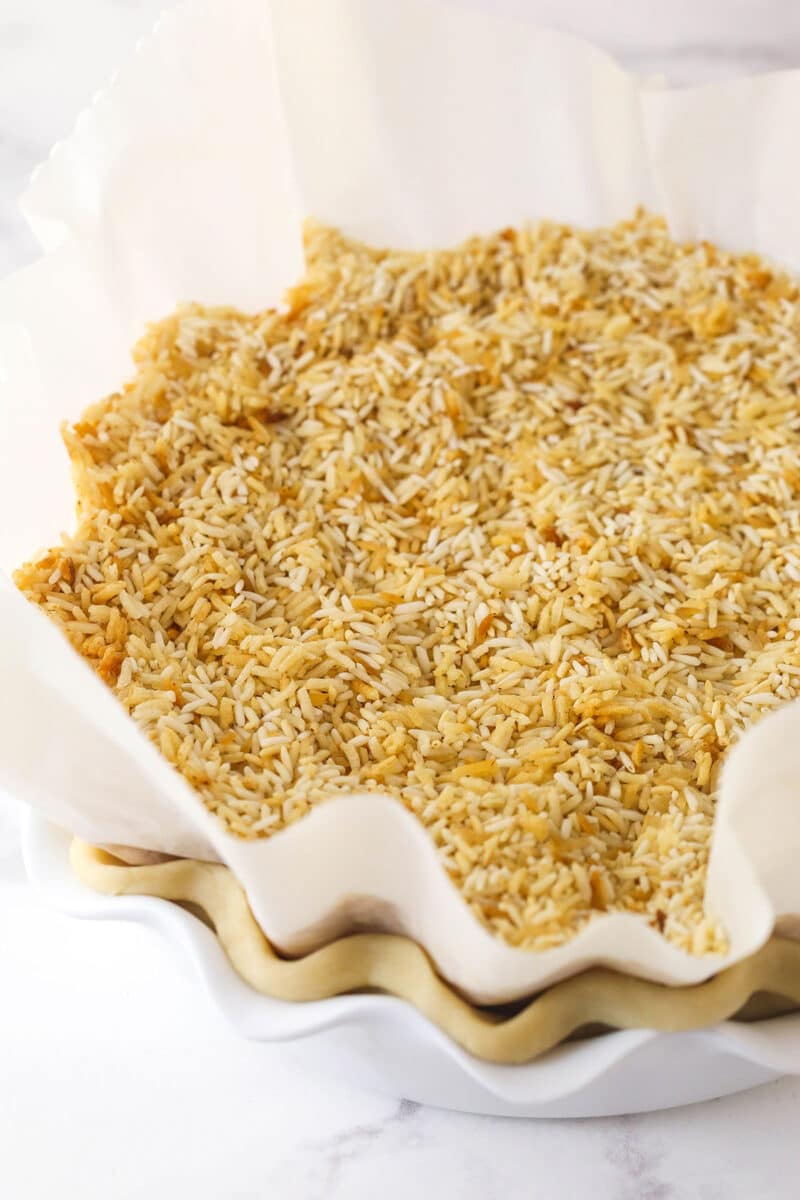
Line the crust with parchment paper and fill it with pie weights. Bake at 350ºF for 20-25 minutes, remove the pie weights, and bake for another 5-10 minutes. The crust needs to cool completely before you add the filling.
Make the Crust Without a Food Processor
I make the crust with a food processor because it’s quicker and easier, but you can also do it by hand by adding the cubed butter to all of the flour and salt and cutting the butter into the flour until it’s all combined and the largest pieces of butter remaining are about the size of peas. Then add the water and continue with the rest of the instructions.
Make the Coconut Cream Filling
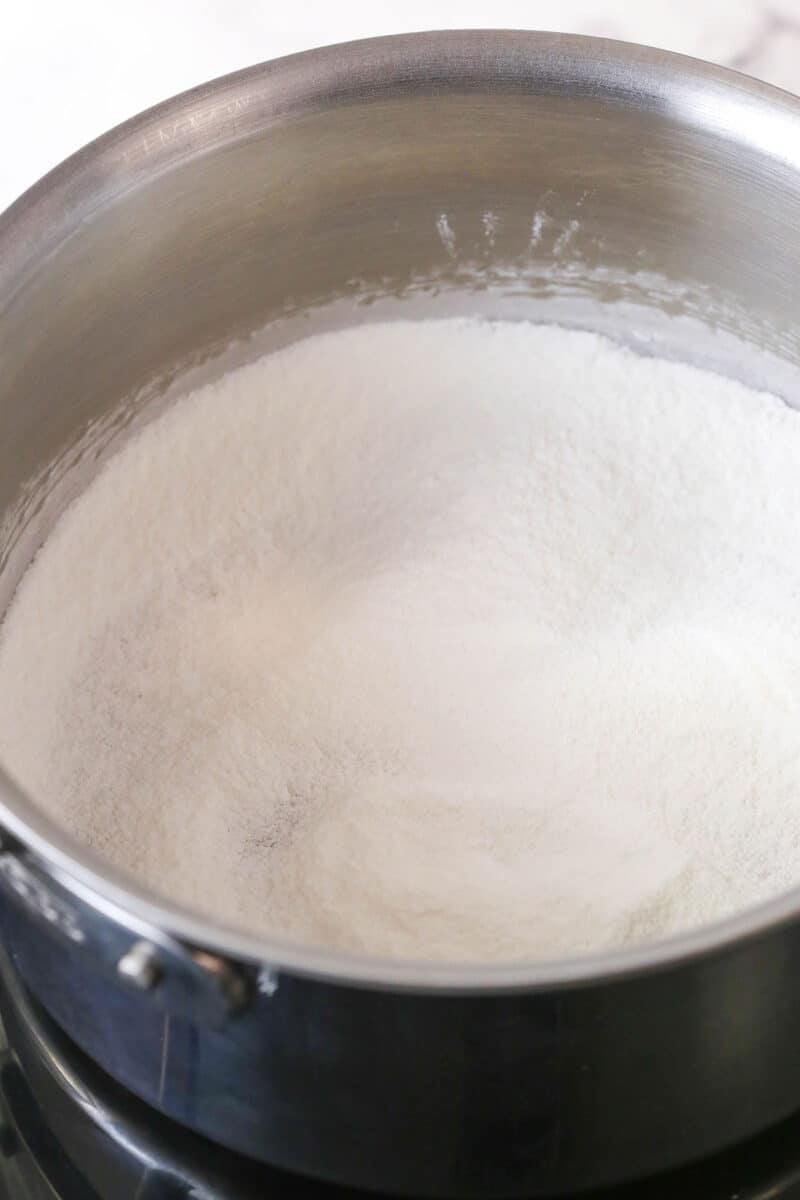
Whisk the egg yolks in a bowl. Set aside. Add the sugar, cornstarch and salt to a medium saucepan and whisk until no lumps remain.
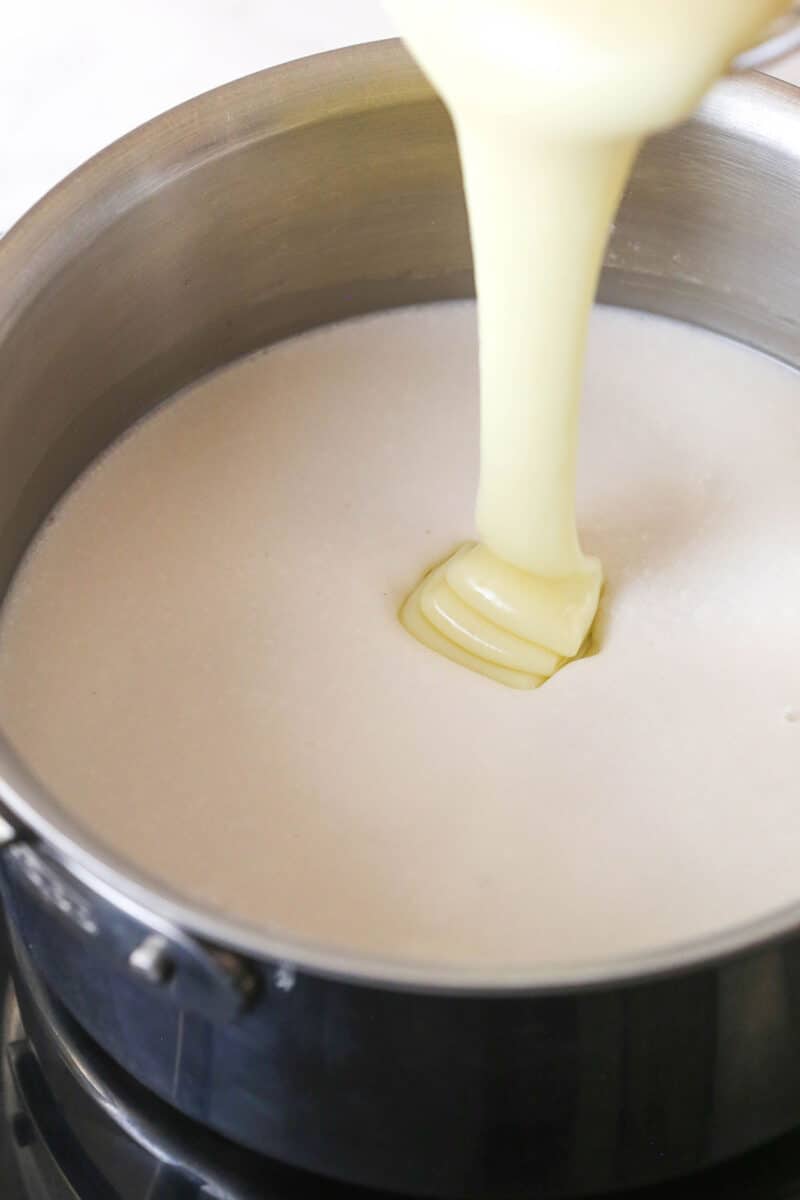
Add the whole milk, coconut milk and sweetened condensed milk. Heat mixture over medium heat, whisking constantly.
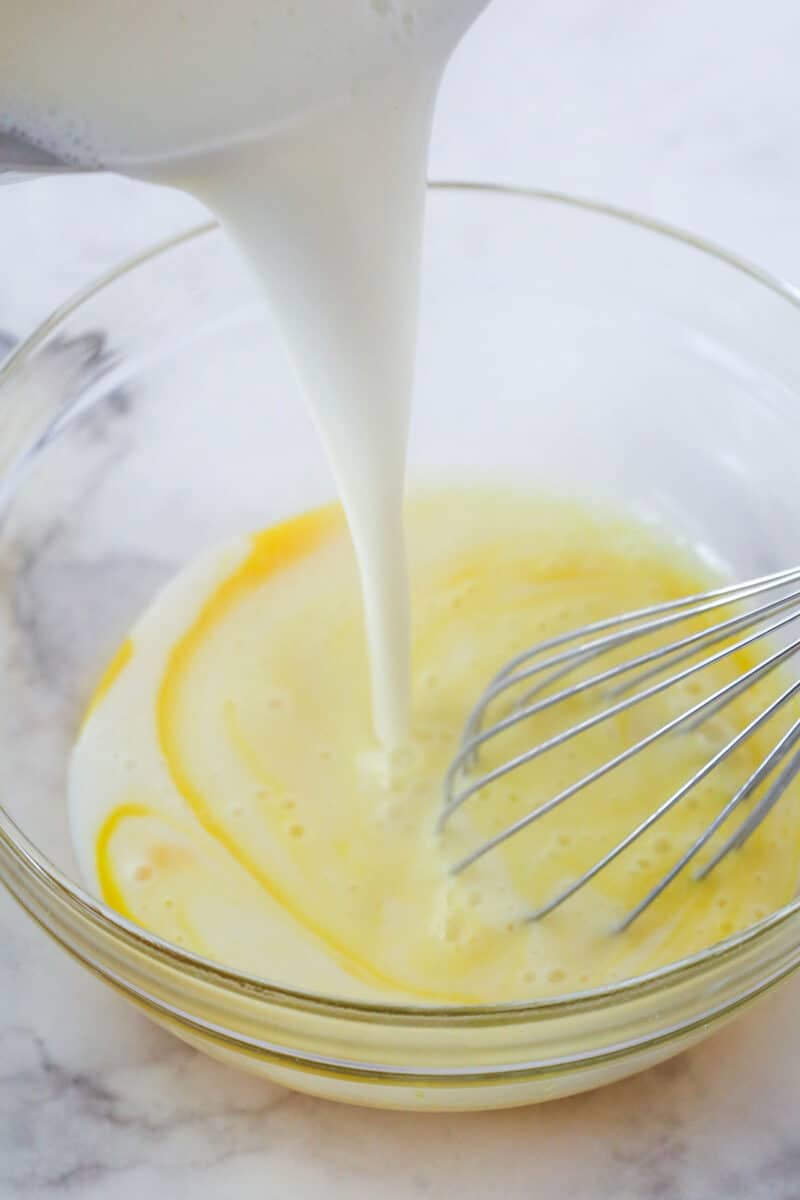
Once the milk mixture beings to simmer, pour a little of the milk mixture into the eggs while whisking constantly, to temper the eggs.
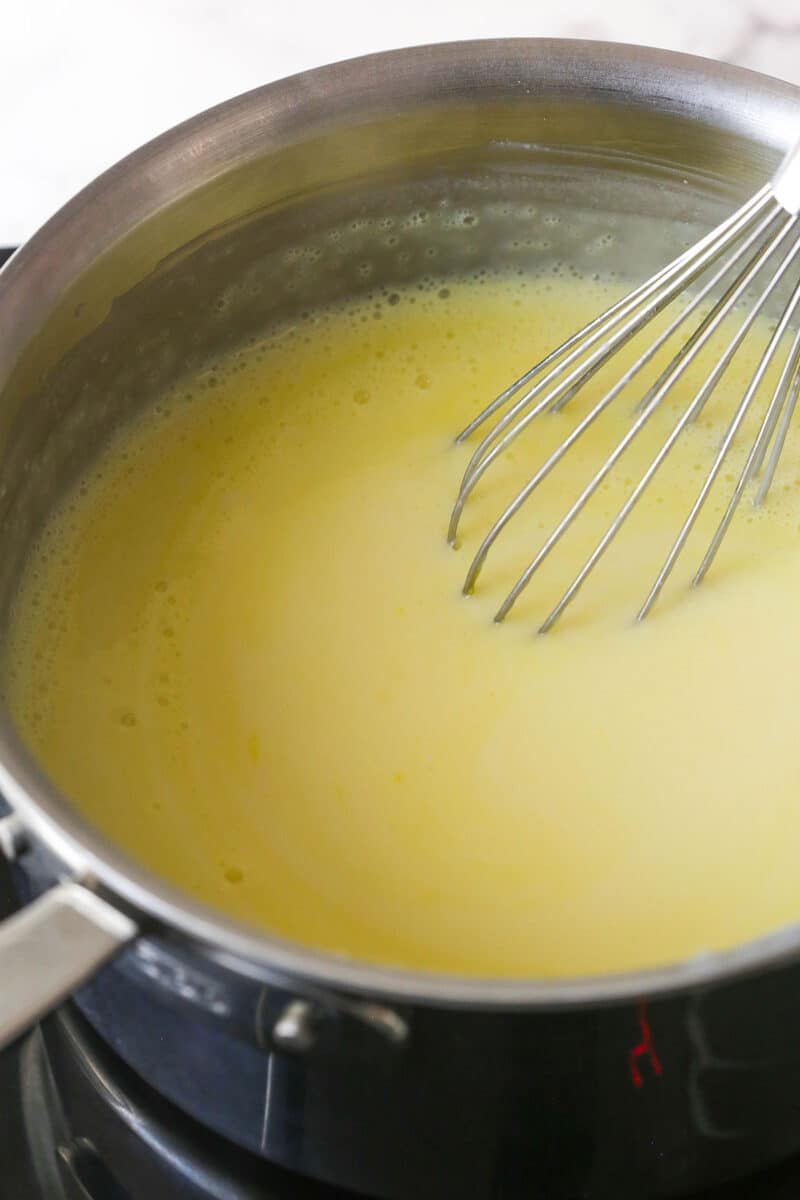
Pour the egg mixture back into the saucepan and whisk until well combined.
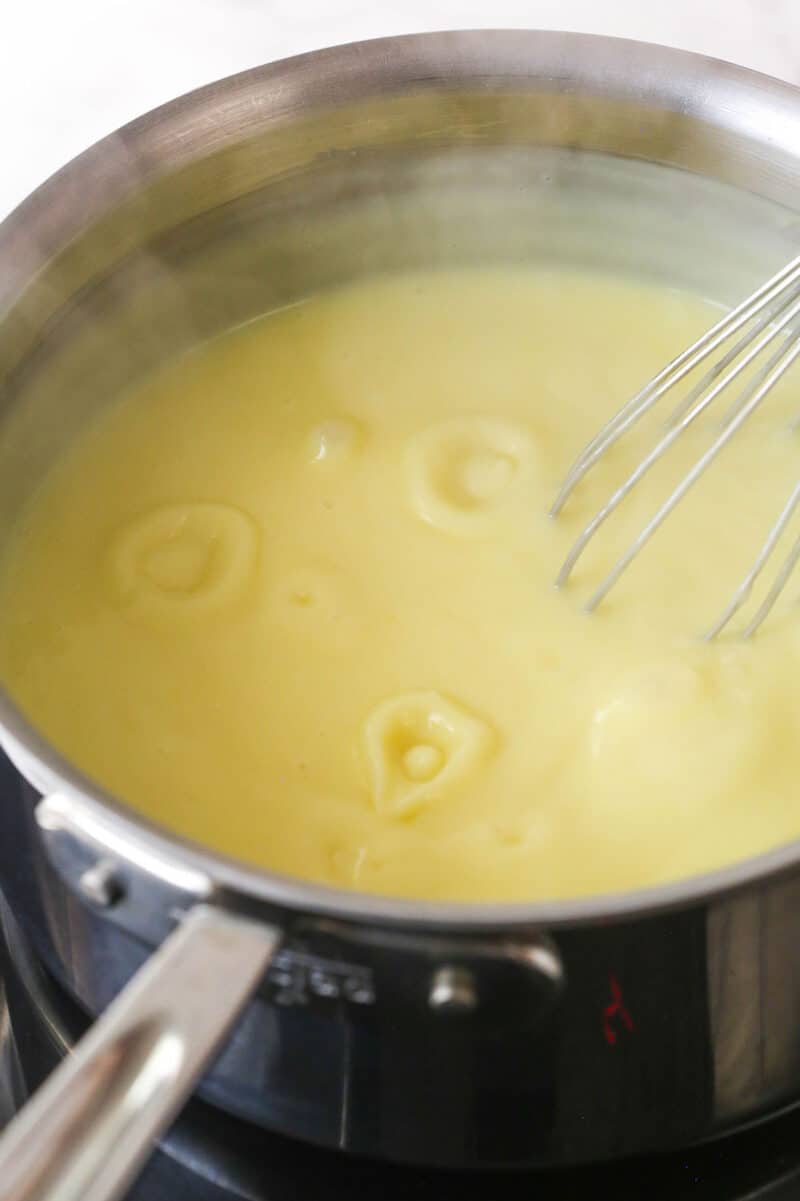
Whisk constantly until the mixture begins to thicken and comes to a boil. Allow to boil for 1 minute.
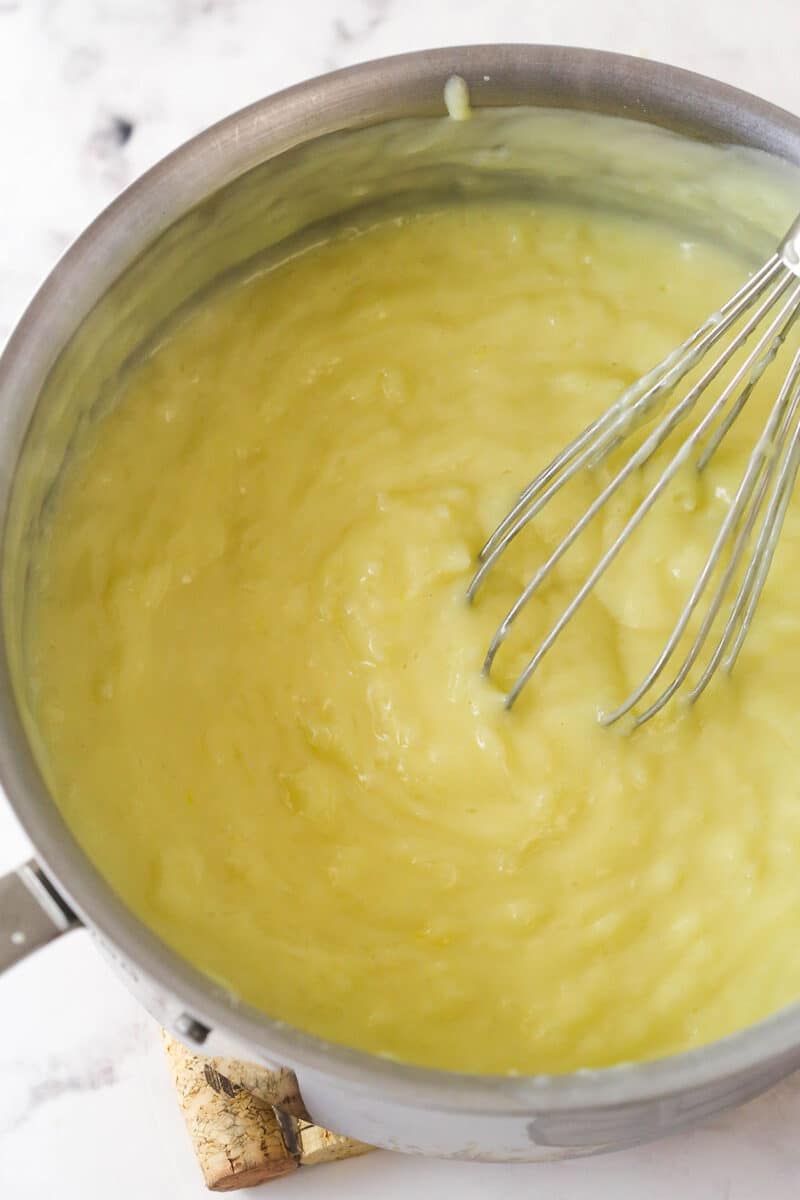
Remove from heat and whisk in the coconut extract and shredded coconut.
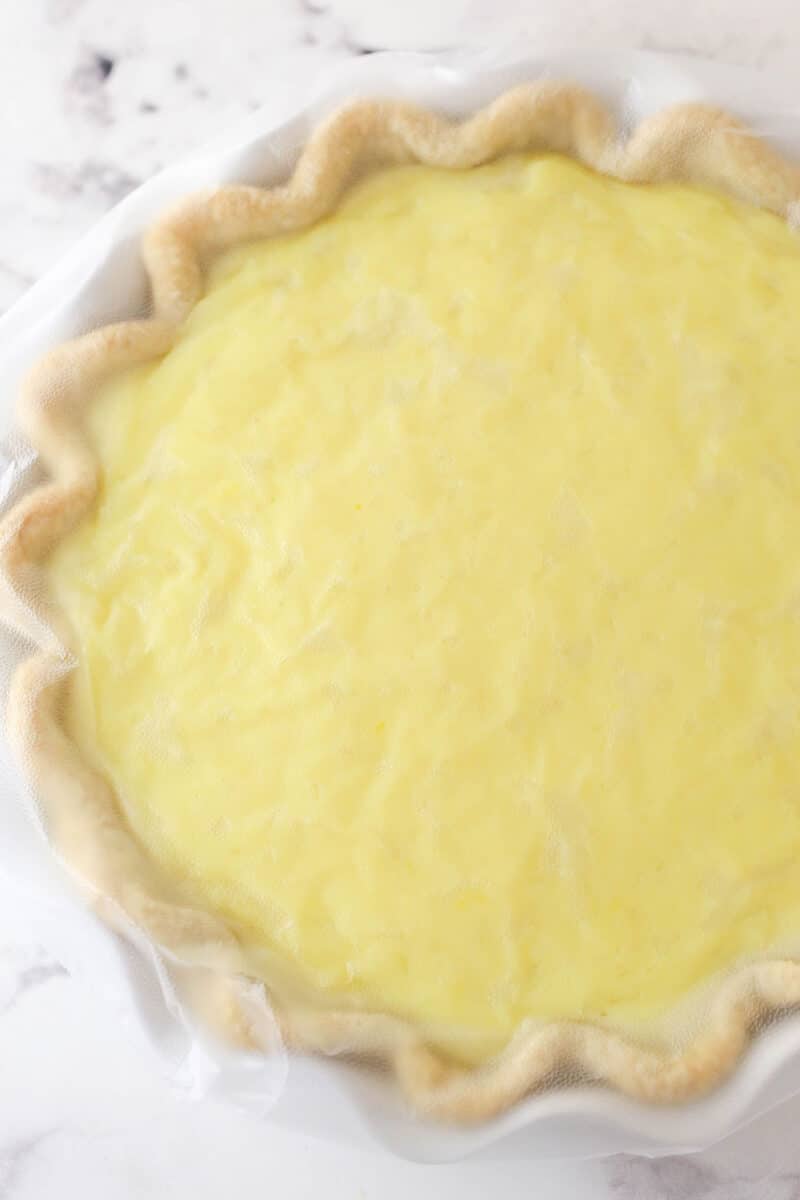
Pour the filling into the cooled crust and spread evenly. Press a piece of plastic wrap directly on top of the pie and refrigerate about 4–6 hours or until the pie is set.
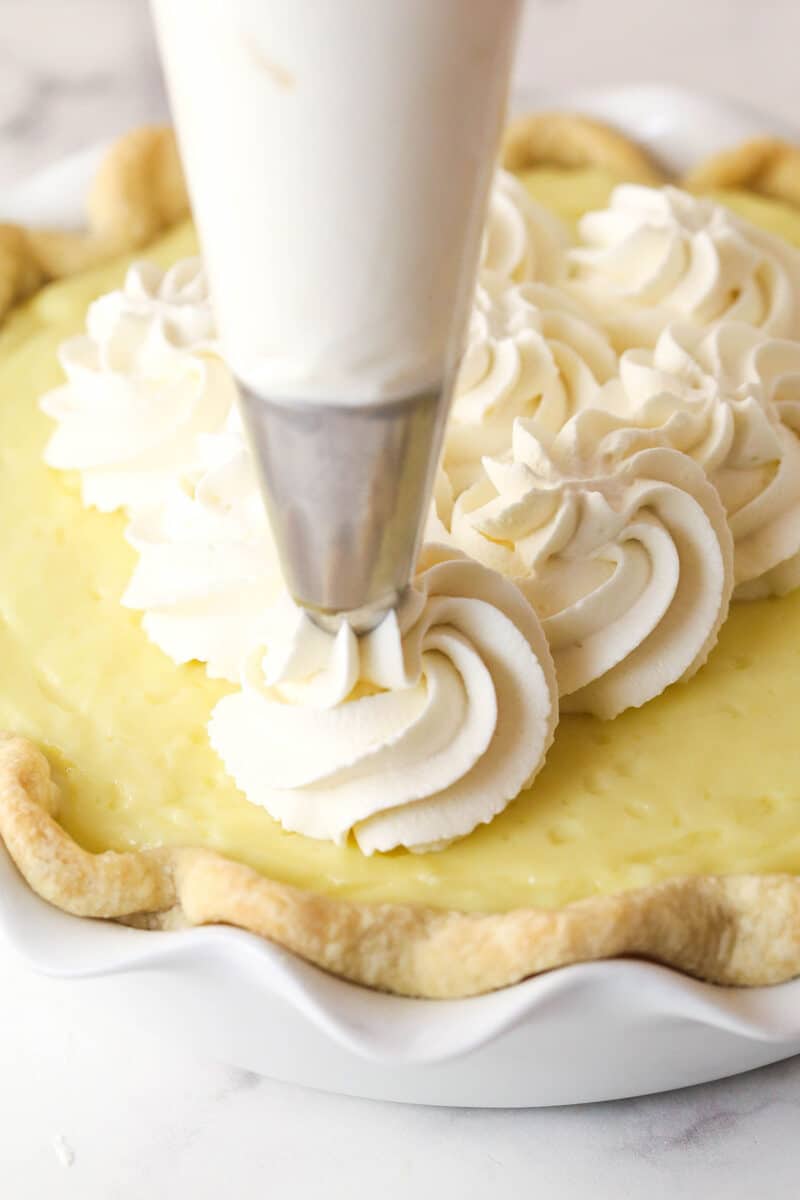
Whip the heavy whipping cream, powdered sugar and vanilla extract on high speed until stiff peaks form. Pipe the whipped cream onto the top of the pie, garnish and serve.
Tips For a Creamy Coconut Cream Pie
- Keep the heat under control. When making the filling, keep the heat to medium. No higher. Otherwise, the filling can curdle and/or burn.
- Keep it moving. When cooking the custard mixture, stir continuously to prevent it from staying in direct contact with the bottom or sides of the pan for too long. That can cause it to cook too much in spot, causing lumps.
- Strain the filling. If you find you still have some lumps in your filling, you can strain it before adding the shredded coconut.
Why Didn’t My Pie Filling Set Properly?
No one wants a runny coconut cream pie, but it happens. Here are two of the main culprits and how to avoid them.
- Too high heat. If you rush the thickening process, you will likely end up with a runny filling. So be patient, keep the heat on medium (or a touch lower if your stove runs hot) and let the filling slowly start to bubble before tempering the eggs.
- Improper thickening time. Once you’ve tempered the eggs, let it come to a boil (still over medium heat) and boil for a full minute, or up to 1 ½ minutes, no more. Too little time could mean a runny filling, but too much time could overheat the cornstarch and break down the starch bonds, which can also cause your pie not to set properly.
Prep This Pie Ahead
This pie holds up great to prepping ahead and you have a few options. You can simple make the whole pie the day before you serve it, which does great, or you can choose an option below.
- Prepare the crust – The pie dough can easily be made ahead. Store it in the fridge for a day or two (or freeze it for up to 3 months) before making the crust. You can also blind bake the crust a day before and cover it until the next day.
- Make the filling a day ahead – The pie filling can easily be made and added to the crust the day before serving. It needs time to set anyway, so make it the day before and then add your toppings the day you serve it.
Proper Storage
- Refrigerator. Cover the pie with plastic wrap (I like using toothpicks to prop the plastic away from the whipped cream topping) or arrange slices in a single layer in an airtight container. You can store the leftovers in the fridge for up to 4 days.
- Freezer. I haven’t tried freezing the full pie, and it’s possible it would separate until thawing. That said, you could give it a try. Wrap it well and thaw it in the fridge within 2-3 months before serving.
Watch How To Make It
More Pie Recipes to Try
This recipe was updated/changed 4/21/2026. For the old version of the recipe, download the recipe PDF.

Coconut Cream Pie
save this recipe
Enter your email & we’ll send it to your inbox. Plus get new recipes from us every week!
Ingredients
Crust
- 1 ¼ cups (163g) all-purpose flour (divided)
- ½ teaspoon salt
- ½ cup (112g) unsalted butter (cold, cut into ½ inch cubes)
- 2-4 tablespoons ice water
Filling
- 4 large egg yolks (room temperature)
- ¾ cup (143g) granulated sugar
- 3 ½ tablespoons (20g) cornstarch
- ½ teaspoon salt
- 1 cup (240ml) whole milk
- 13.5 ounce can (1 ¾ cups) full-fat coconut milk
- 14 ounce can (1 ¼ cups) sweetened condensed milk
- 2 teaspoons coconut extract
- 1 ½ cups sweetened shredded coconut
Whipped Cream
- 1 cup (240ml) heavy whipping cream (cold)
- 4 tablespoons (29g) powdered sugar
- ¾ teaspoon vanilla extract
Instructions
- NOTE: I make the crust with a food processor because it’squicker and easier, but you can also do it by hand by adding the cubed butterto all of the flour and salt and cutting the butter into the flour until it’sall combined and the largest pieces of butter remaining are about the size ofpeas. Then add the water and continue with the rest of the instructions.
Make the Crust
- Add 3/4 cup (98g) of flour and salt to a food processor and pulse together 2 to 3 times.
- Scatter the cubed butter over the flour and process until a crumbly dough forms, about 15 seconds. The flour should all be coated – none of the flour should be dry.
- Add the remaining 1/2 cup (65g) of flour and pulse a few times until everything is evenly distributed. The doughy pieces should break up, and it should look sandy. There shouldn’t be a bunch of big pieces remaining. A few are fine, but they should be mostly evenly distributed.
- Move the mixture to a medium mixing bowl and add 2 tablespoons of the ice water. Start with 2 tablespoons and add from there. Using a rubber spatula, gently fold everything together. The crumbs should begin to form larger clusters. If you pinch some of the dough and it holds together nicely, it’s ready. If the dough falls apart, add 1-2 more tablespoons of water and continue to press until the dough comes together.
- Work just enough for it to come together, then shape it into a disc. Wrap the disc in plastic wrap and refrigerate for at least an hour or up to 2 days.
- When ready to bake the crust, place the pie crust onto a piece of parchment paper. Cover the crust with another piece of parchment paper and roll it out with a rolling pin.
- Peel one piece of the parchment paper off and use the other piece of parchment to lift the pie crust and drape it over a 9-inch deep-dish pie plate. Carefully peel off the second piece of parchment paper, then shape your pie crust. “Dock” the crust by pricking the crust with a fork to allow steam to escape evenly. This helps the crust not bubble up and cook unevenly.
- Refrigerate the crust for 2-3 hours or freeze for about 20 minutes. You want to be sure the crust is very cold.
- Preheat oven to 350°F (180°C) and line the pie crust with parchment paper. Be sure the parchment paper presses all the way against the crust so that it’s flush. Fill the pie crust with pie weights, dry rice, or beans.
- Bake for 20-25 minutes, or until the crust begins to brown on the edges. Remove the parchment paper and pie weights and bake for another 5-10 minutes, or until lightly golden brown. Remove from the oven and allow to cool completely. If you need to speed up cooling, you can place it in the fridge.
Make the Filling
- When the crust has cooled, add the egg yolks to a medium-sized bowl, whisk together until smooth, then set aside.
- Add the sugar, cornstarch, and salt to a medium saucepan and whisk together until well combined and no lumps remain.
- Add the whole milk, coconut milk, and sweetened condensed milk and whisk well to combine. Heat mixture over medium heat, whisking constantly.
- Once the milk mixture begins to simmer, pour a little of the milk mixture into the eggs while whisking constantly, to temper the eggs. Add a little more of the hot liquid into the eggs, then pour the egg mixture back into the saucepan.
- Whisk constantly until the mixture begins to thicken and comes to a boil. Allow to boil for 1 minute, then remove from heat and whisk in the coconut extract and shredded coconut.
- Pour the filling into the cooled crust and spread evenly. Press a piece of plastic wrap directly on top of the pie and refrigerate for about 4–6 hours or until the pie is set.
Add Topping and Serve
- When the pie is completely cool and firm, remove the plastic wrap from the pie.
- Add the heavy whipping cream, powdered sugar, and vanilla extract for the whipped cream to a large mixer bowl and whip on high speed until stiff peaks form.
- Pipe the whipped cream onto the top of the pie (I used Ateco tip 844), then garnish with coconut flakes, if desired. Serve.
- Store leftover pie well-covered in the fridge. Best if eaten within 3-4 days.
Notes
- Whole milk – I don’t recommend swapping whole milk for skim or another milk with a lower fat content. The fat makes the filling nice and thick. Lower fat milks will result in a thinner filling.
- Coconut milk – I highly suggest using full-fat coconut milk from a can. Other versions, or low fat ones, will make the filling too thin.
- Sweetened condensed milk – Make sure it’s sweetened and not evaporated milk, which isn’t the same.
- Storing – Cover the pie with plastic wrap (I like using toothpicks to prop the plastic away from the whipped cream topping) or arrange slices in a single layer in an airtight container. You can store the leftovers in the fridge for up to 4 days.
Nutrition
The nutrition facts provided are calculated using a third-party tool and are estimates only. Actual nutritional content may vary based on the ingredients and brands you use, as well as portion sizes. For accurate results, please consult a registered dietitian or nutritionist.
Categories:
Easter, Fall and Holiday Favorites, Holidays, Pie, Recipes, Recipes with video, Sweets and Treats, Thanksgiving,












I really want to try this updated version (love the old version!) but I can’t seem to find the recipe card with the measurements. Not sure if it’s because I’m on my phone, but I can’t seem to find it 😭