

Learn how to make brown butter with this easy tutorial! Brown butter is delicious and has a nutty – and almost caramel-y flavor – making it perfect for adding to cakes, cookies, frostings and more. Simply cook the butter over the stove and you’re on your way to elevating your desserts!
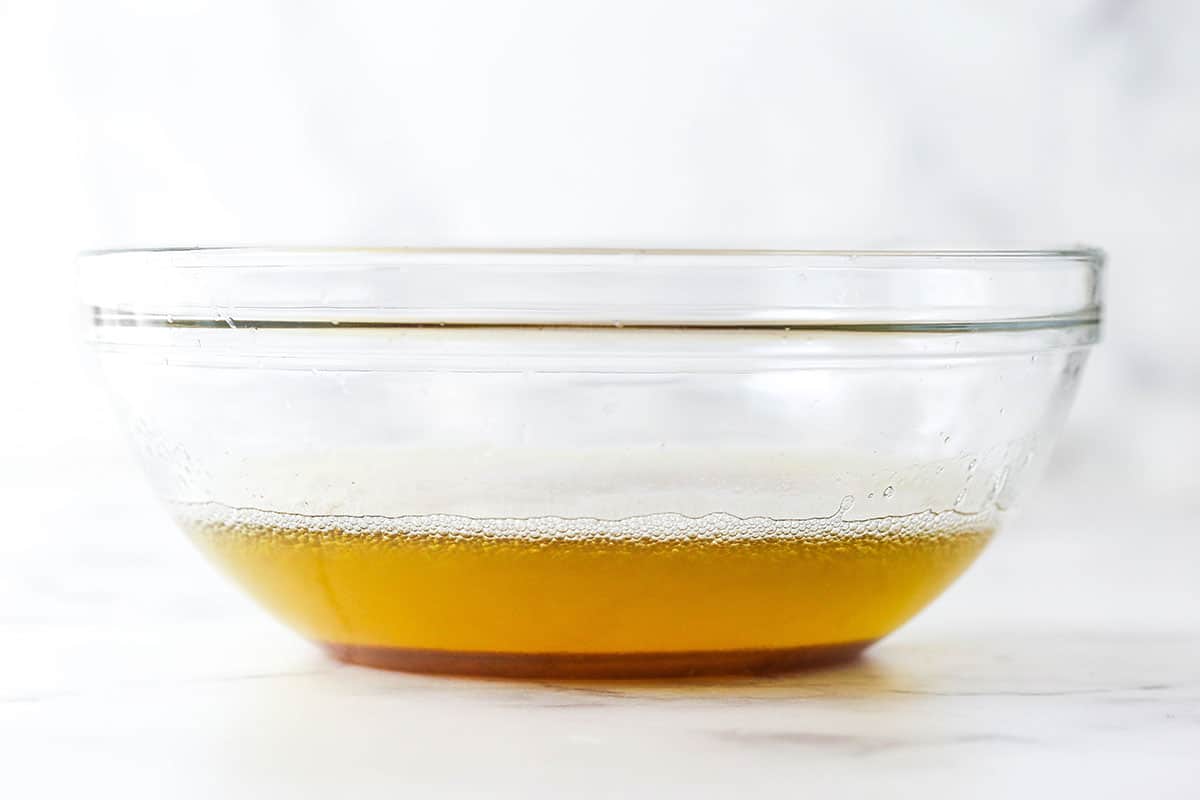
What Is Brown Butter?
Brown butter is butter that has been gently cooked and browned on the stove. You melt it, then continue cooking it until the water content has evaporated and the milk solids in the butter turn golden brown. It only takes about 10 minutes to make and has a nutty and caramel-like flavor and smell. Because the water evaporates, you lose about 20-25% of your butter volume, depending on the butter brand.
What You’ll Need
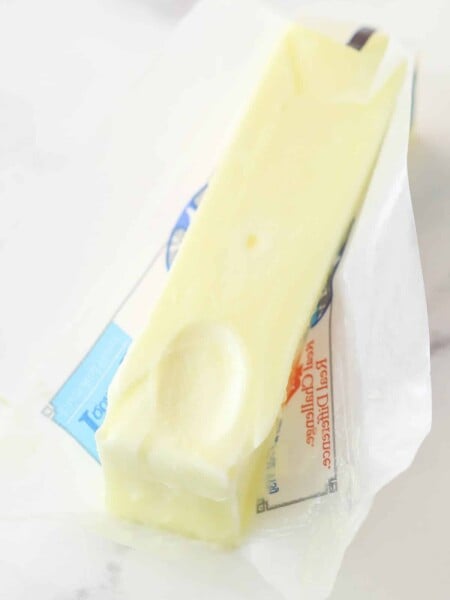
- Butter – You can use salted or unsalted butter. I use unsalted. I’d recommend a high quality butter for browning, which will usually have a lower water content so it browns more quickly and loses less volume.
- Light colored pan – You definitely want a pan that’s lighter in color for browning butter, otherwise you won’t be able to see the color change and it’s likely to burn.
- Silicone spatula – For stirring.
How To Brown Butter
Here’s a look of how to brown butter and what the different stages look like. For more detailed instructions, see the recipe card below.
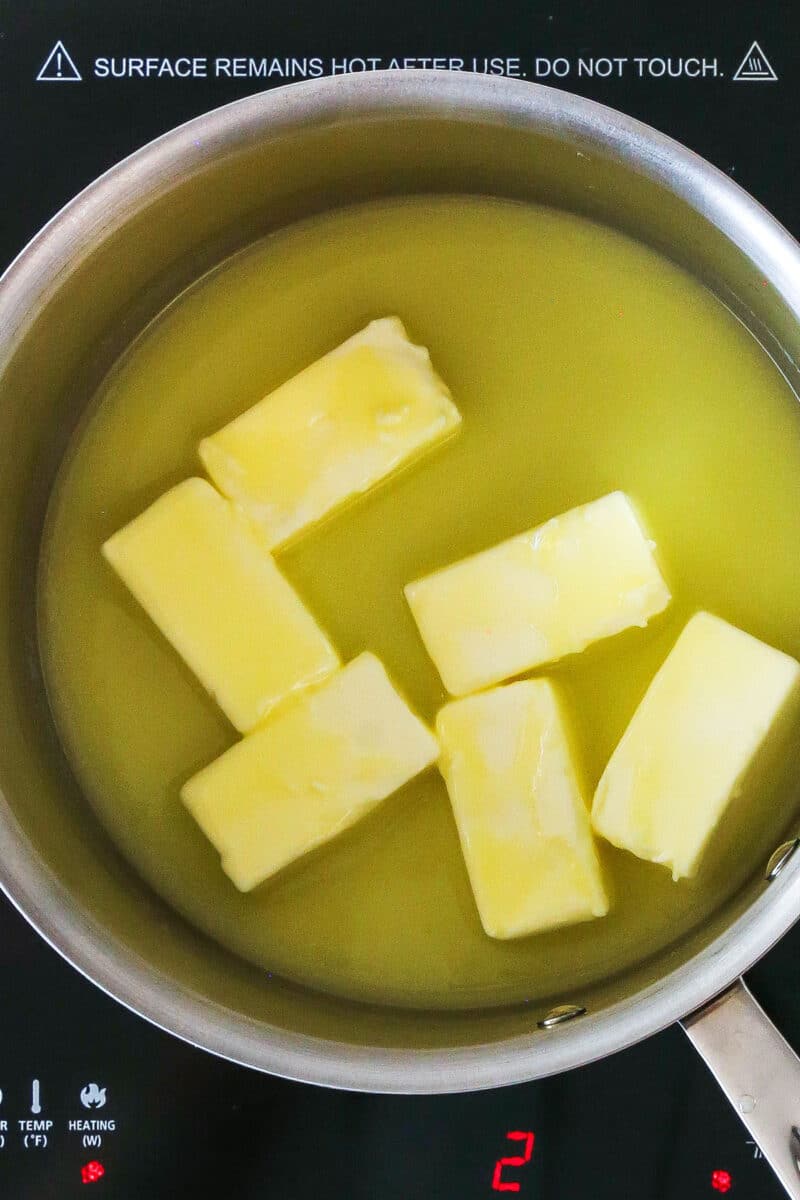
Add butter to a light-colored pan over medium-low heat and melt, stirring continuously.
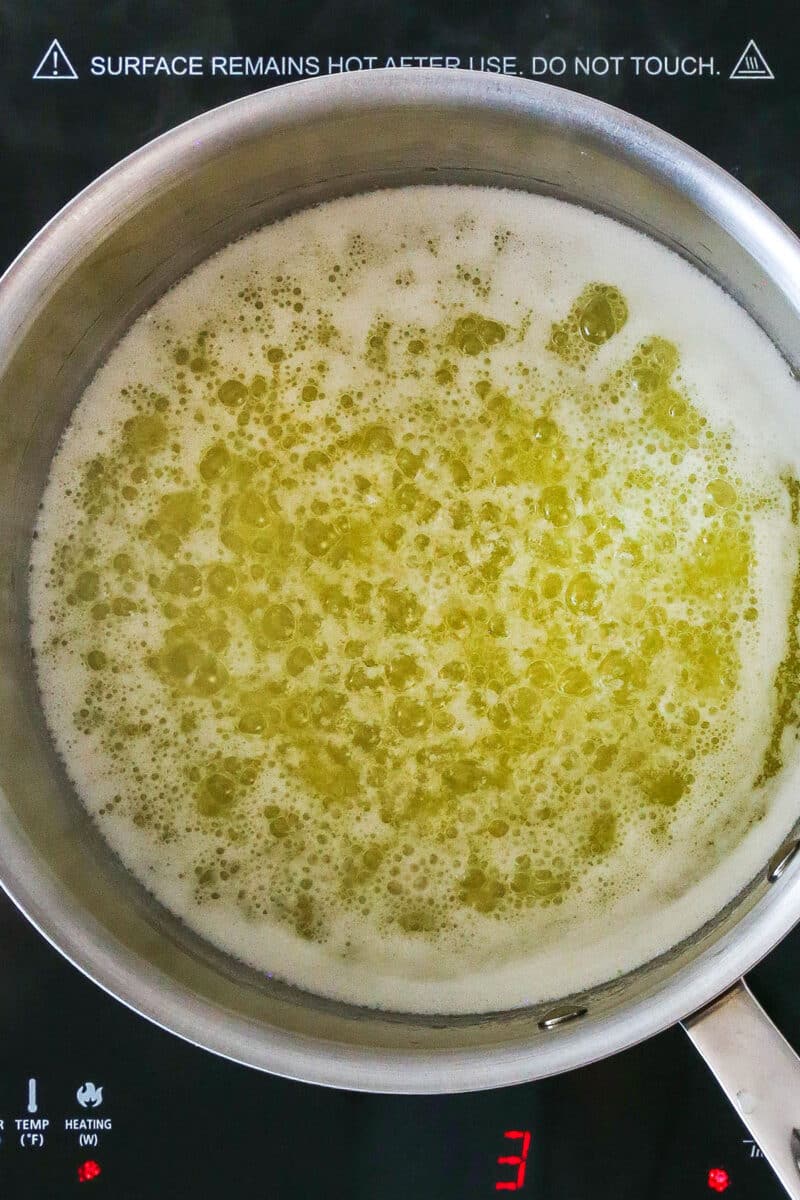
Turn the heat up to medium and bring to a boil, stirring constantly. The look of the butter will change as it boils.
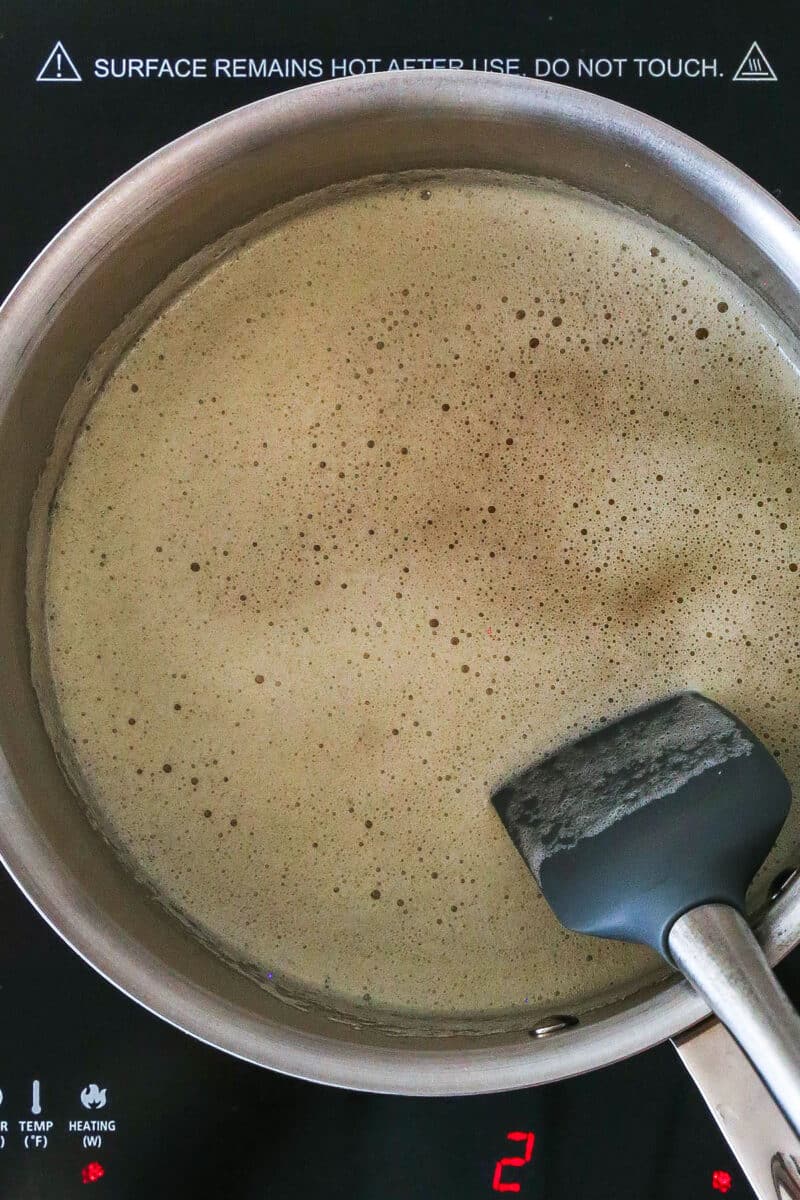
The butter will develop a dense foam on top once the water has all evaporated. Stir constantly so that the butter browns evenly and milk solids don’t settle on the bottom of the pan and burn.
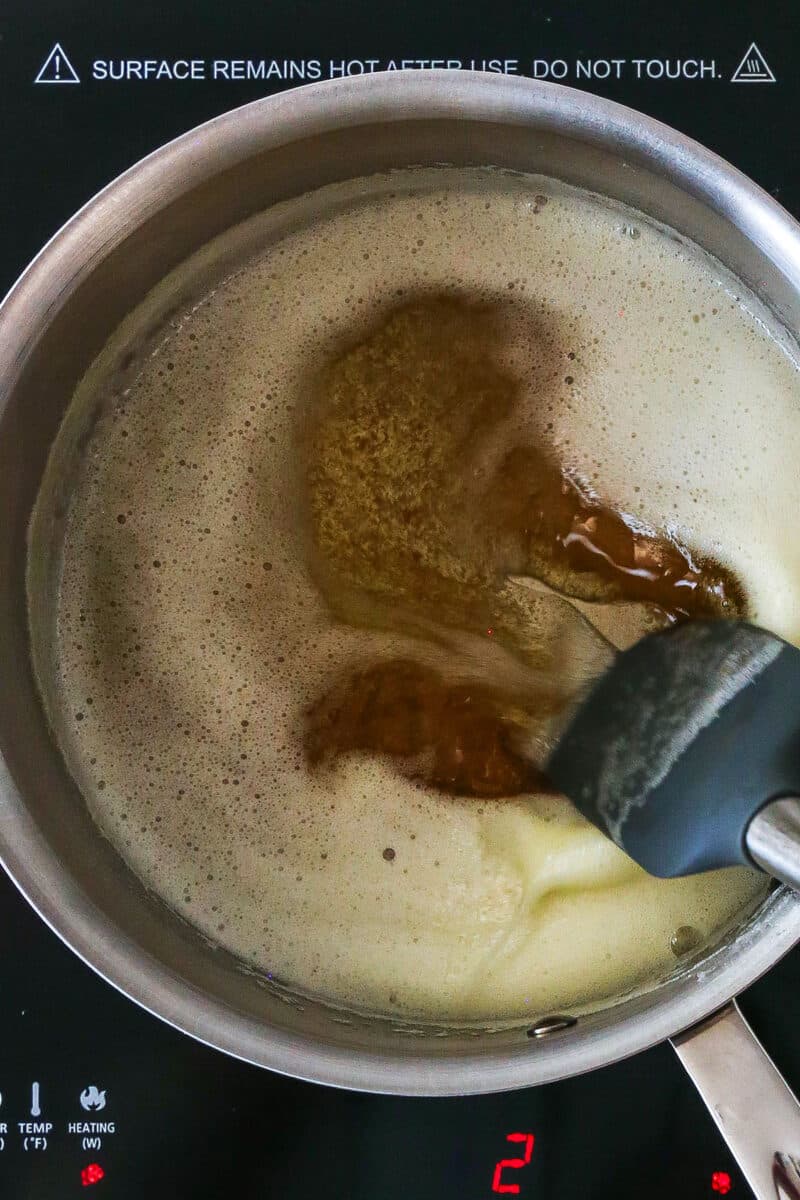
The foam will subside a bit and you’ll see brown bits on the bottom. Stir so you can see through the foam to see when the butter starts to brown. It’ll smell buttery and nutty. I like to stir a touch longer to get plenty of brown bits, just be careful not to burn it.
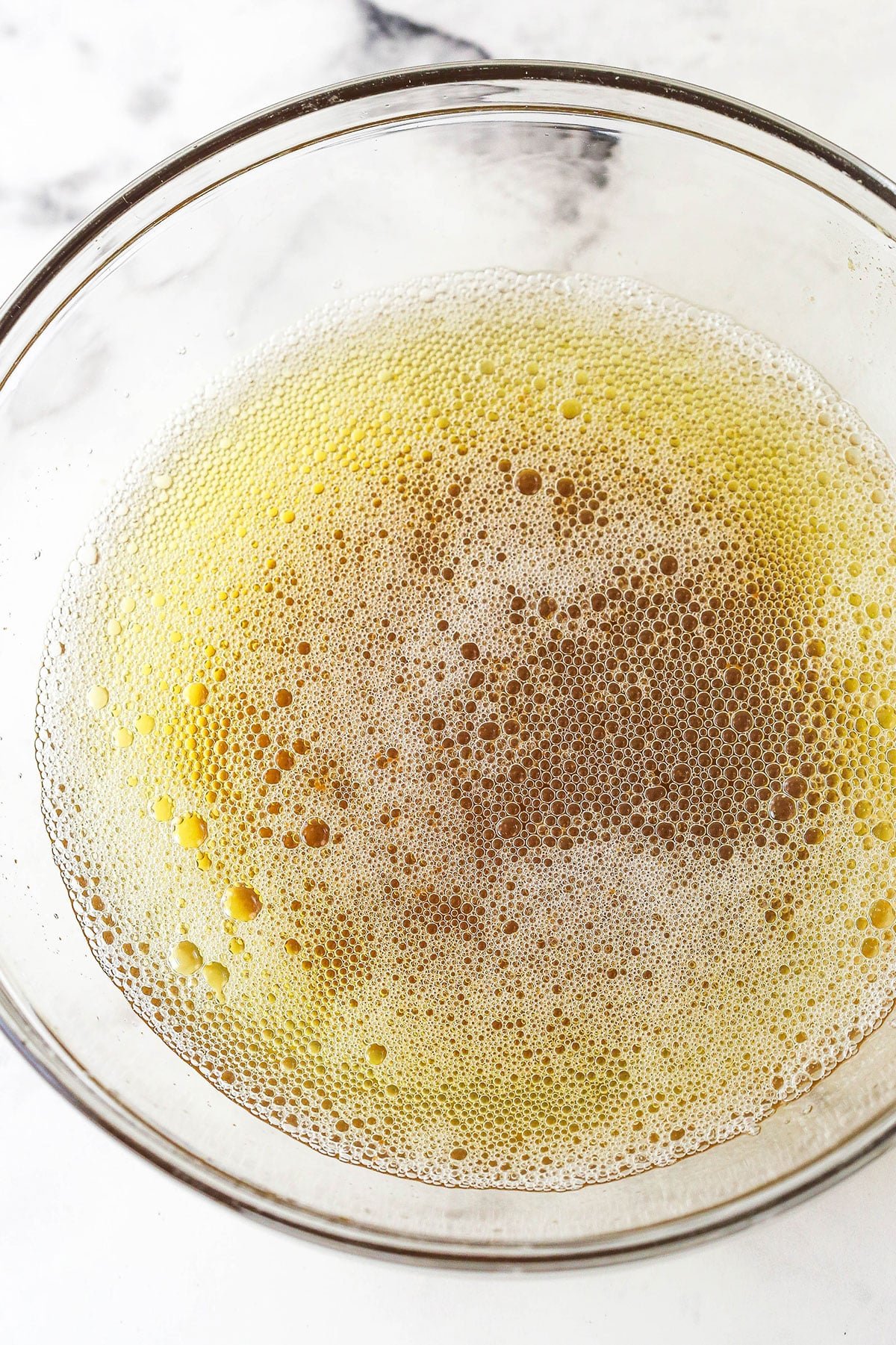
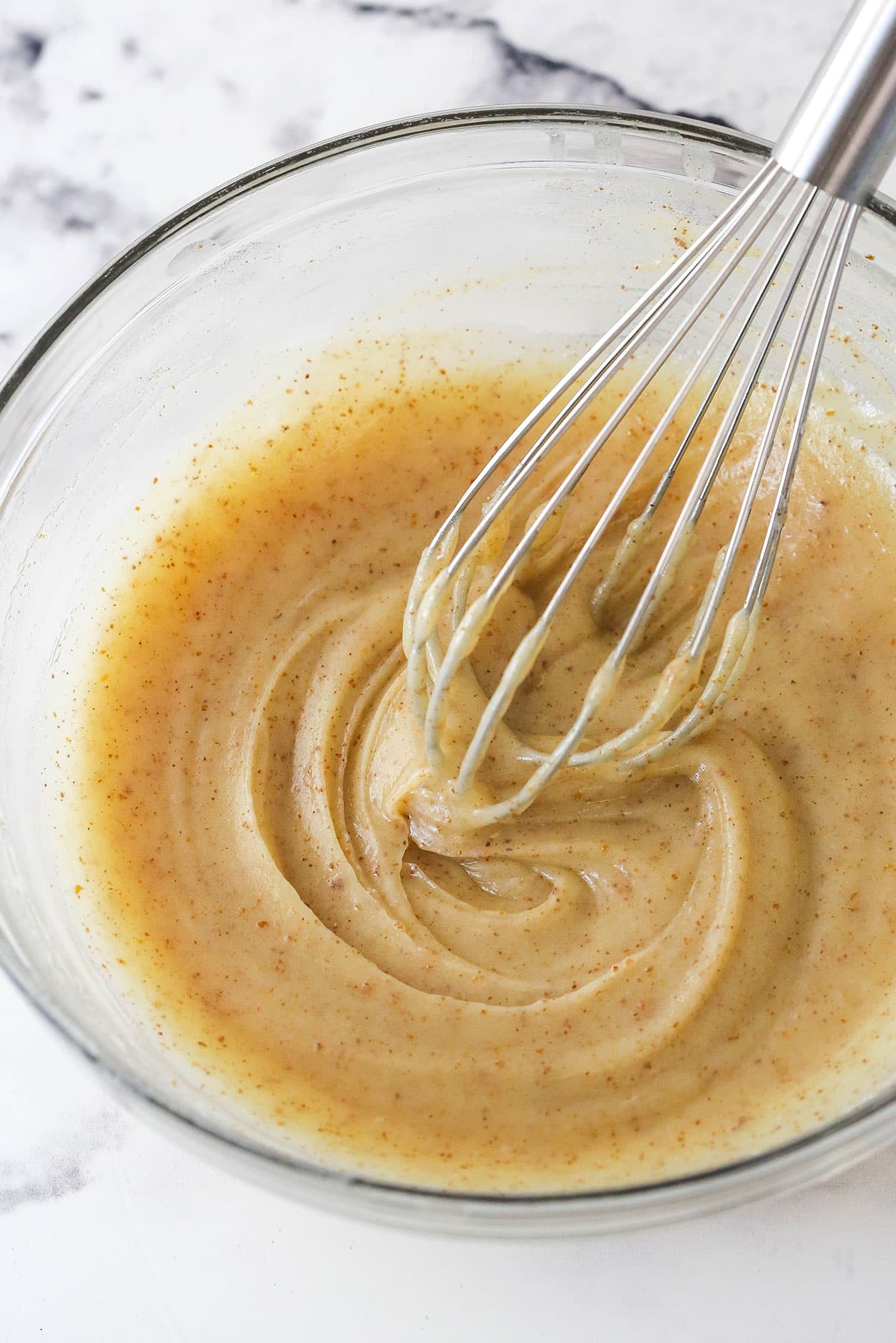
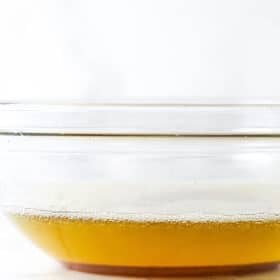
Immediately remove from the heat and pour the brown butter into a bowl. Set aside to cool to room temperature (or just slightly warmer). It will thicken as it cools and become more solid, but soft, at room temperature. If you want to prep the brown butter ahead, you can refrigerate it and bring it room temperature before using it.
Tips For Browning Butter
- Don’t walk away from the pan – It’ll brown quickly once it starts to brown. If you walk away, it can easily burn.
- Don’t stop stirring – This ensures the butter browns evenly and helps it not burn. It also helps you to see when it begins browning.
- Use a light-colored pan – It’s hard to see the butter browning with a dark pan.
- Pour into bowl immediately – Once it’s brown, add to another bowl. Don’t let it sit in the pan or it’ll continue to cook, and burn.
How to Use Brown Butter
You can use brown butter in so many things – cakes, cookies, frostings and more! You can even use it in savory recipes. Here are a few ways to use it:
- Bake it into Brown Butter Pecan Cheesecake
- Use it in buttercream.
- Drizzle it over steak.
- Stir it into mashed potatoes.
- Stir it into pasta sauce.
- Toss it with vegetables.
Frequently Asked Questions
Can Brown Butter Burn?
Yes, it can. If the brown bits cook for too long and turn more of a black color, it has burned and the flavor will be more bitter and unappealing. To avoid burned butter, don’t stop stirring and don’t walk away from the stove. Once it has browned, immediately pour it into a bowl, so it doesn’t continue cooking.
Does Brown Butter Lose Moisture?
Yes, it does. Because the water in the butter evaporates while it cooks, you lose about 20-25% of your butter volume and moisture. Depending on what you’re using your brown butter for, you can offset the loss by browning additional butter. If you need half a cup of brown butter, brown an additional 2 tablespoons, which is 25% of half a cup.
Can I Use Brown Butter Instead of Regular Butter?
You can, but keep in mind the above note that brown butter loses moisture and volume. You’ll want to make additional butter to offset the loss. Depending on what you’re making, that also may not be enough. You could also try adding a little milk to whatever your making. In cookies, I sometimes add an additional egg yolk. If you need to cream the butter with sugar, you’ll want to let it come to room temperature first. It gets quite firm when cold.
How To Brown Butter
save this recipe
Enter your email & we’ll send it to your inbox. Plus get new recipes from us every week!
Ingredients
- 1/2 cup (112g) butter (salted or unsalted)
Instructions
- Note: The butter will brown quickly once it starts to turn brown, so don’t walk away from the stove. Have a bowl ready to pour it into once it’s done, so it doesn’t continue to cook and burn.
- Add the butter to a light-colored pan over medium-low heat and allow to melt, stirring continuously. Turn the heat up to medium and allow it to come to a boil, again stirring constantly.
- The butter will change as it boils, finally getting a dense foam on top once the water has all evaporated. Stir constantly so that the butter browns evenly and milk solids don’t settle on the bottom of the pan and burn. Stirring also allows you to see through the foam to see when the butter starts to brown. The foam will subside a bit and you’ll notice brown bits on the bottom of the pan. It’ll smell buttery and nutty. I like to stir a touch longer to get plenty of brown bits, just be careful not to burn it (keep stirring!).
- Immediately remove from the heat and pour the brown butter into a heatproof bowl. Set aside to cool to room temperature (or just slightly warmer). It will thicken as it cools and become more solid, but soft, at room temperature. If you want to prep the brown butter ahead, you can refrigerate it and bring it room temperature before using it.
Notes
- Prep ahead – You can prepare brown butter ahead of time. Since butter is solid at room temperature, the browned butter will firm up. It’s also quite firm when cold. Cover and store in the refrigerator for up to 1 week or in the freezer for up to 3 months. Melt or bring to room temperature before using in your recipe.
- Amount – The recipe lists 1/2 cup of butter, but use however much you need for your recipe. Keep in mind the notes in the post above about losing volume. You may want to make more than needed.
The nutrition facts provided are calculated using a third-party tool and are estimates only. Actual nutritional content may vary based on the ingredients and brands you use, as well as portion sizes. For accurate results, please consult a registered dietitian or nutritionist.













Great Post.
Thanks!