

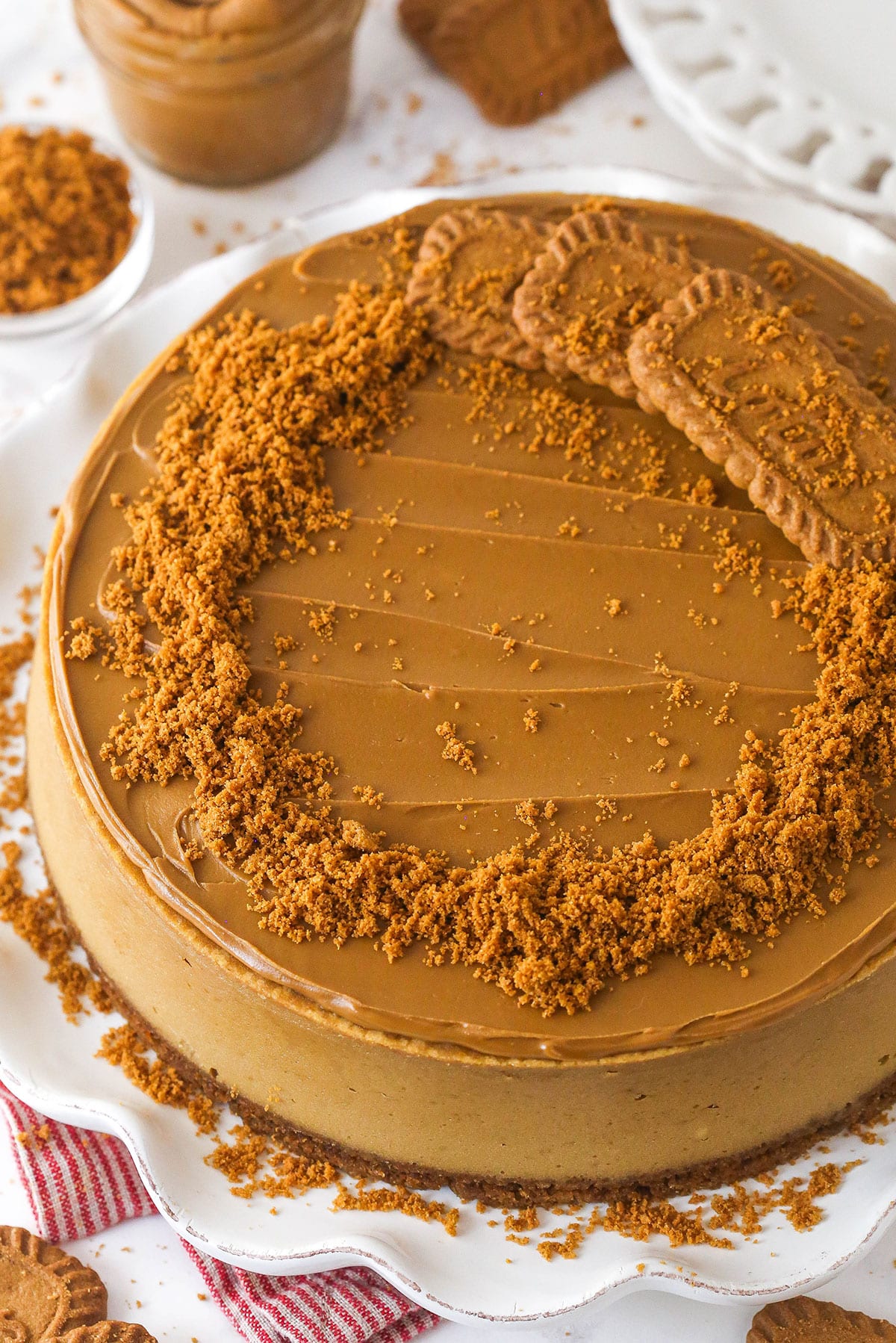
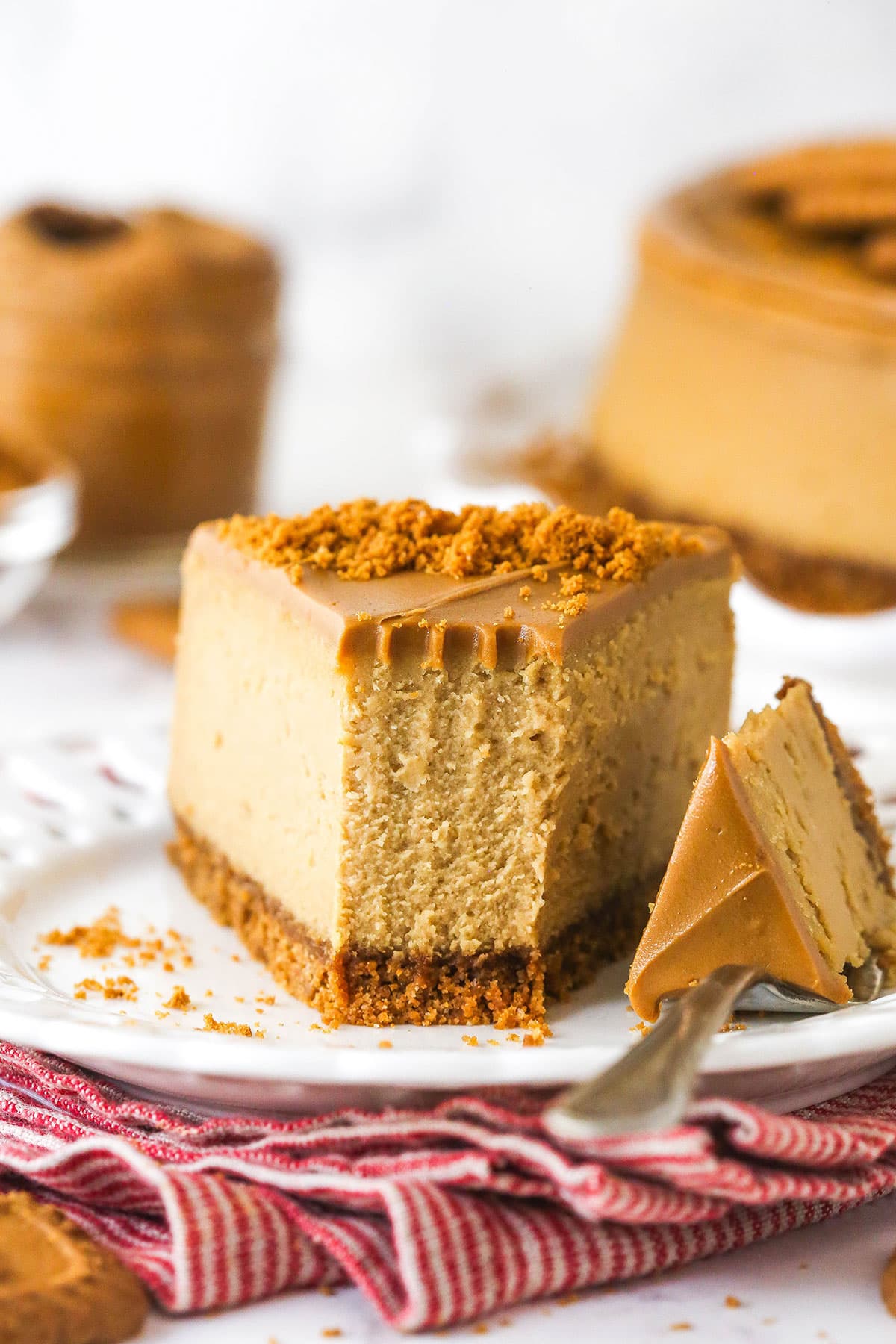
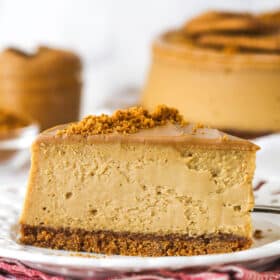
This thick and creamy Biscoff cheesecake is loaded with Biscoff cookie spread and baked in a Biscoff cookie crust. Every bite is filled with that warm, spiced cookie flavor. Simple and straightforward to make, this is an easy cheesecake recipe that’s sure to impress!
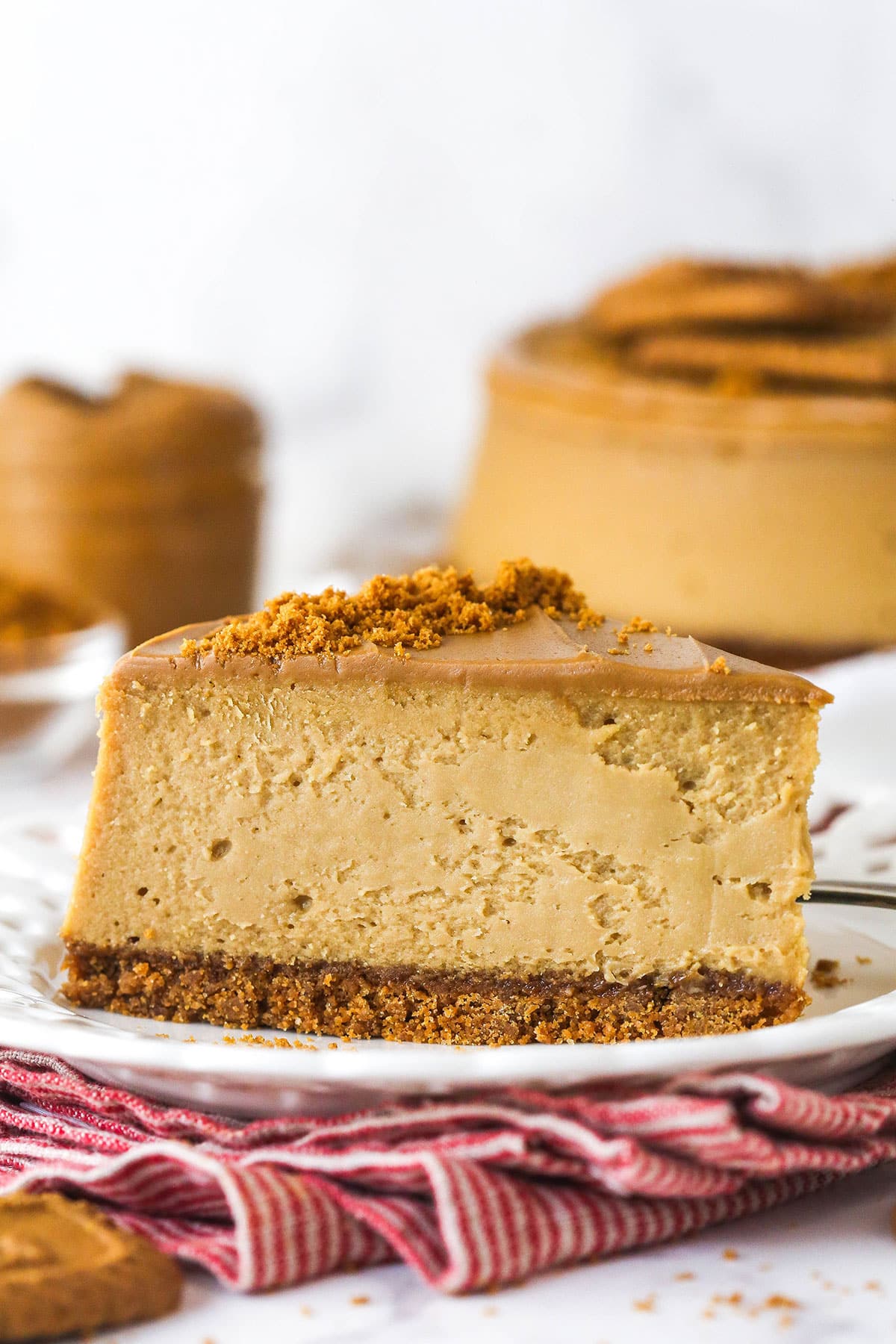
Biscoff, the spiced shortbread cookies often given out on planes, has really taken off in recent years. The company now makes Biscoff cookie spread, which is a bit like Nutella but with a buttery spiced cinnamon flavor. It’s so good! And, like Nutella, it makes an excellent addition to desserts. I’ve even combined the two before, to make Nutella Biscoff Icebox Cake.
This Biscoff cheesecake is made with both Biscoff cookies and the cookie spread. I wanted it to taste just like the cookies, with a rich spiced flavor. I did some testing to find just the right amount of Biscoff cookie spread and landed on 1 ½ cups. Less barely provided any Biscoff flavor, but more wasn’t necessary, and it started to negatively affect the texture. And then, of course, there’s the Biscoff cookie crust (which is basically a graham cracker crust but with Biscoff cookies instead of graham crackers) and even more cookie spread and crumbs on top of the cheesecake.
If you love Biscoff, you will come back to this cheesecake over and over. It’s so hard to resist the amazing flavor and relative simplicity.

Why I’m Obsessed With This Biscoff Cheesecake Recipe
- Tastes just like the cookies. This cheesecake truly tastes just like the cookies. I mean, how could it not when the crust is made from cookie crumbs, there’s a generous amount of cookie spread in the filling, and even more crumbs and cookie spread on top?!
- Simple to make. Biscoff cheesecake is a great entry point for anyone who has never made a cheesecake before. The simplicity reminds me a lot of my peanut butter cheesecake, which is very similar but obviously made with peanut butter instead of Biscoff. Plus, the Biscoff spread on top will hide any cracks or imperfections, so you don’t have to worry about it looking perfect.
- Unexpected flavor. Even though Biscoff has become more popular recently, it’s still not the first flavor most people think of. If you offer to bring cheesecake, they’re probably expecting New York style cheesecake or maybe chocolate cheesecake. I love to surprise people with this Biscoff cheesecake. Even if they’ve never tried Biscoff before, they end up loving the flavor!
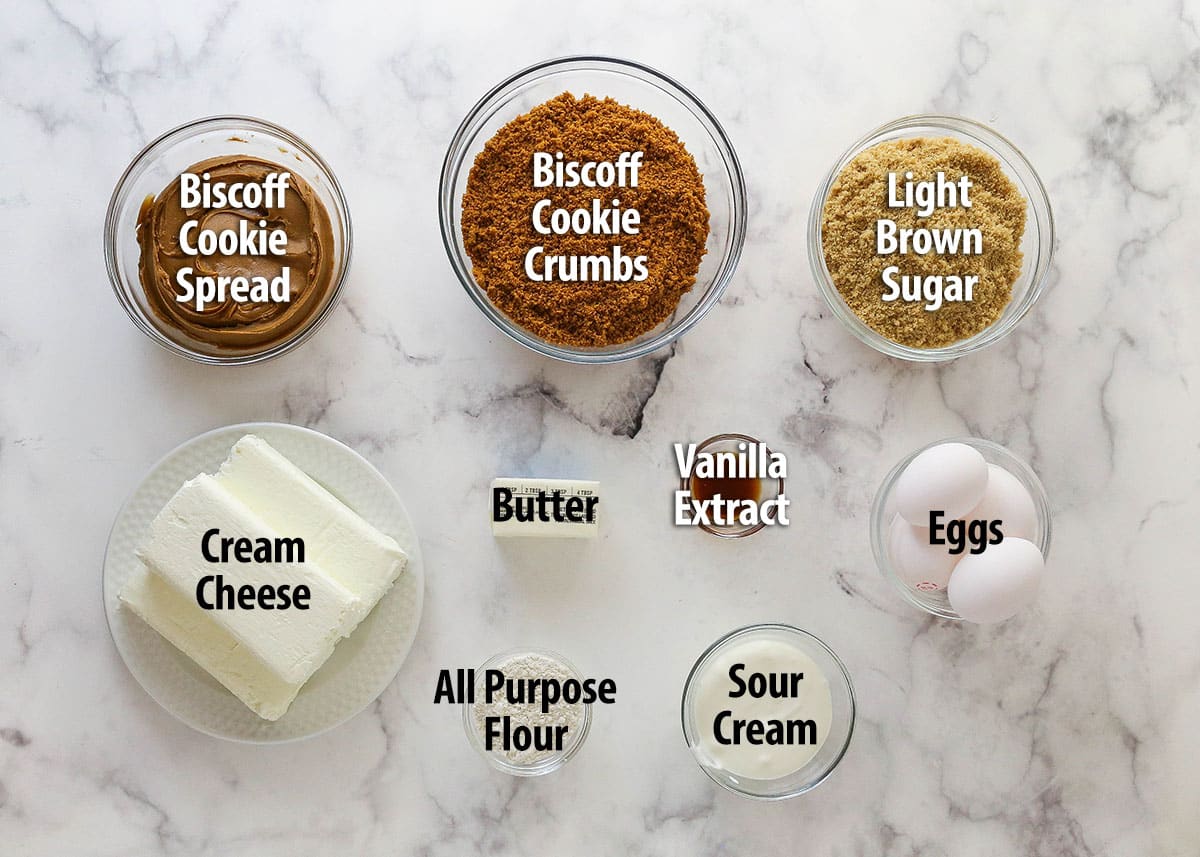
Key Ingredients
Besides the addition of the Biscoff, the ingredients in this recipe are pretty typical for any cheesecake. Let’s take a look at what you’ll need. (The exact measurements can be found in the recipe card below.)
Crust
- Biscoff cookie crumbs – The easiest way to make the crumbs is to put the cookies in a food processor and pulse them into fine crumbs. You can also put the cookies in a ziploc bag and use a rolling pin to crush them, but the crumbs tend not to be so uniform this way.
- Light brown sugar – The molasses in the brown sugar pairs nicely with the spiced cookie crumbs.
- Butter – Melted unsalted butter helps hold the crumbs together to form the crust.
Filling & Topping
- Cream cheese – Always use full-fat brick-style cream cheese for cheesecakes. Low-fat or the kind in containers is too soft for cheesecake. It should be at room temperature for easy mixing.
- Biscoff cookie spread – This is what really adds the Biscoff flavor to the cheesecake. The spread is also used on top of the cheesecake.
- Light brown sugar – Again, I opted for light brown sugar here because the flavor complements the Biscoff so well.
- All-purpose flour – A small amount of flour in the cheesecake filling helps prevent the egg proteins from overcoagulating, which results in a smoother, creamier texture.
- Sour cream – Adds tangy flavor to the filling and helps break up the overall richness, while making the filling extra smooth.
- Vanilla extract – A small amount of vanilla adds more flavor to the cheesecake filling.
- Eggs – Always use large eggs, not medium or small. They should also be at room temperature.
- Biscoff cookie crumbs – A few extra crumbs are sprinkled on top of the cheesecake for an extra bit of flavor and presentation.
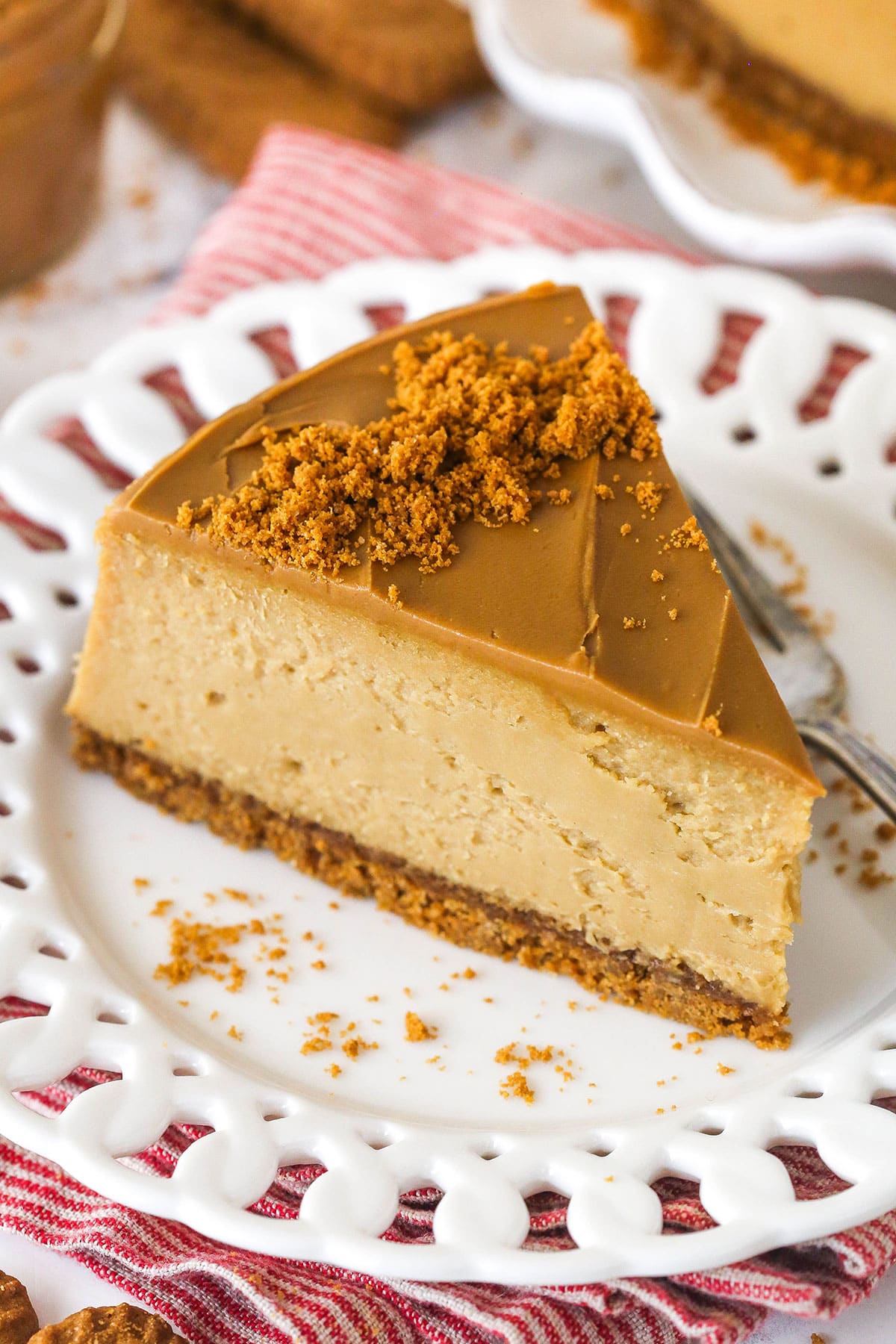
How To Make Biscoff Cheesecake
Let’s take a look at how to make this cheesecake. The printable instructions can be found in the recipe card below.
Make the crust
Preheat oven to 325°F (163°C). Line a 9-inch (23cm) springform pan with parchment paper in the bottom and grease the sides.
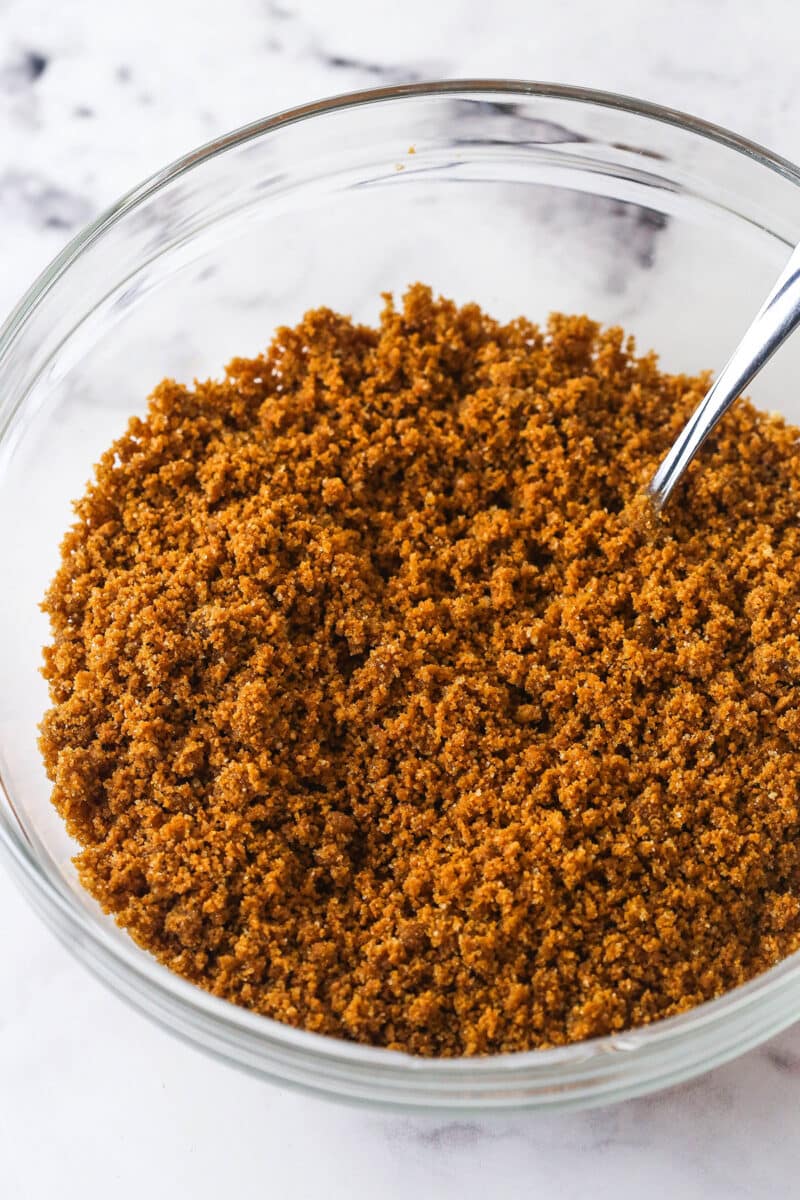
Combine the crust ingredients in a bowl.
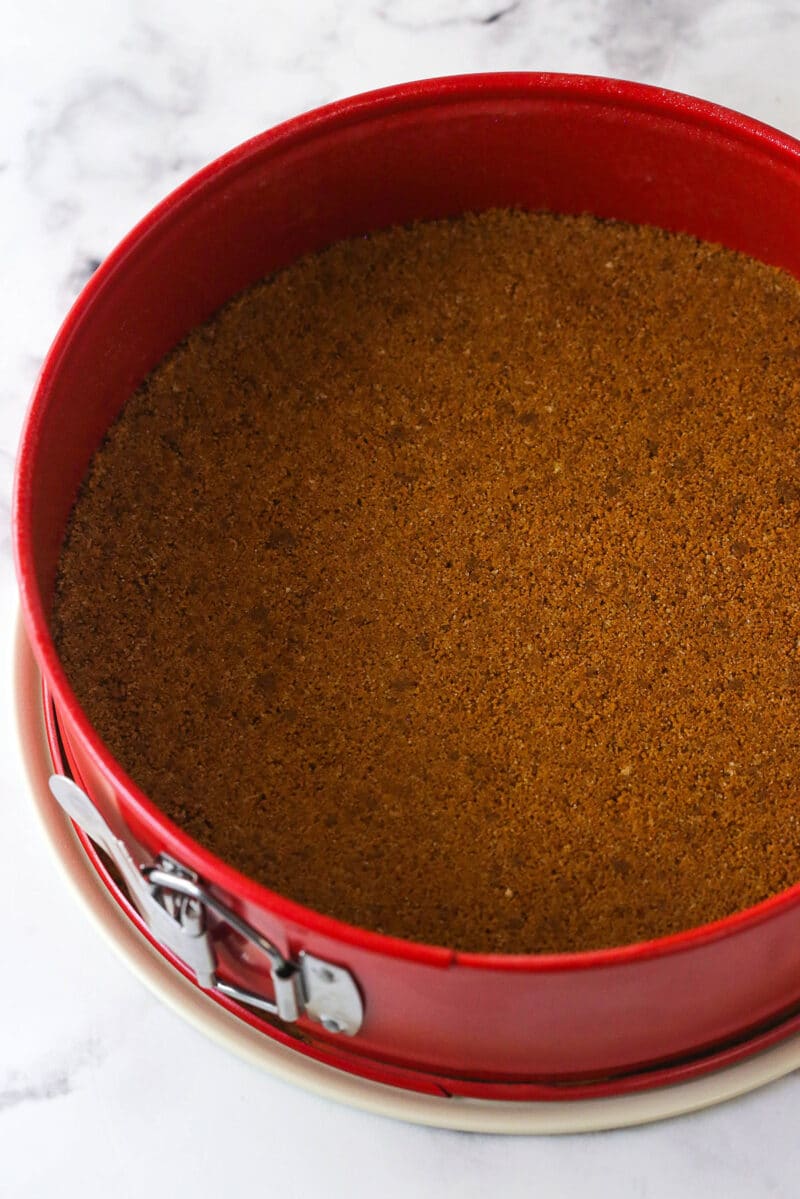
Press the crumbs into the bottom of a springform pan. Bake for 7-9 minutes. Prepare the pan for a water bath. Set aside.
Make the cheesecake and decorate
Reduce oven temperature to 300°F (148°C).
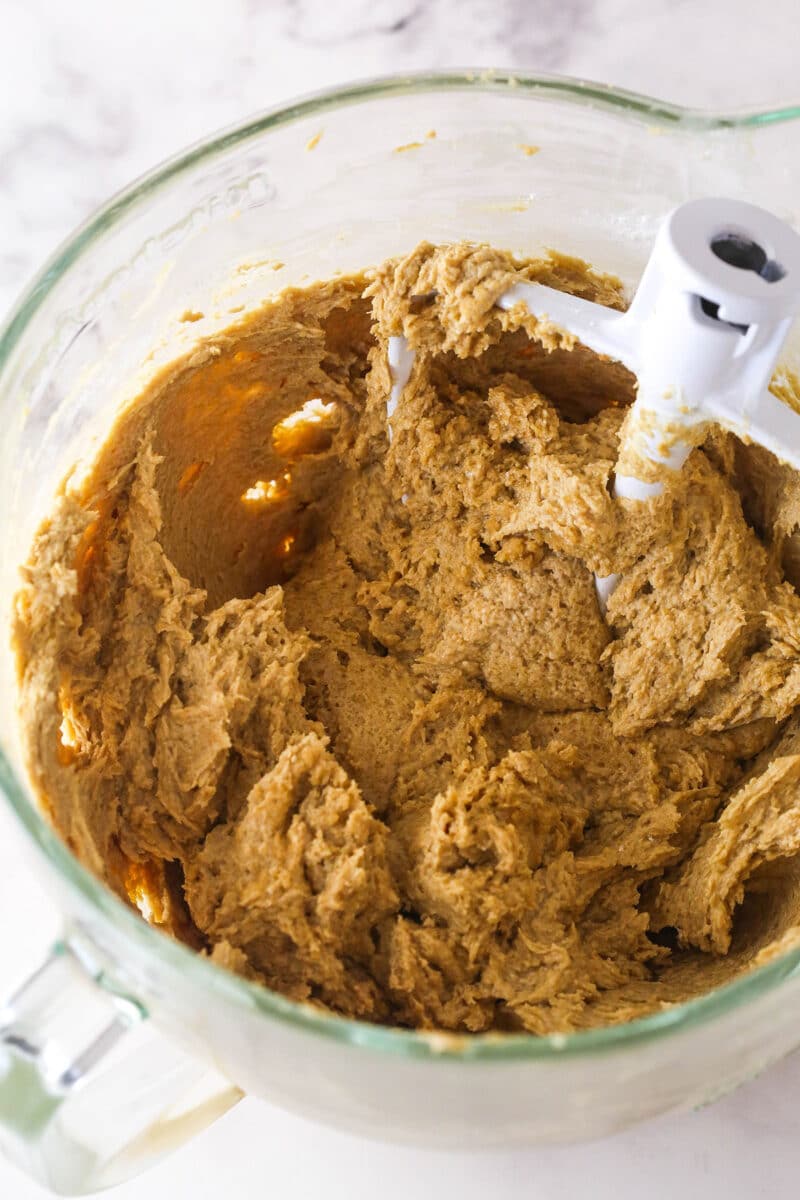
Beat the cream cheese and Biscoff on low speed.
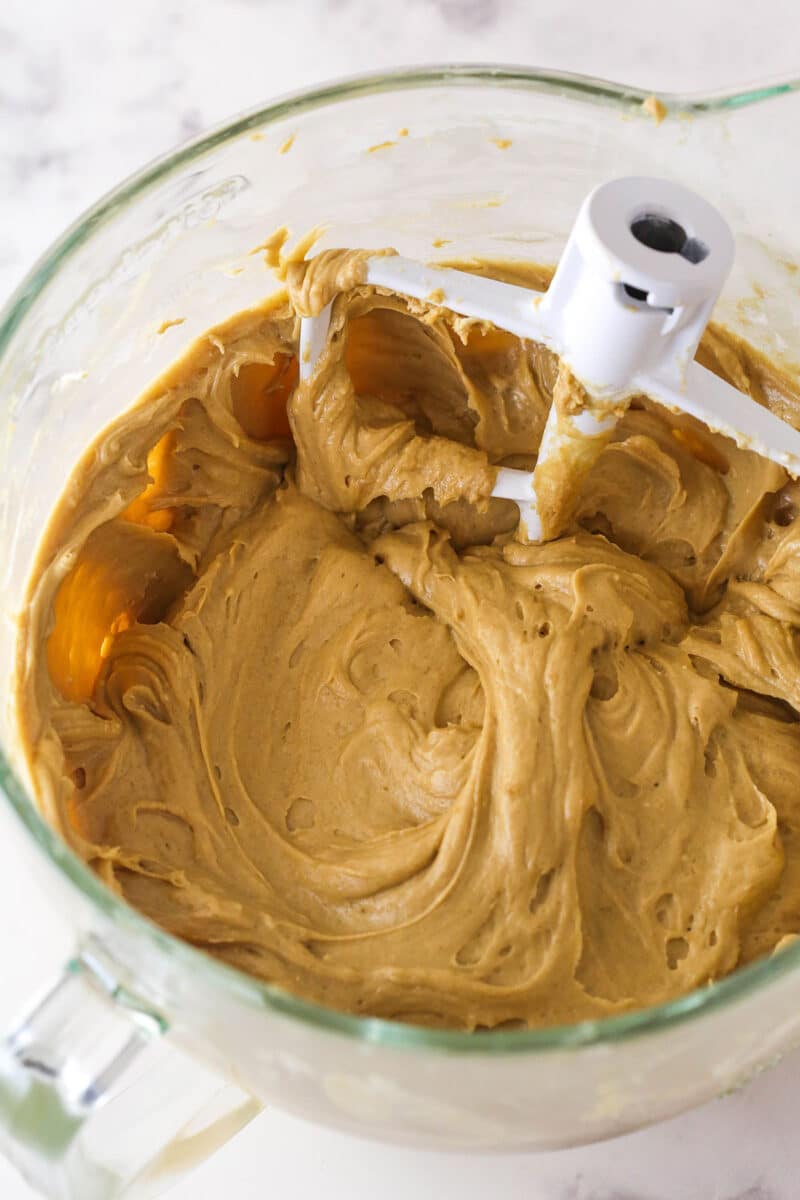
Mix in the brown sugar and flour, followed by the sour cream and vanilla extract.
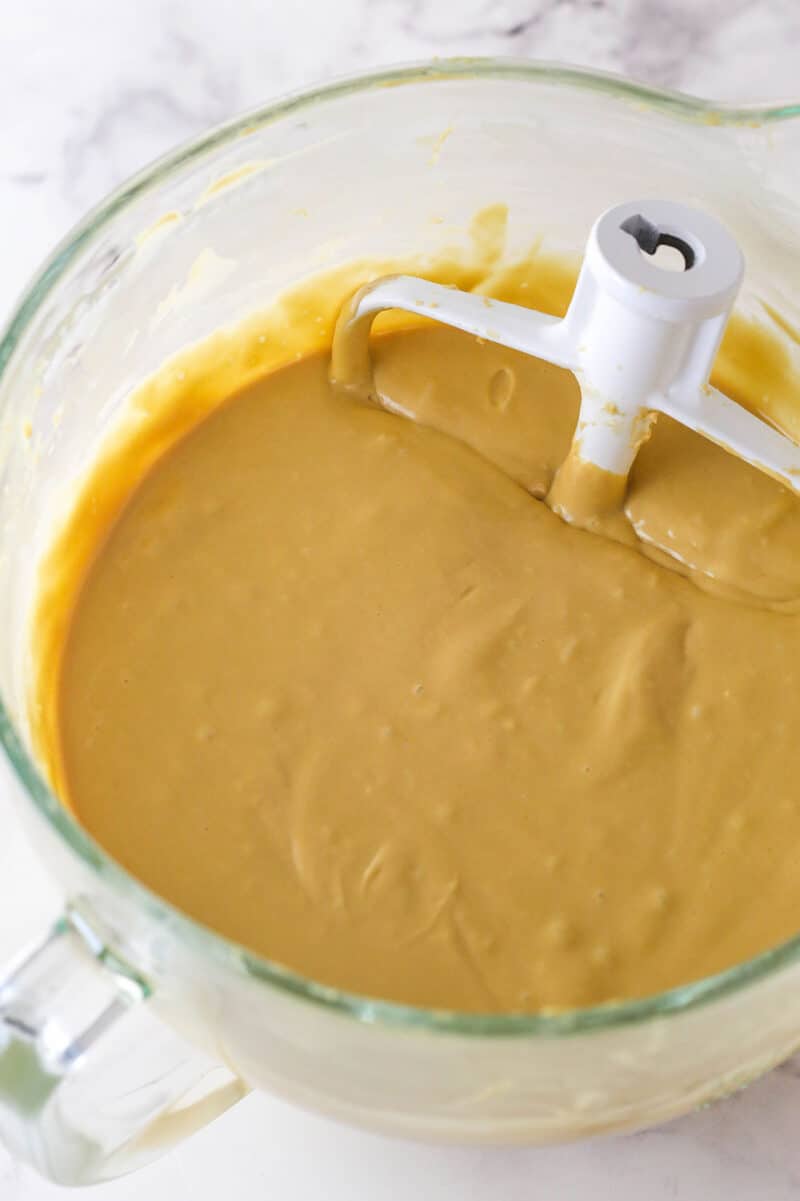
Mix in the eggs one at a time. Scrape down the sides of the bowl.
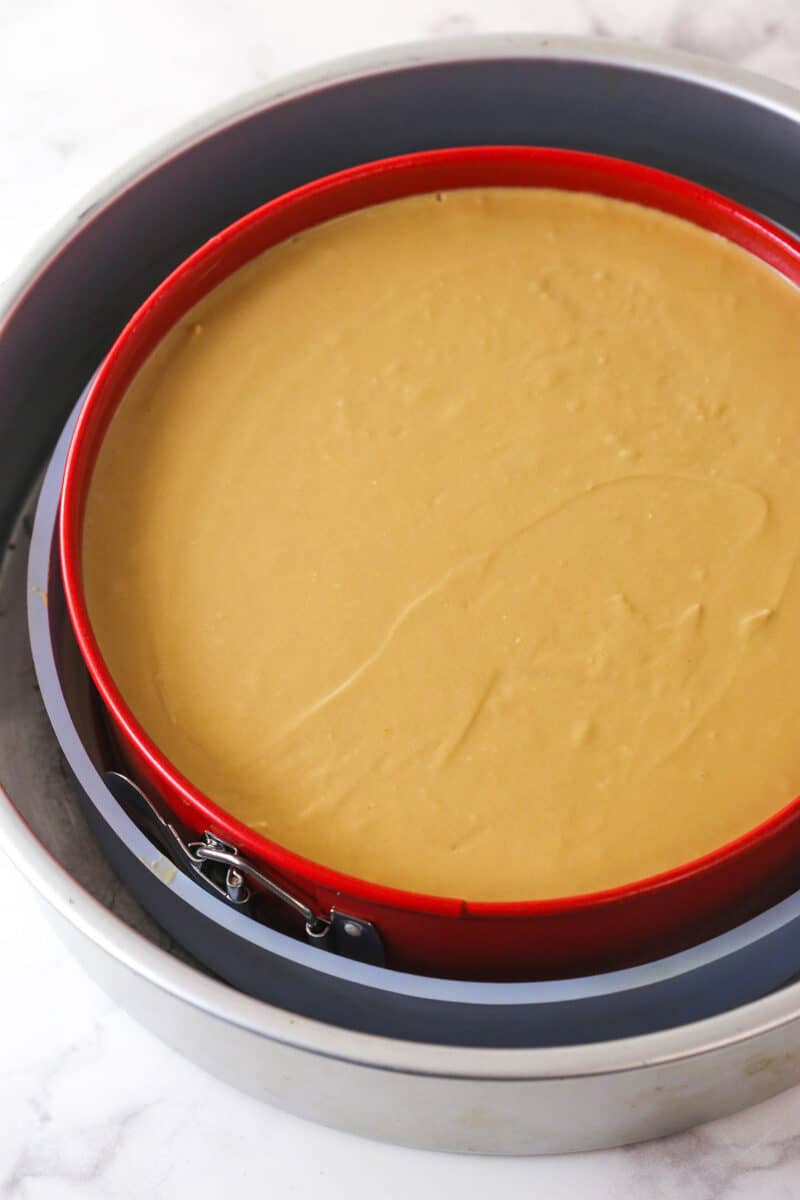
Transfer the filling to the prepared springform pan. Bake for 1 hour and 25 minutes.
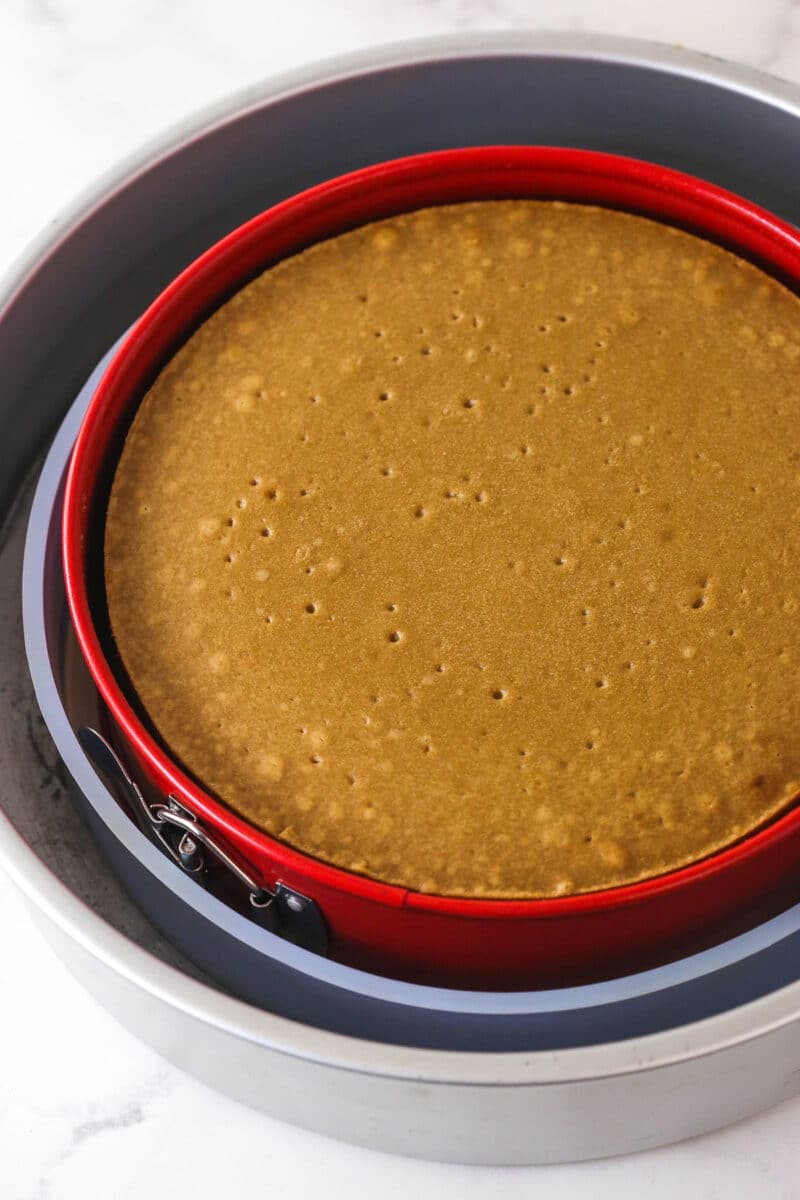
Cool for 30 minutes in the oven with the door closed, then crack the door and continue cooling for 30 minutes. Remove from the water bath and refrigerate for 5-6 hours.
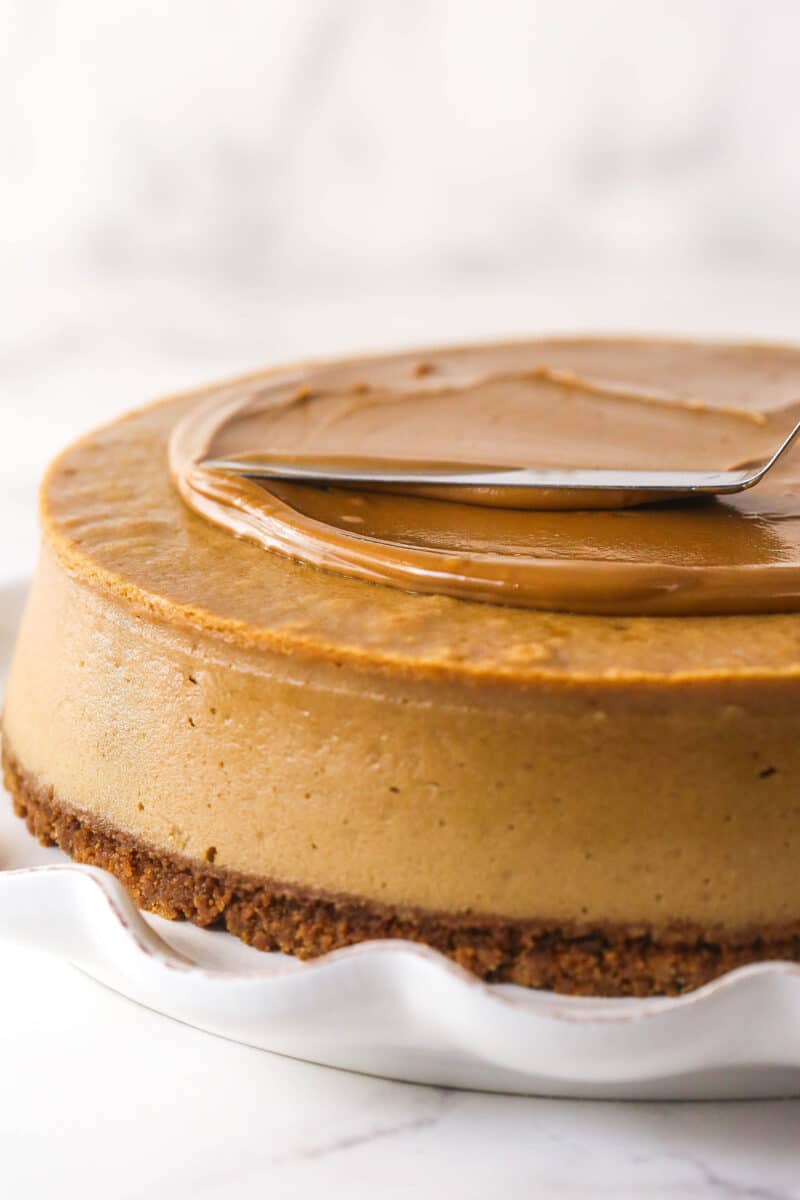
Remove the cheesecake from the springform pan. Warm the cookie butter in the microwave for 15-20 seconds. Spread evenly on top of the cheesecake. Sprinkle with extra cookie crumbs and a few cookies, if desired.
Tips for the Perfect Cheesecake
As I mentioned above, this Biscoff cheesecake is pretty simple to make and is great for those who are new to making cheesecake. Below are some of my best tips for perfecting this recipe.
- Use a springform pan. Baking this Biscoff cheesecake (or any cheesecake) in a springform pan will make your life much easier. Removing a cheesecake from a springform pan is much simpler than any other pan and ensures a beautiful presentation.
- Mix on low. When incorporating the ingredients for the cheesecake filling, keep the mixer on low. Higher speeds allow more air into the mixture, which can result in cracks.
- Don’t skip the water bath. A water bath is key to an evenly baked cheesecake. Without it, the cheesecake is likely to collapse in the center, brown too much, and crack. The good news is that it’s easier than you think! See more on how I prepare my cheesecake water baths.
- Avoid over-baking. Keep in mind that the cheesecake should still be jiggly in the center when the oven is turned off, because it will continue to set as it cools. If it’s completely solid, the cheesecake is likely over-cooked. Check out my post on How to Tell When Your Cheesecake Is Done for more information.
- Cool gradually. For a perfectly baked cheesecake with no cracks, it’s important to let it cool in stages. First, turn off the oven and leave the cheesecake there, with the door cracked for about 30 minutes. Then, crack the door with the cheesecake in the oven for another 30 minutes. Finally, remove it from the oven and the water bath and refrigerate for 5-6 hours.
Proper Storage
I have an entire post on how to store cheesecake with all of my best tips and practices. But, here’s an overview of how to store this Biscoff cheesecake.
- Fridge – Store leftover Biscoff cheesecake in the fridge for 4-5 days. It should be kept well-covered, either with plastic wrap (use toothpicks to keep it off the topping) or in a cake carrier.
- Freezer – Freeze the cheesecake (or slices) for an hour or two to completely solidify. Then, wrap it in a layer of plastic wrap and a layer of foil. Freeze for up to 3 months, then thaw in the fridge. Keep in mind that the cookie crumbs on top will be very soft after freezing.
More Cheesecake Recipes
Biscoff Cheesecake
save this recipe
Enter your email & we’ll send it to your inbox. Plus get new recipes from us every week!
Ingredients
Crust
- 1 ¾ cups (235g) Biscoff cookie crumbs (29-30 cookies, one 8.8oz package )
- ¼ cup (56g) packed light brown sugar
- ¼ cup (56g ) unsalted butter (melted)
Filling
- 24 ounces (678g) cream cheese (room temperature)
- 1 ½ cups (360g) Biscoff cookie spread
- 1 ¼ cups (280g) light brown sugar
- 3 tablespoons (24g) all-purpose flour
- ½ cup (115g) sour cream
- 1 teaspoon vanilla extract
- 4 large eggs (room temperature)
Topping
- ½ cup (120g) Biscoff cookie spread
- Biscoff cookie crumbs
Instructions
Make the crust
- Preheat oven to 325°F (163°C). Line a 9-inch (23cm) springform pan with parchment paper in the bottom and grease the sides.
- Combine the crust ingredients in a small bowl. Press the mixture into the bottom of the springform pan.
- Bake the crust for 7-9 minutes, then set aside to cool.
- Cover the outsides of the pan with aluminum foil (or use a silicon pan) so that water from the water bath cannot get in (see how I prepare a pan for a water bath). Set prepared pan aside.
Make the cheesecake
- Reduce oven temperature to 300°F (148°C).
- In a large bowl, beat the cream cheese and Biscoff on low speed until well combined and smooth. Be sure to use low speed to reduce the amount of air added to the batter, which can cause cracks. Scrape down the sides of the bowl.
- Add the brown sugar and flour and mix until well combined and smooth.
- Add the sour cream and vanilla extract and mix on low speed until well combined.
- Add the eggs one at a time, mixing slowly to combine after each addition. Scrape down the sides of the bowl as needed to make sure everything is well combined.
- Pour the cheesecake batter into the crust and spread evenly. Place the prepped springform pan inside another larger pan. Fill the outside pan with enough warm water to go about halfway up the sides of the springform pan. The water should not go above the top edge of the aluminum foil (or silicon pan) on the springform pan.
- Bake for 1 hour 25 minutes. The center should be set, but still jiggly. See how to tell when your cheesecake is done baking.
- Turn off the oven and leave the door closed for 30 minutes. The cheesecake will continue to cook, but slowly begin to cool as well.
- Crack the door of the oven for 30 minutes to allow the cheesecake to continue to cool slowly. This process helps prevent cracking.
- Remove the cheesecake from the oven and water bath wrapping and refrigerate until firm, 5-6 hours or overnight.
Decorate and serve
- When the cheesecake is cool and firm, remove the cheesecake from the springform pan and place on a serving plate.
- Add the Biscoff cookie spread for the topping to a small microwaveable bowl and heat for 15-20 seconds, or until just pourable. Pour the cookie spread over the top of the cheesecake and spread evenly.
- Sprinkle some additional cookie crumbs around the edge of the cheesecake and add a few cookies, if desired, then refrigerate until ready to serve. Cheesecake is best stored well-covered in the fridge and eaten within 4-5 days.
Notes
- Cream cheese – Always use full-fat brick-style cream cheese for cheesecakes. Low-fat or the kind in containers is too soft for cheesecake. It should be at room temperature for easy mixing.
- Biscoff cookie crumbs – The easiest way to make the crumbs is to put the cookies in a food processor and pulse them into fine crumbs. You can also put the cookies in a ziploc bag and use a rolling pin to crush them, but the crumbs tend not to be so uniform this way.
- Avoid over-baking – Keep in mind that the cheesecake should still be jiggly in the center when the oven is turned off, because it will continue to set as it cools. If it’s completely solid, the cheesecake is likely over-baked. Check out my post on How to Tell When Your Cheesecake Is Done for more information.
Nutrition
The nutrition facts provided are calculated using a third-party tool and are estimates only. Actual nutritional content may vary based on the ingredients and brands you use, as well as portion sizes. For accurate results, please consult a registered dietitian or nutritionist.













Hi Lindsay, i want to use this recipe to bake in 8 inch springform pan. I want cheesecake to be about 3 inches tall. Do you think making 1.5 of the recipe will work? Or 1 batch is fine?
I haven’t made an 8 inch, so it’s hard to say for sure. I’m guessing just making this in the smaller 8 inch pan would be enough, but I’m not sure. I think 1.5 recipes worth would be too much.
made this Saturday night, was a big hit……and very easy to make.
really delicious. Thank you
I’m so glad you enjoyed it!