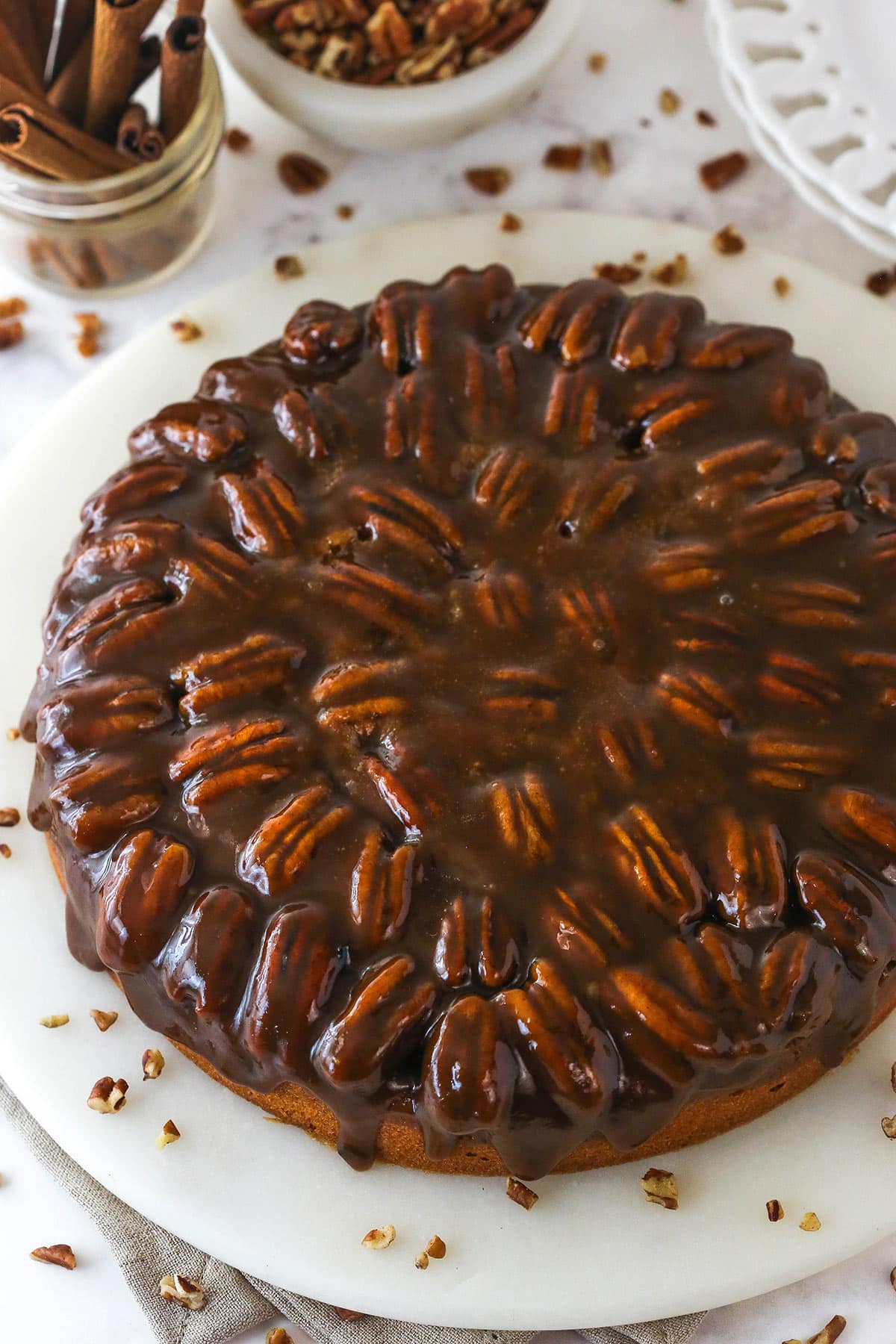
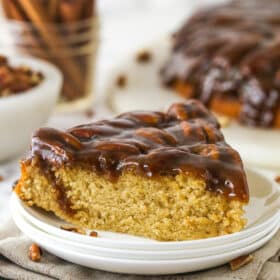
With a moist, lightly spiced cake topped with a gooey pecan topping, this pecan upside down cake is perfect for fall, winter, and all the holidays! It’s an easy alternative to pecan pie while still satisfying that craving. Just be sure to read all my tips to ensure it doesn’t stick to the pan!
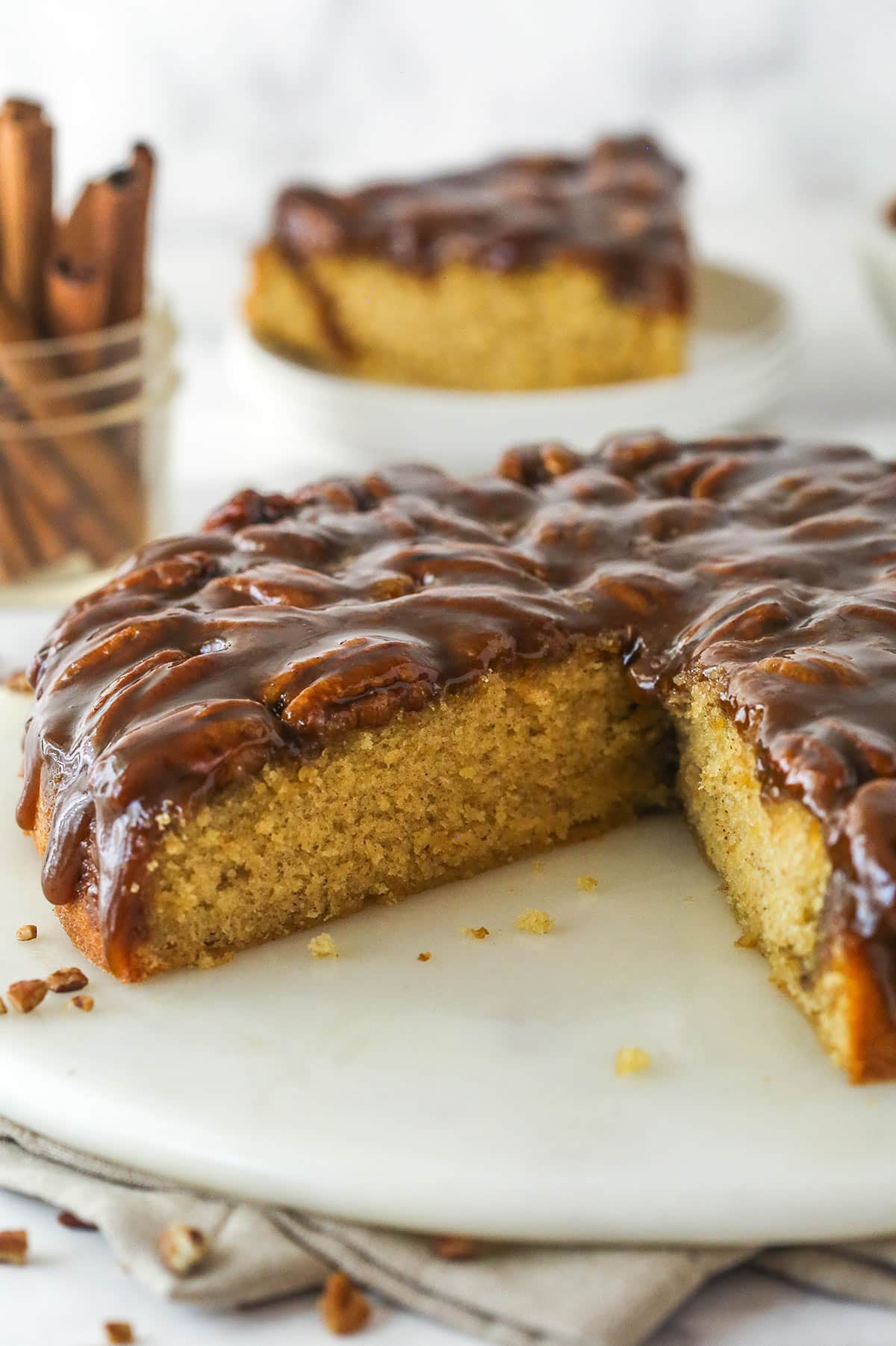
I love upside-down cake recipes, like my pineapple upside down cake and apple upside down cake. They are great, in part, because they always have a lovely presentation that bakes right into the top of the cake as it bakes. So beautiful and easy to do! This pecan upside down cake is a fun flavor twist that reminds me of pecan pie, but in cake form. The cake itself is so tender, with amazing spiced flavor, paired with a warm, gooey pecan topping – it’s SO good! If you love pecans, this is a recipe you can’t miss!
The trickiest part of this pecan upside down cake is making sure the topping doesn’t stick to the pan. While sticking is typically something to be careful of with an upside down cake, it’s much more of a problem in this cake. The fruit in other upside down cakes adds additional moisture that helps the sugary topping not stick quite to badly. Without that moisture, the topping candies a bit, and it gets very sticky. It took a good bit of testing to make the topping work. In addition to changing the topping ingredients and method up, I also used a different method of lining my pan with parchment paper to be sure it truly did not stick and waste your efforts.

Why We Love This Pecan Upside Down Cake
- The pecan topping! The pecan topping isn’t exactly the same as my pecan pie, but it has many of the same ingredients and flavor. Instead of mixing it all together, the pecans are arranged in the pan and then the creamy brown sugar mixture is boiled and poured on top as a glaze. It’s gooey and so good!
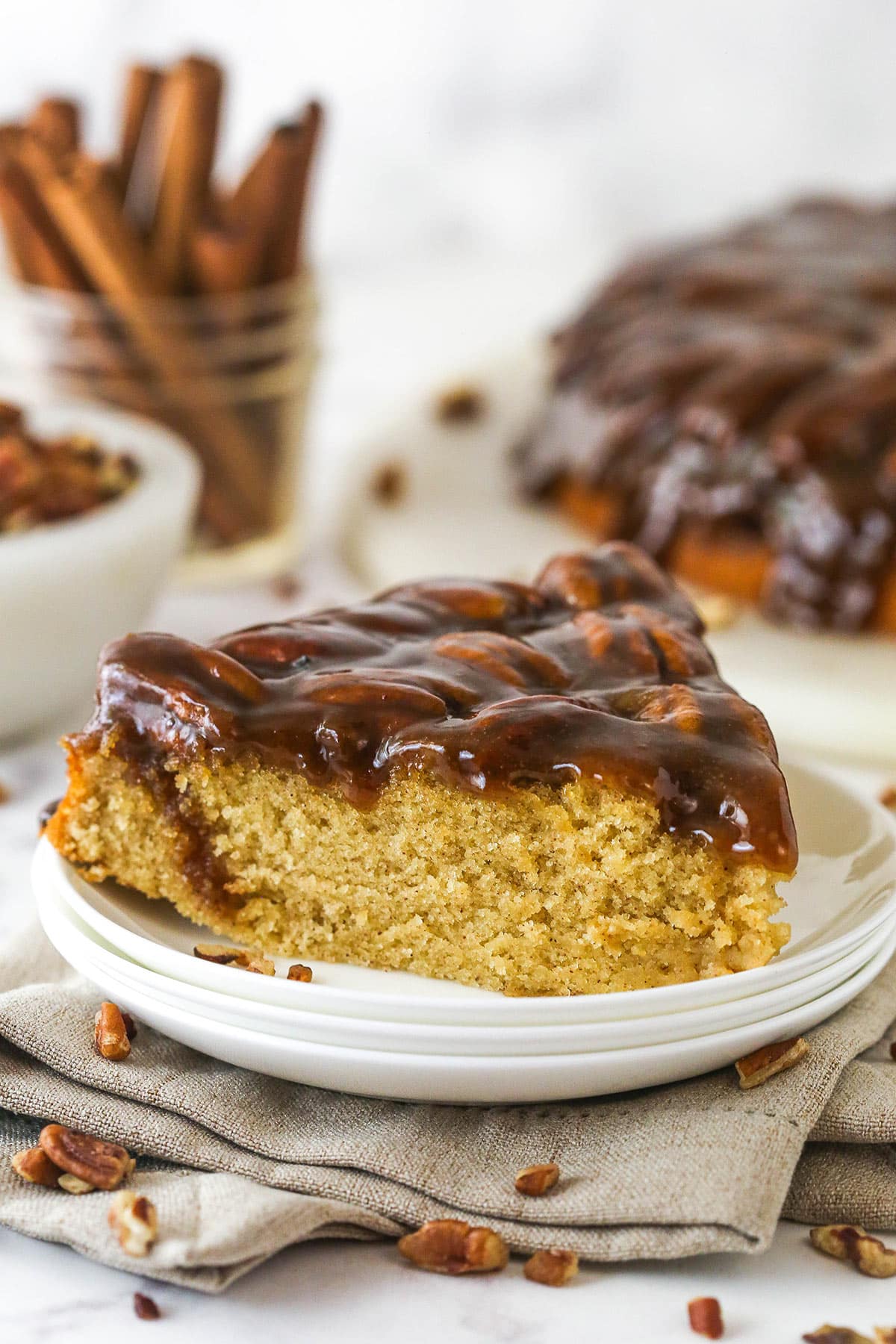
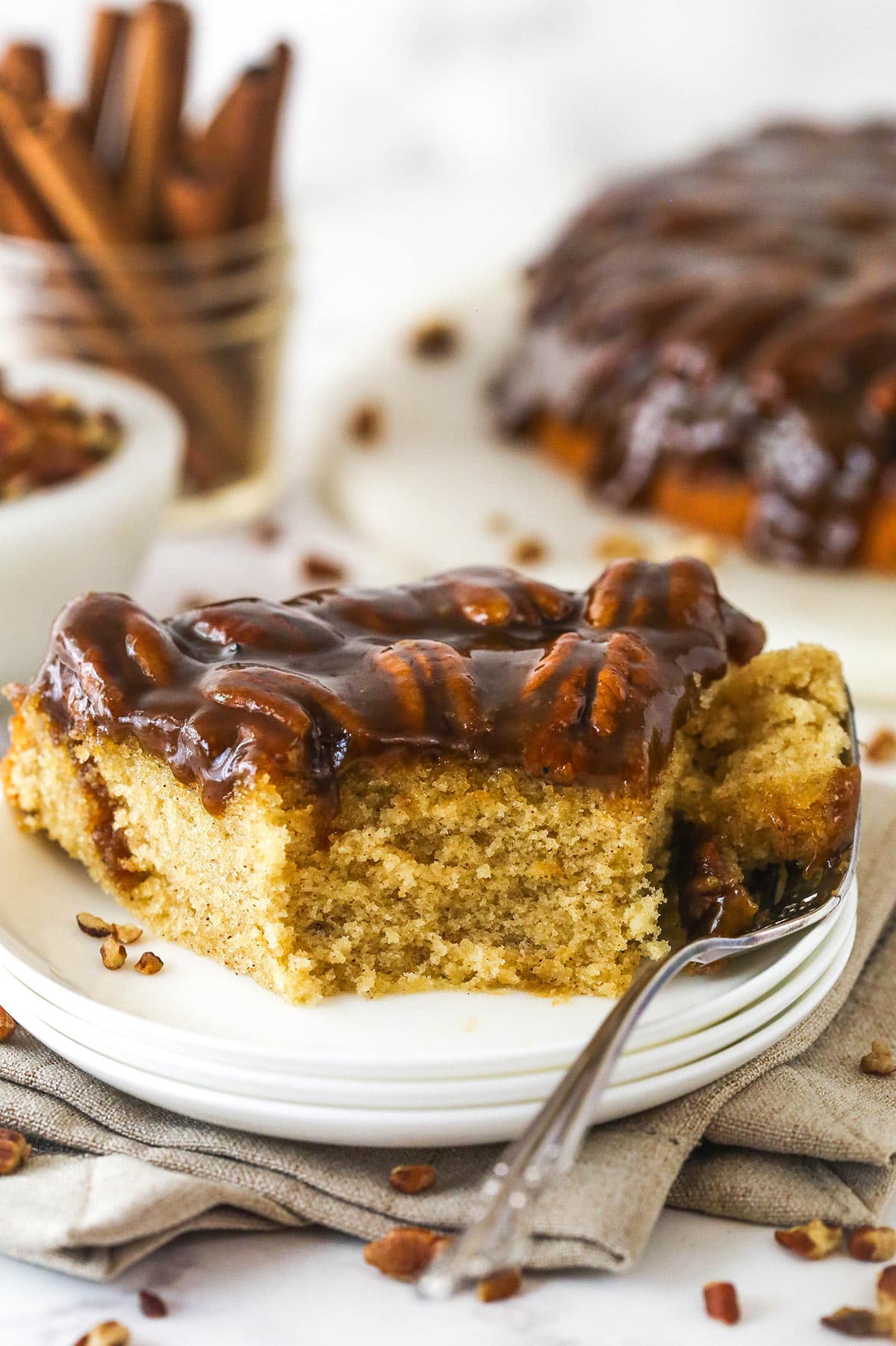
- Moist, tender cake layer. The cake layer itself has such a warm, comforting flavor to it and it just melts in your mouth – especially while warm with the warm, gooey, caramel-y topping on it.
- Elegant but easy. One of the things I love about upside down cakes in general is that they always look so fancy, but they are quite easy to make. This pecan upside down cake has the added bonus of also being a bit unexpected, because it’s not the usual fruit upside down cake.
Ingredient Notes
This upside down cake is made with pretty basic ingredients that you likely already have in the pantry, plus pecans, of course. The exact measurements can be found in the recipe card below.
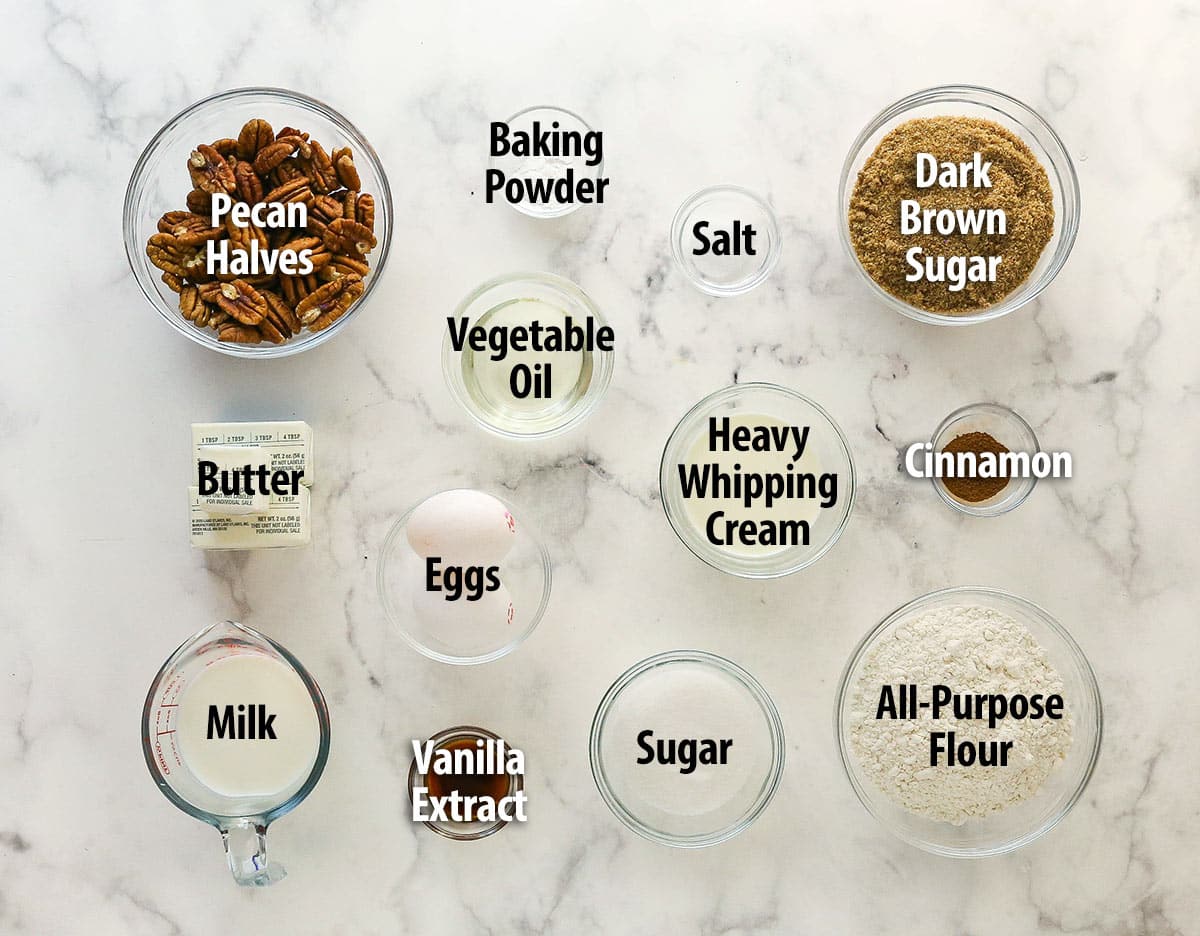
- Pecans – You may need a few more or less pecan halves, depending on their size as you make circles around the pan. You can also use chopped pecans and just create a full, even layer over the bottom of the pan. Chopped pecans are easier to slice, while circles of pecans halves make for a pretty presentation.
- Brown sugar – You can use light or dark brown sugar for both the cake and the topping. I prefer light brown in the cake and dark brown for the topping (it gives the topping more flavor). But if you want to use the same one for both to simplify, you definitely can.
- All-purpose flour – Be sure to use a food scale or the spoon and level technique (outlined here) to avoid adding too much flour and getting a dry or dense cake.
- Vegetable oil – Using a little oil with the butter adds great moisture to the cake.
- Eggs – Always use large eggs, not medium or extra large.
- Milk – Whole or 2% work great. The fat helps keep the cake moist.
How To Make Pecan Upside Down Cake
Each part of this upside down cake only takes a few simple steps. Just be sure to prep the pan well so it releases easily later! The detailed printable instructions can be found in the recipe card at the end of the post.
Line Your Cake Pan
Removing this pecan upside down cake from the pan is perhaps the trickiest part of the recipe. But lining the pan with parchment paper as I show should ensure you have no trouble removing it from the pan.
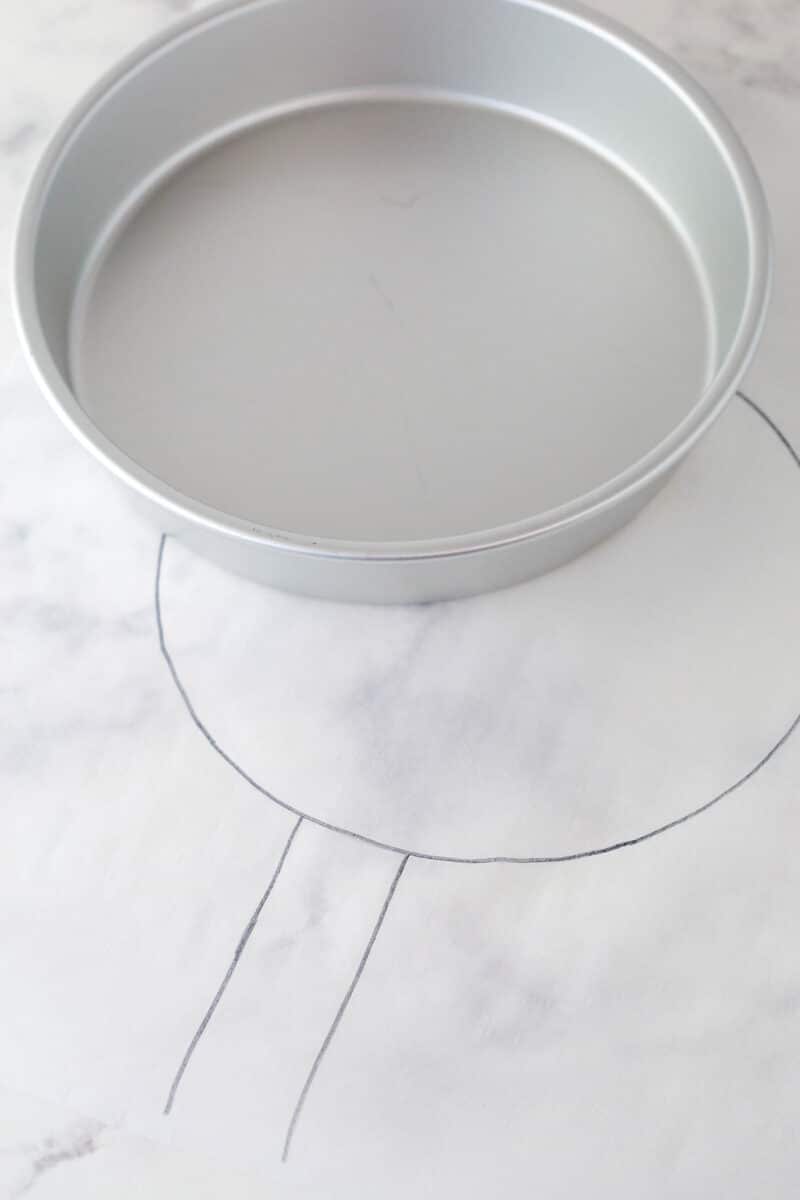
Roll out a piece of parchment that is about 6-8 inches longer than your pan width. Trace your pan in the middle of the parchment, then draw two “handles” coming off of opposite sides of the pan.
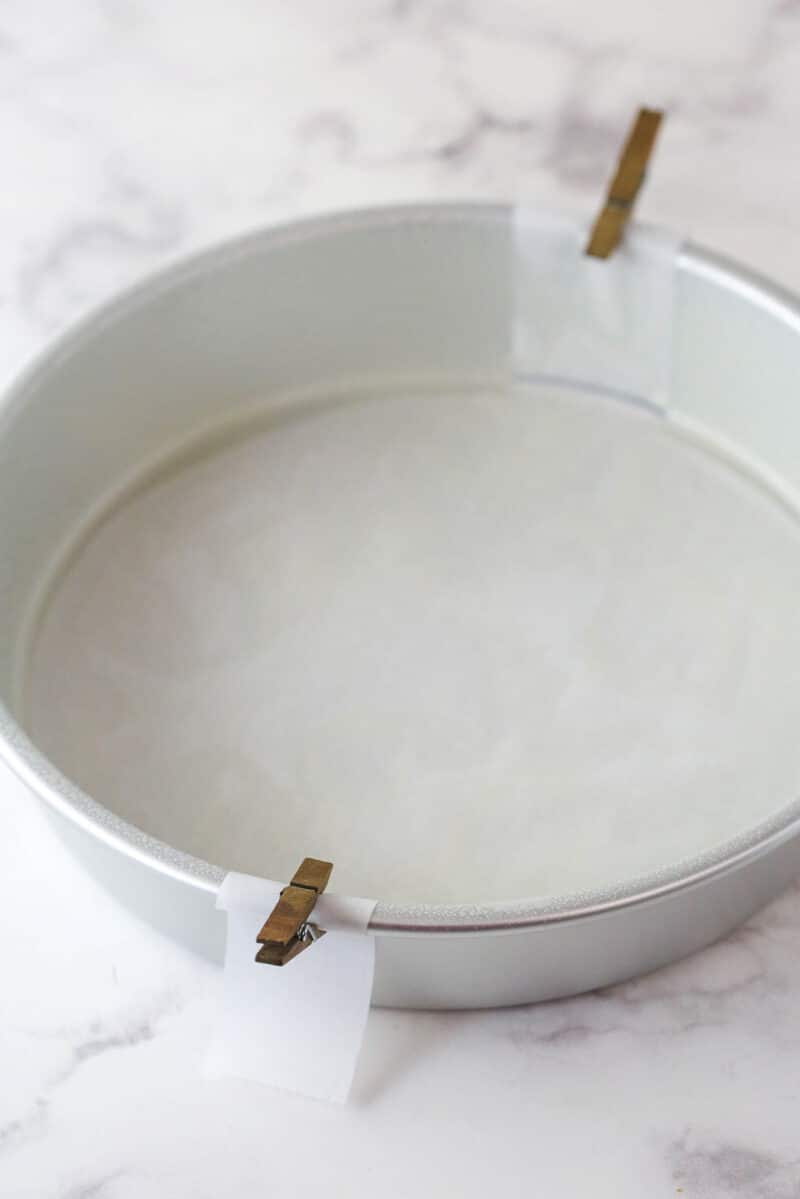
Cut out the parchment so that you have a circle with a handle on two opposing sides and place that into your pan, which should be sprayed with non-stick spray, as well. The handles will be used to help remove the cake and topping from the pan after baking.
Make the pecan topping
Prepare the pan with baking spray and parchment paper (see the section below “How to Easily Remove the Cake From The Pan” for detailed instructions.)
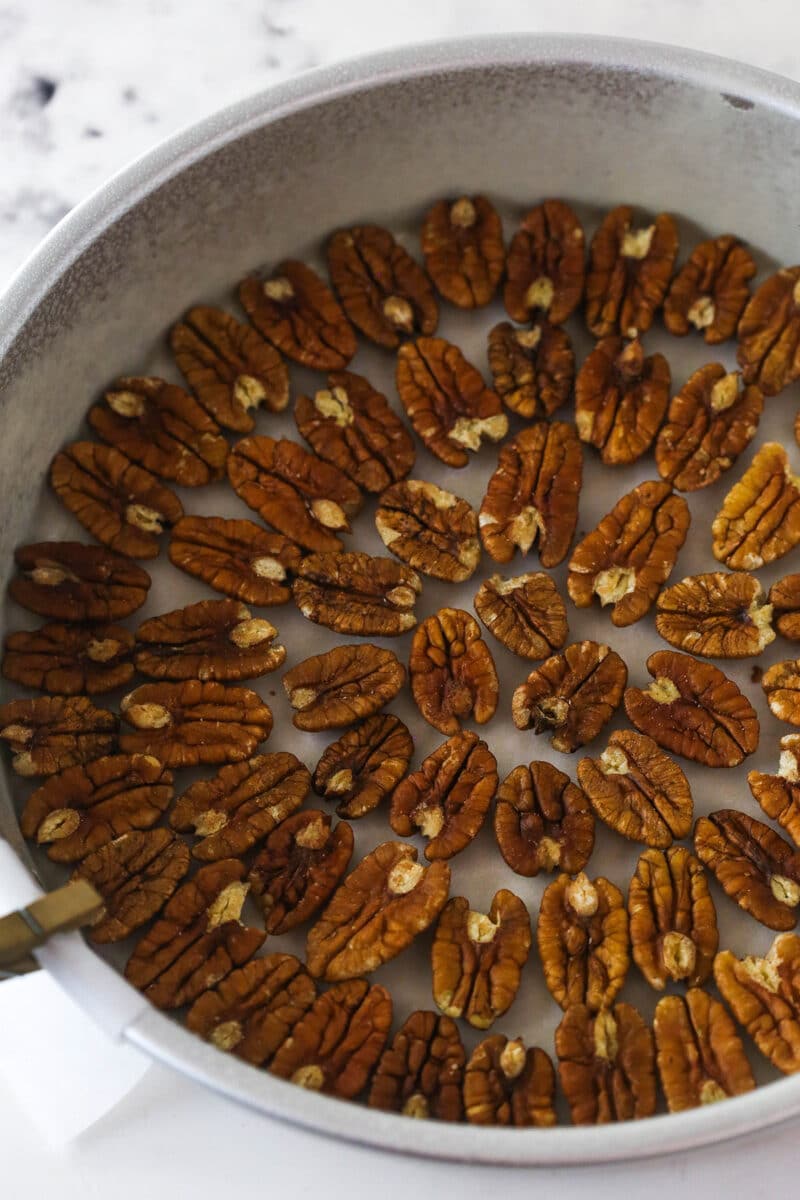
Arrange the pecan halves in circles, starting around the outside.
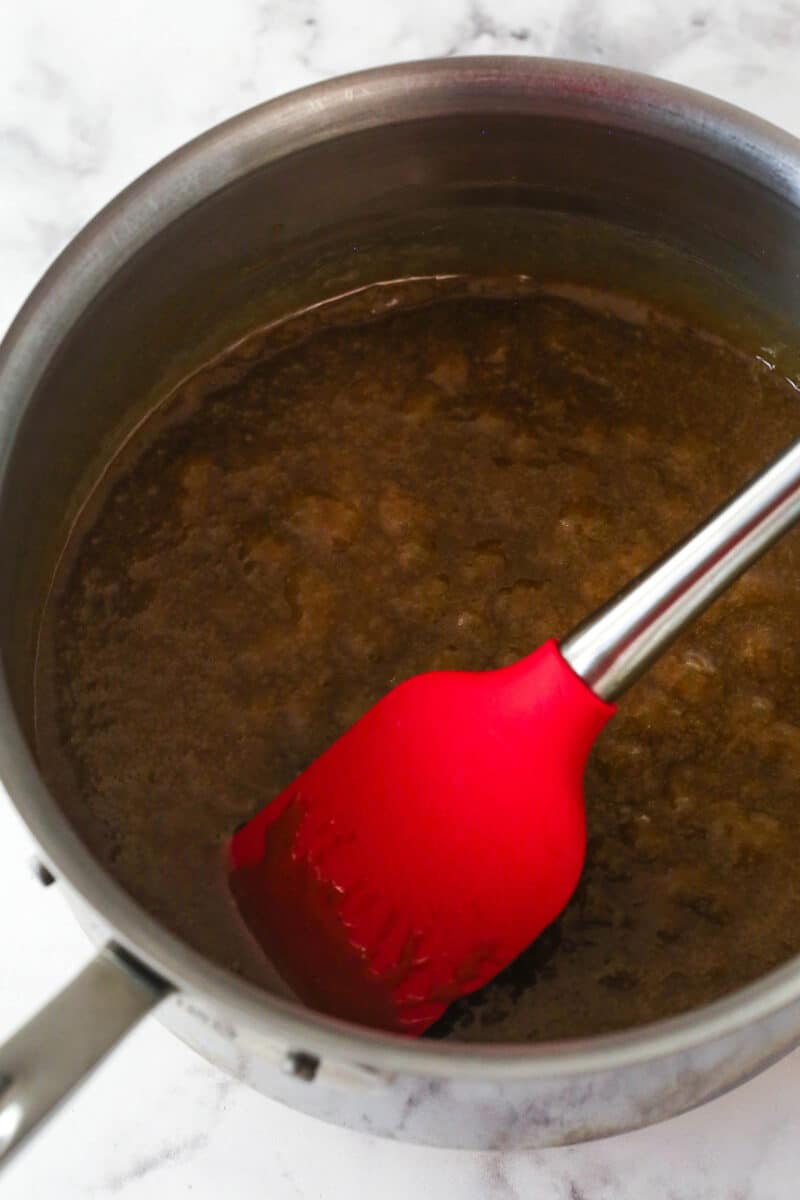
Combine the other topping ingredients over medium heat. Whisk until it melts. Boil for 30 seconds.
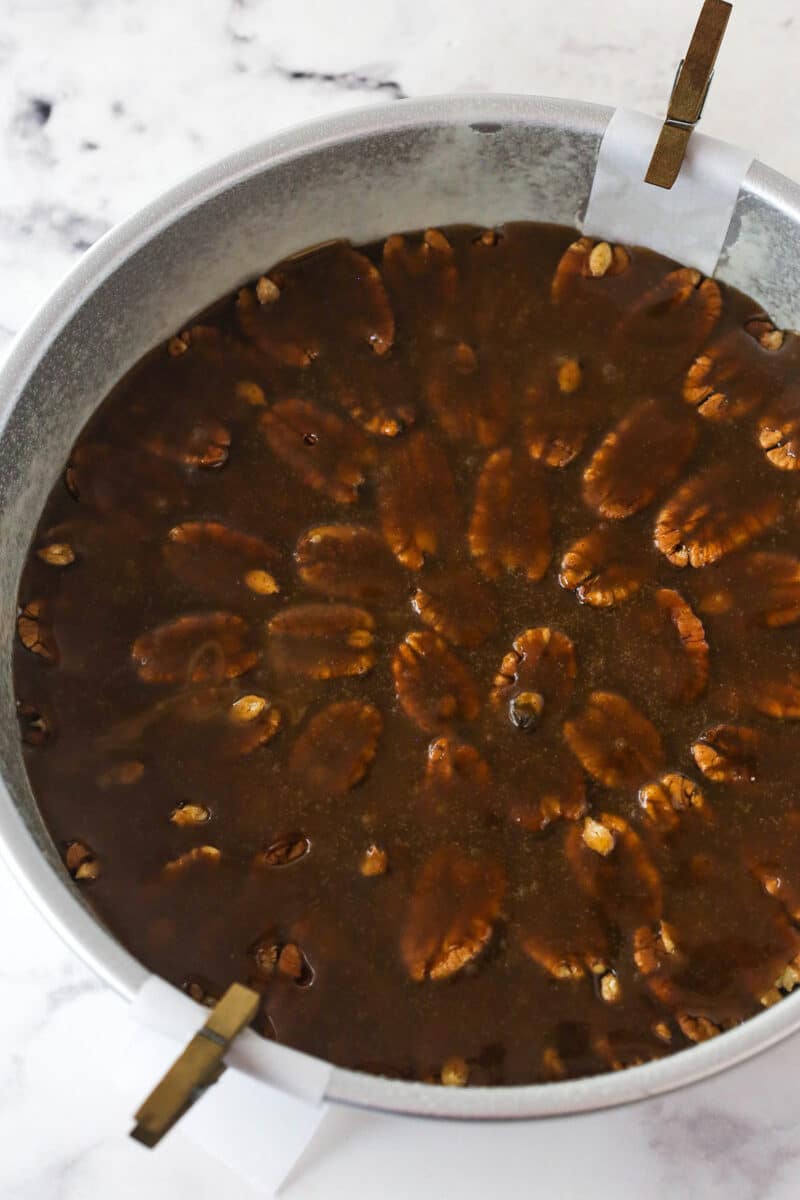
Pour the glaze over the pecans, distributing it evenly.
Make the cake
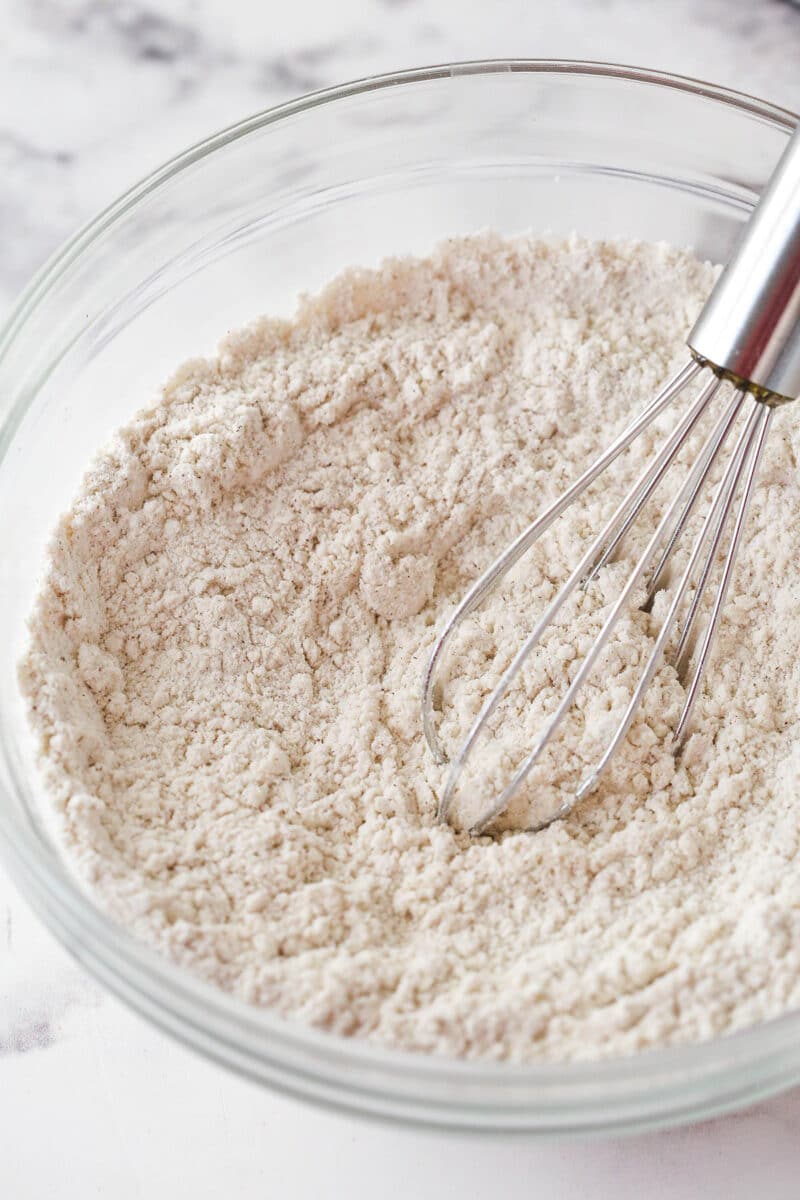
Combine the dry ingredients.
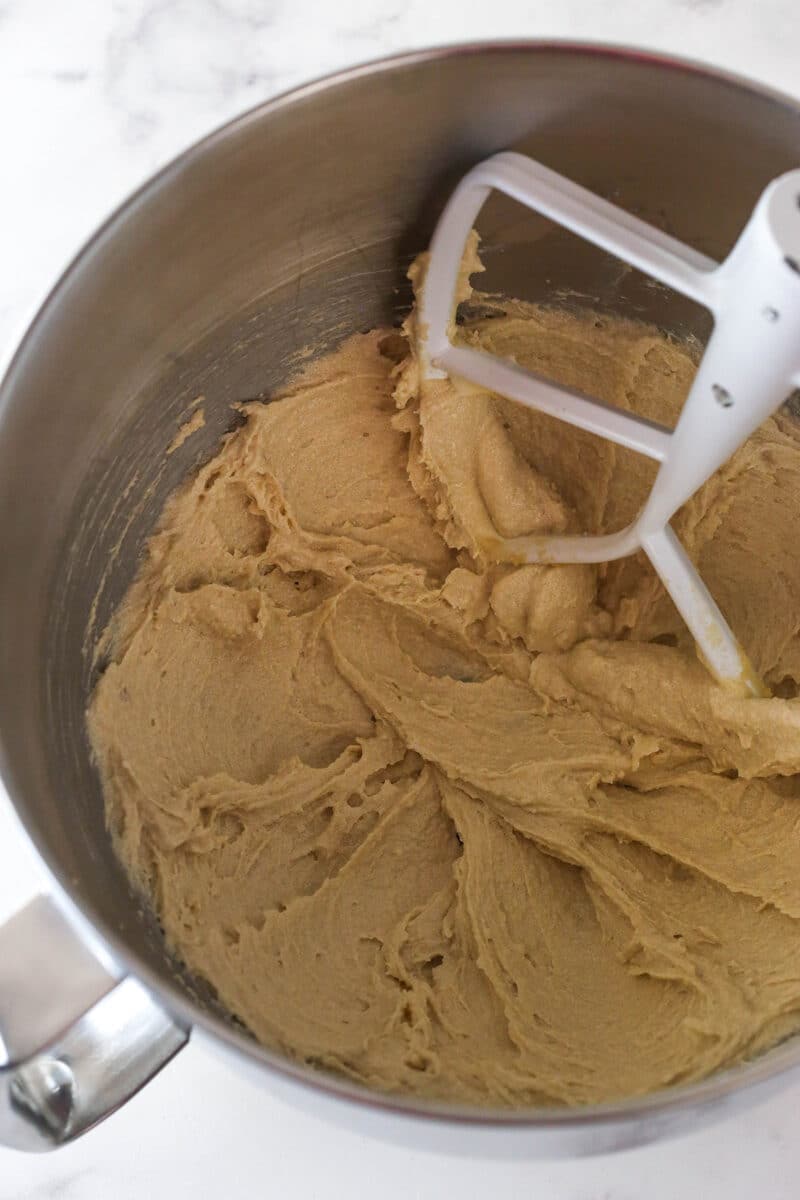
In another bowl, cream the butter, oil, sugars, and vanilla until light and fluffy.
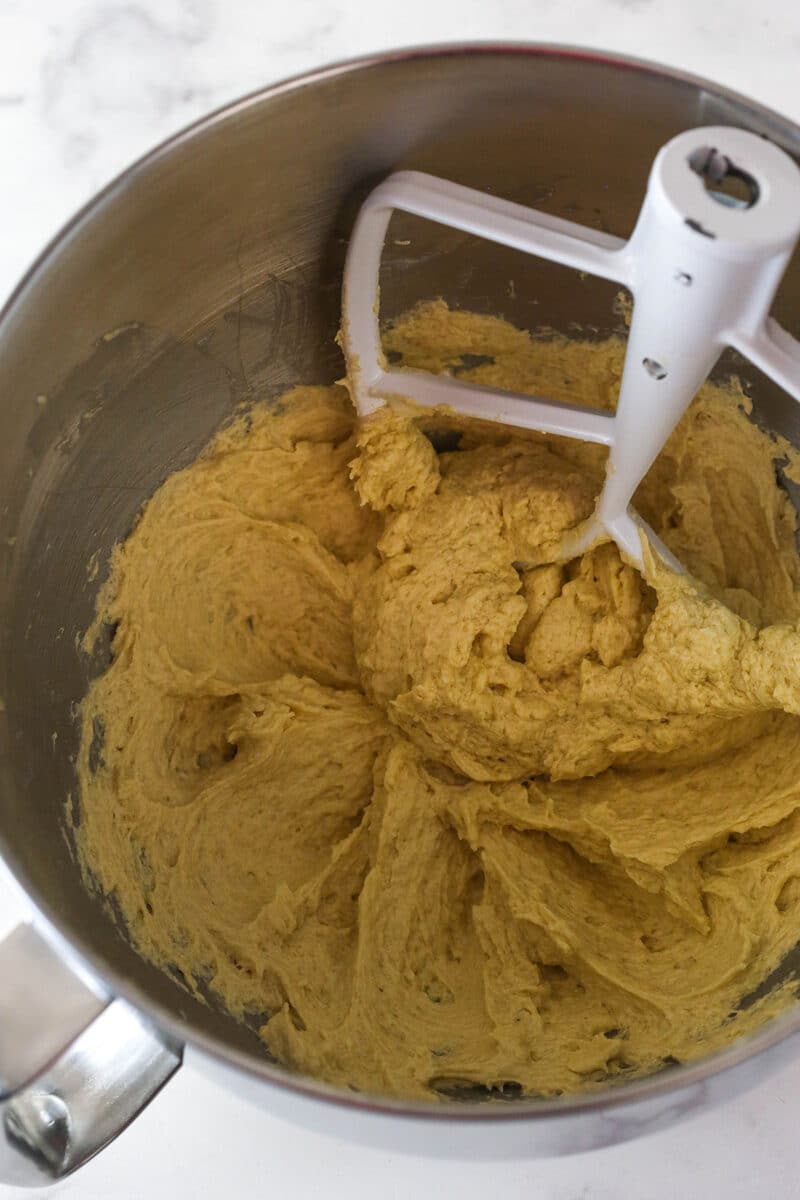
Mix in the eggs one at a time.
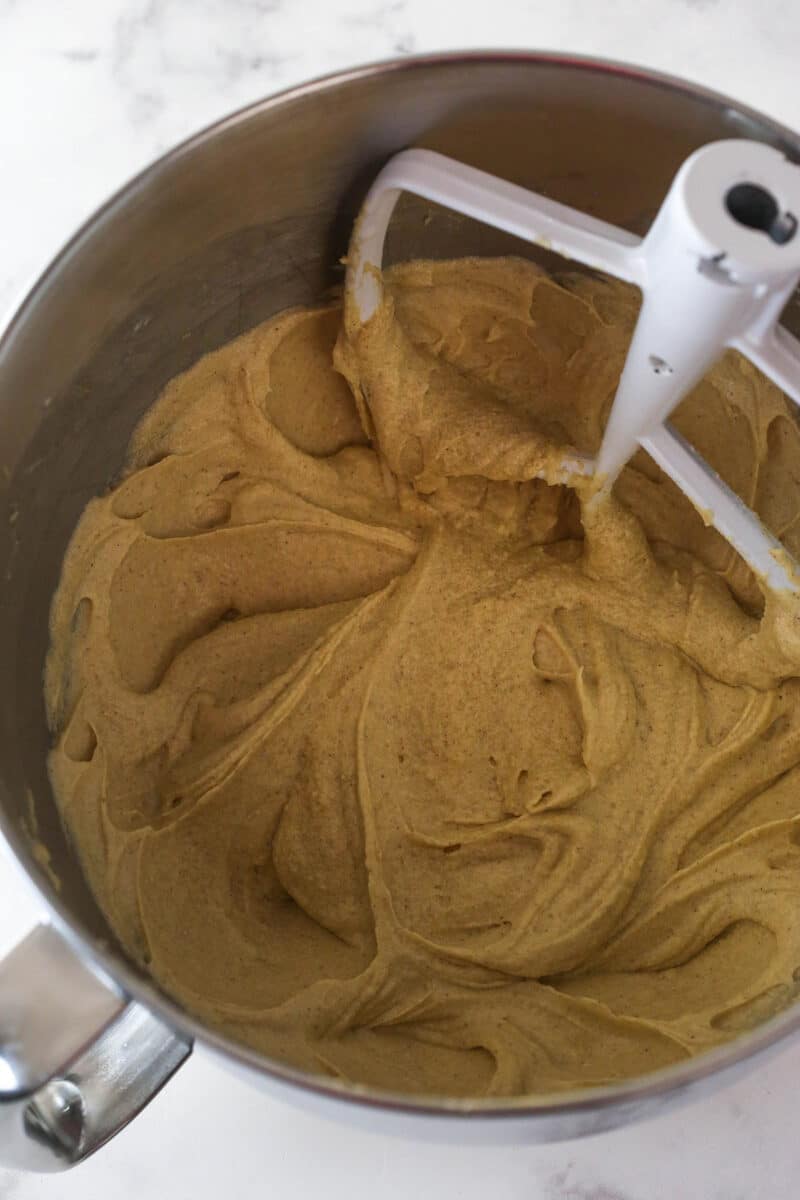
Add half of the dry ingredients, then slowly mix in the milk. Add the remaining dry ingredients.
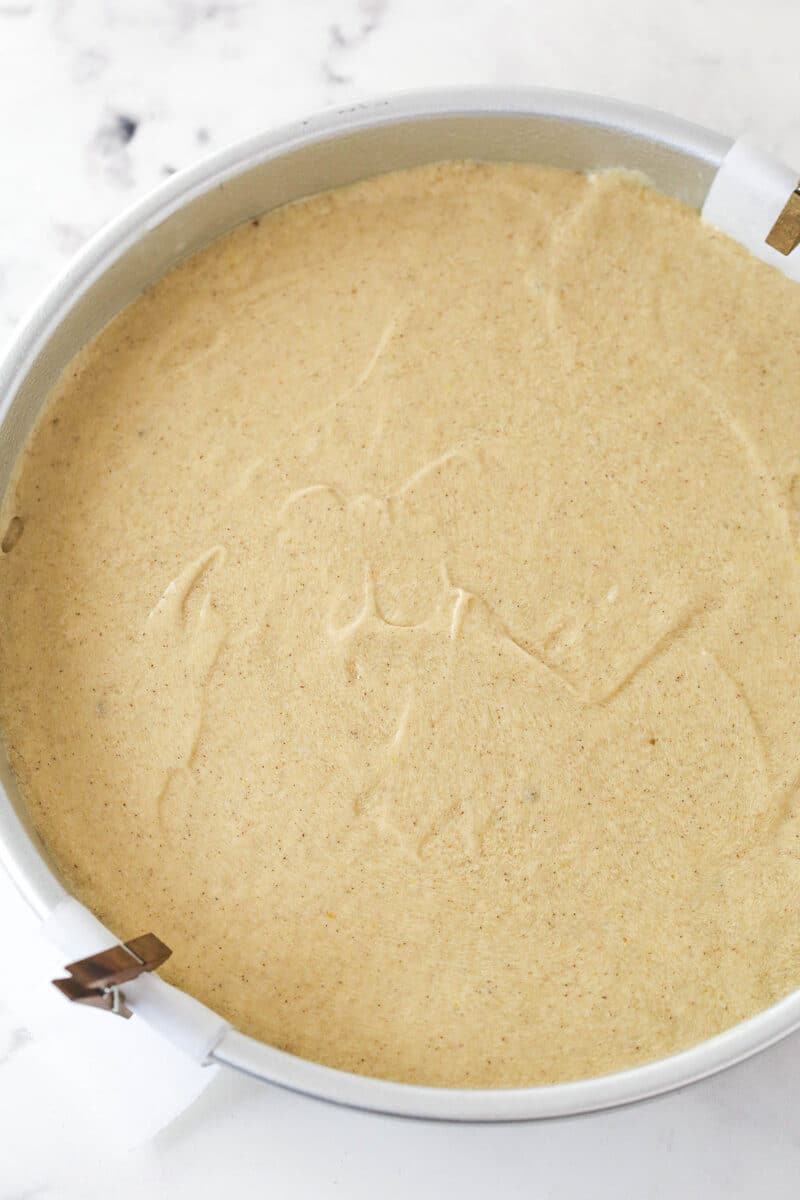
Spread the batter in the pan. Bake for 45-50 minutes, until a toothpick comes out with a few crumbs.
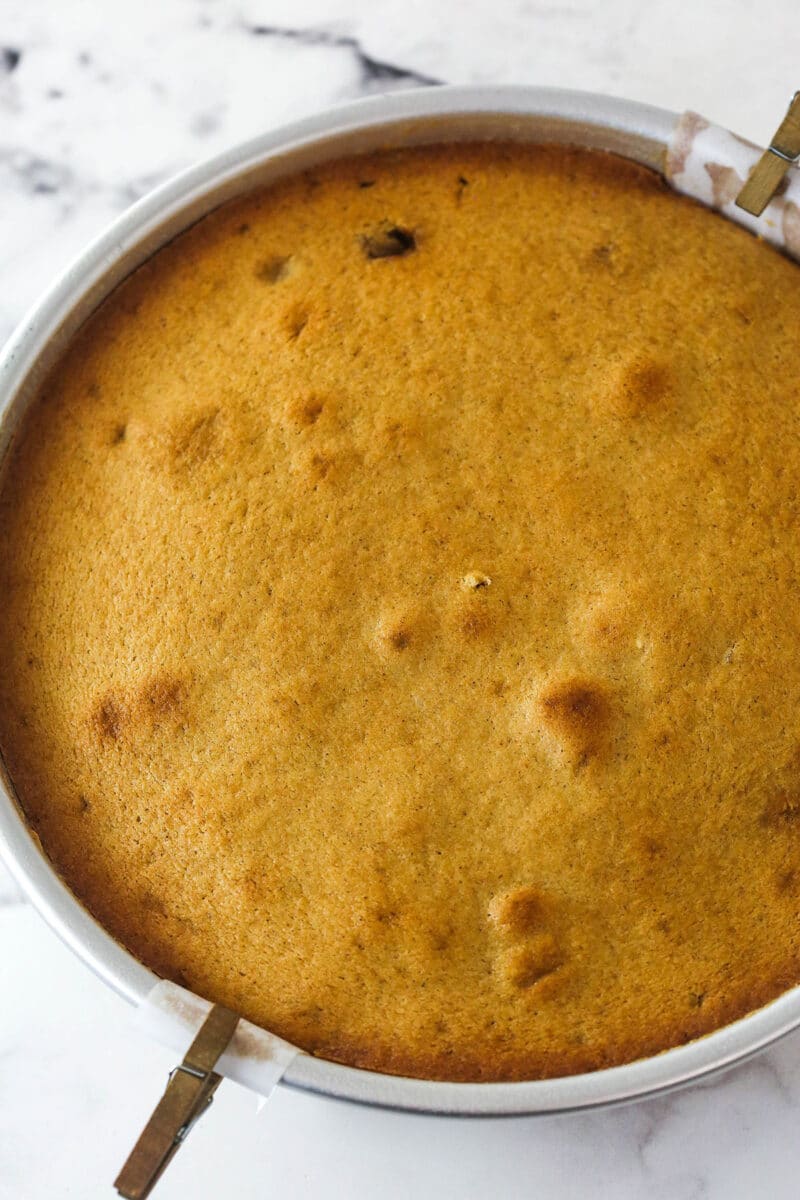
Use a dishcloth to gently press down any dome. Cool for 10 minutes.
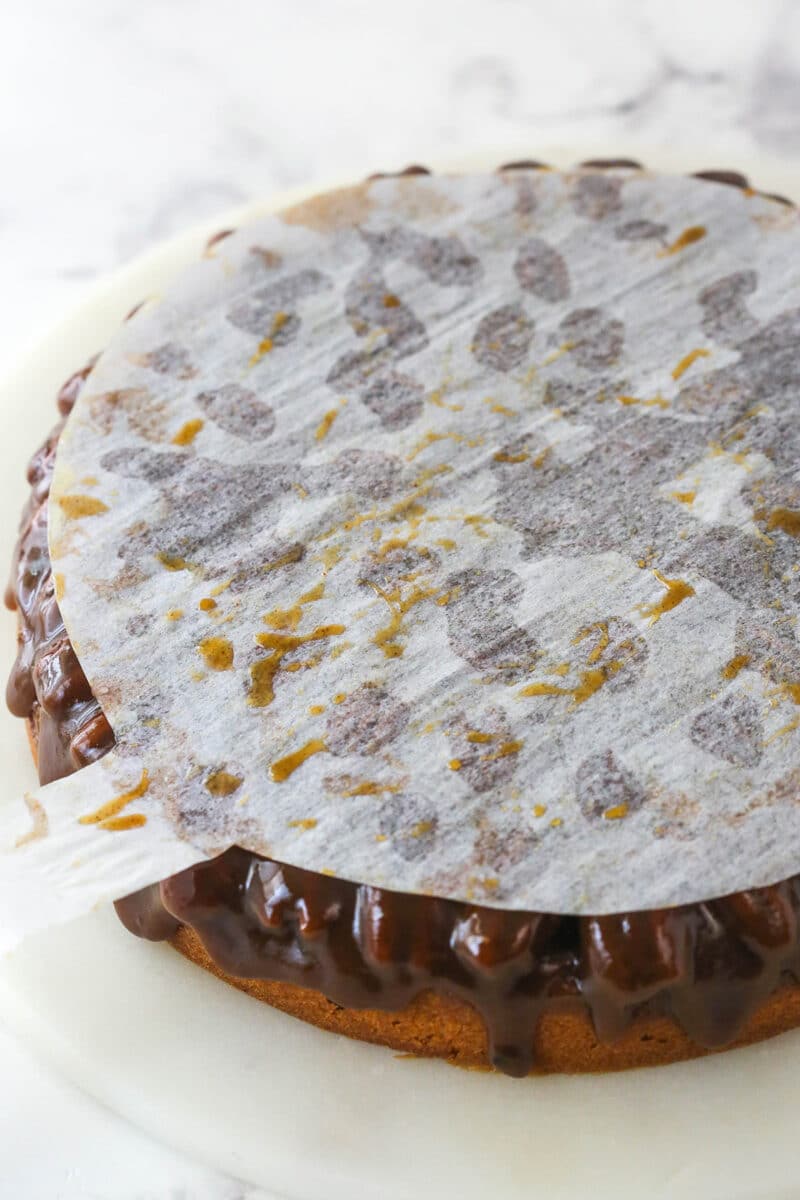
Invert the cake on a serving platter, gently shaking side to side. Peel off the parchment paper.
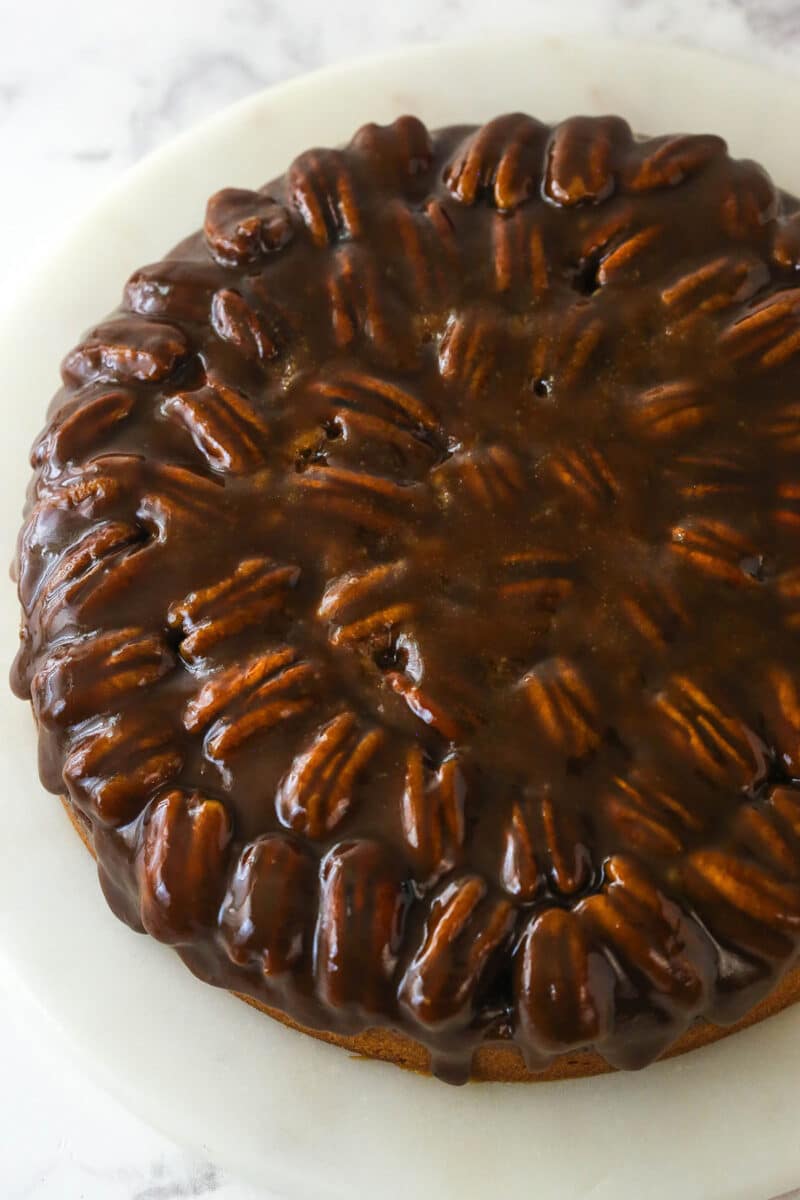
Cool for another 10-15 minutes, then slice and serve. Best enjoyed warm.
How to Remove The Cake From the Pan
To help loosen the cake from the pan after baking, I like to gently shake my pan side-to-side and back-and-forth a few times until I see the cake loosen and move in the pan a bit. Place your serving platter upside down on top of the cake pan, then invert it. Some of the sauce from the topping should drip down a bit, so I like to put the cake straight onto my serving dish. Pull gently on the little parchment paper handles you created earlier, which should loosen the pan from the cake topping and keep it all in place. Lift the pan off of the cake, then gently peel off the parchment paper.
More Tips for This Upside Down Cake Recipe
- Fully cream the butter & sugar. There should be a visible change in color and texture when creaming the butter, sugars, oil, and vanilla for the cake. This step should take a full 2-3 minutes and it’s important to not skip that time.
- Boil the topping. If you don’t boil it, it still works, but the topping is a little “looser” and doesn’t stay as nice looking on top of the cake for as long. Boiling it “candies” it a bit, so it has a really lovely look and texture when the cake is done.
- Use foil if needed. If the top of the cake starts over-browning, you can cover it with foil. I usually check around the 25-30 minute mark.
- Flatten the dome. It’s normal for the cake to puff up a bit and have a bit of a dome shape on top. You can flatten this as soon as it comes out of the oven by gently pressing on it with a dish cloth.
- Don’t cool too long in the pan. Even with pre-boiling the topping and properly setting up the pan to be able to remove the cake, you still don’t want this cake to cool in the pan for too long. You want to remove the cake from the pan after about 10 minutes. Otherwise, the topping cools too much and is harder to remove.
Proper Storage
This pecan upside down cake can be stored on the counter in an airtight container. A cake carrier is ideal, if you have one, or you can keep it well-covered with plastic wrap. It’s best enjoyed within 3 days.
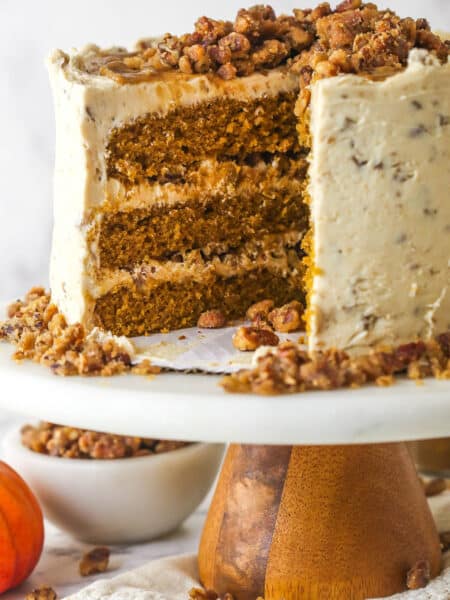
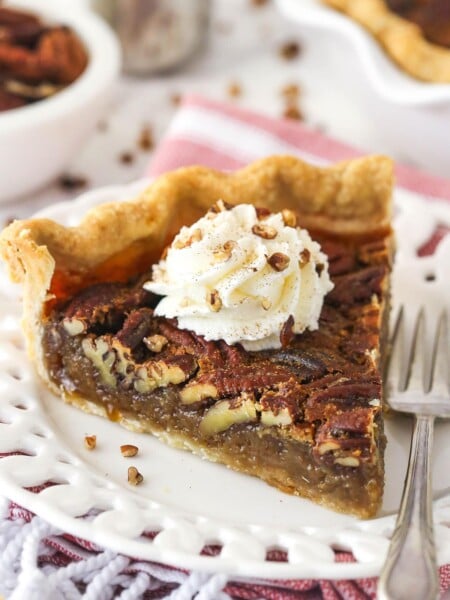
More Pecan Desserts To Try


Pecan Upside Down Cake
save this recipe
Enter your email & we’ll send it to your inbox. Plus get new recipes from us every week!
Ingredients
Pecan Topping
- 120-140 grams pecan halves*
- ¾ cup (168g) light or dark brown sugar (packed, I prefer dark)
- ¼ cup (56g) unsalted butter
- 5 tablespoons (75ml) heavy cream
- ¼ teaspoon salt
- ½ teaspoon ground cinnamon
Cake
- 1 ¼ cups (163g) all-purpose flour
- 1 teaspoon baking powder
- 1 teaspoon ground cinnamon
- ¼ teaspoon salt
- 6 tablespoons (84g) unsalted butter (room temperature)
- 2 tablespoons (30ml) vegetable oil
- 6 tablespoons (78g) sugar
- 6 tablespoons (84g) light or dark brown sugar (packed, I prefer light)
- 1 ½ teaspoons vanilla extract
- 2 large eggs
- ½ cup + 2 tablespoons (150ml) milk
Instructions
Make the pecan topping
- Prepare a 9-inch cake with pan baking spray on the bottom and sides. To line the pan with parchment paper, roll out a piece of parchment that is about 6-8 inches longer than your pan width. Trace your pan in the middle of the parchment, then draw two “handles” coming off of opposite sides of the pan. Cut out the parchment so that you have a circle with a handle on two opposing sides (see photos above). The handles will be used later to remove the cake from the pan and ensure that your pecan topping stays on the cake, and doesn’t stick to the bottom of the cake pan.
- Starting from the outside of the pan, arrange the pecan halves in circles. Make one circle around the outside, then make additional concentric circles until you’ve filled the pan to the middle. Set aside.
- Combine brown sugar, unsalted butter, heavy cream, salt and cinnamon in a medium pot over medium heat. Whisk while it melts, then continue whisking and bring to a boil for 30 seconds.
- Pour the glaze over the pecans, trying to distribute it evenly over the pecans. Set pan aside.
Make the cake
- To make the cake batter, combine the flour, baking powder, cinnamon and salt in a medium sized bowl and set aside.
- Add the butter, oil, sugars and vanilla extract to a large mixer bowl and beat together until light in color and fluffy, about 2-3 minutes. Do not skimp on the creaming time.
- Add the eggs one at a time, mixing until mostly combined after each. Scrape down the sides of the bowl as needed to be sure all ingredients are well incorporated.
- Add half of the dry ingredients to the batter and mix until mostly combined.
- Slowly add the milk and mix until well combined. The batter may look a little curdled, but that’s ok.
- Add the remaining dry ingredients and mix until well combined and smooth. Scrape down the sides of the bowl as needed to be sure all ingredients are well incorporated. Do not over mix the batter.
- Add the batter to the prepared cake pan and spread evenly. Bake for 45-50 minutes, covering with foil about 25-30 minutes in, only if needed to prevent the top from over-browning. You can also place another larger pan on the rack below, to catch any of the sugar mixture that could overflow. The cake is done when a toothpick inserted in the middle comes out with a few crumbs.
- Remove the cake from the oven and gently press the cake down to help flatten any dome, if it has one. I placed a dish cloth on top of the cake to help press on the hot cake.
- Let the cake cool in the pan for 10 minutes, then invert onto a cooling rack. Try not to let it sit in the pan for longer or the topping may start to stick to the pan. To help loosen the cake and topping from the pan, I like to gently shake my pan side-to-side and back-and-forth a few times until I see the cake loosen and move in the pan a bit. Place your serving platter upside down on top of the cake pan, then invert it. Some of the sauce from the topping should drip down a bit, so I like to put the cake straight onto my serving dish. Pull gently on the little parchment paper handles you created earlier, which should help loosen the pan from the cake topping and keep it all in place. Lift the pan off of the cake, then gently peel off the parchment paper. If some of the sauce is still in the pan or on the parchment paper, use a spatula to scrape it off and place it back on top of the cake.
- Allow the cake to cool for another 10-15 minutes before serving. It’s best served warm, but if you allow it to cool completely to room temperature, you can heat individual slices for 10-15 seconds to warm them back up a bit.
- Store in an air-tight cake carrier or well covered at room temperature. Best if eaten within 2-3 days.
Notes
- Pecans – You may need a few more or less pecan halves, depending on their size as you make circles around the pan. You can also use chopped pecans and just create full, even layer over the bottom of the pan. Chopped pecans are easier to slice, while circles of pecans halves make for a pretty presentation.
- Brown Sugar – You can use light or dark brown sugar for both the cake and the topping. I prefer light brown in the cake and dark brown for the topping (it gives the topping more flavor). But if you want to use the same one for both to simply, you definitely can.
Nutrition
The nutrition facts provided are calculated using a third-party tool and are estimates only. Actual nutritional content may vary based on the ingredients and brands you use, as well as portion sizes. For accurate results, please consult a registered dietitian or nutritionist.