

This Butterscotch Pie has a silky, custard-like filling with a deep butterscotch flavor that pairs perfectly with the buttery, flaky crust and whipped cream on top. It’s also perfect for prepping ahead, because it needs to set in the fridge. The perfect pie for Thanksgiving!

Getting this butterscotch pie just right was no easy feat. It took countless tests, a lot of trial and error, and even a break before I came back determined to perfect it. All of the pre-existing recipes I tried were lacking in that bold, rich butterscotch flavor I was looking for. I thought about making a filling like the one in my turtle pie (which is amazing BTW), but that has more of a candy texture. I wanted a lusciously smooth, custard-like filling for this one. After a lot of experimenting, I finally cracked the code, and let me tell you, it was worth every minute.
This pie is everything a butterscotch pie should be. It’s packed with deep, real butterscotch flavor folded into a silky, custard-like filling that’s a dream to bite into. It all comes together perfectly with a buttery, flaky crust – an ideal, simple base for the rich filling. So, if you’ve been searching for the butterscotch pie to make, this is it.

The Butterscotch Pie You’ll Want to Eat Straight from the Fridge
This butterscotch pie is one for the books. Here’s what makes it so special:
- Real-deal butterscotch flavor. True butterscotch is made with brown sugar, which is what you’ll find in this pie. And it’s not light on flavor – it’s butterscotch all the way.
- Dreamy, smooth texture. Through SO much testing with cornstarch, egg yolks, and gelatin, I got the filling just right. It’s got this super creamy, lusciously custard-like consistency that sets beautifully for the ideal spoon-through texture.
- Perfect contrast of textures. Speaking of silky smooth fillings, I can’t get enough of the way this one pairs with its crisp, flaky, buttery crust for the ultimate balance of crunch and creaminess, bite after bite.

Ingredients and Notes
Time to gather your ingredients! I used very specific ingredients for this pie. Here’s what you’ll need, why and what not to swap. (see the recipe card below for precise measurements):

- Cold unsalted butter and Cold water – When it comes to the crust, these ingredients are super important to keep cold if you want a flakey crust. The cold butter creates pocked within the crust that turn into the space between your flakey layers when it bakes. If the butter gets to warm and melts before you bake the crust, you lose the flakiness. So keep the butter and water cold.
- Large egg yolks – I like using room temperature eggs. They whisk together more smoothly and easily than cold ones.
- Packed dark brown sugar – And plenty of it. You definitely want DARK brown sugar to get that proper butterscotch flavor. See the section below titled “A Note on Dark Brown Sugar” for more information.
- Water – The brown sugar dissolves/melts better in water than cream. We tested this quite a bit. Stick to the water.
- Heavy whipping cream – Don’t try to use a lower-fat dairy product here. It’ll throw off the texture of the filling and it won’t thicken properly.
- Cornstarch – To thicken things up.
- Whole milk – Stick to whole milk to get the texture just right.
- Powdered gelatin – I tried to avoid the gelatin, but the filling is a bit too soft without it. Don’t fret, though! It’s really not that hard to use. Just stir the powder into some water, let it sit, heat it up so it melts, and stir it into the filling. Easy peasy.
- Powdered sugar – The powdered sugar contributes sweetness AND structure to the whipped cream. It keeps it from wilting, so don’t leave it out. Other kinds of sugar won’t yield the same results.

A Note on Dark Brown Sugar
Not all dark brown sugars contain the same amount of molasses. In the photo, you’ll see light brown sugar on the left (for comparison), with two different brands of dark brown sugar next to it. I tested both dark brown sugars, and the lighter one (in the middle) was definitely better. The darker sugar thinned out the filling more and had an overpowering molasses flavor, which masked the butterscotch notes. If you can find a dark brown sugar that is similar in color to the one in the middle, do.
How to Make This Butterscotch Pie Recipe
Ready to get to it? Here’s a general overview of how to make this totally addictive pie. For more detailed instructions, see the recipe card below.
Make the crust

Pulse 3/4 cups of flour and the salt a couple of times in a food processor. Add the butter and process until a crumbly dough forms.

Add the remaining cup of flour and pulse a few times until everything is evenly distributed. The doughy pieces should break up and it should look sandy.

Transfer the dough to a bowl and mix in 2 tablespoons of the ice water. Keep adding more water (1 tablespoon at a time) until the dough holds together when pinched.

Transfer the dough to a piece of parchment paper and work it into a ball. Then, shape it into a dish, wrap it in plastic wrap, and chill in the fridge for at least 1 hour.

Place the dough on a piece of parchment paper, cover with another piece of parchment paper, and roll the dough out into a circle.

Peel one piece of the parchment paper off, drape the crust over a pie plate, and peel the other piece of parchment off. Shape the crust and use a fork to poke holes in the bottom. Freeze the crust for 20 minutes.

Preheat oven to 350°F. Line the crust with parchment paper, pressing it flush against the crust. Fill with pie weights (or rice).

Bake for 20-25 minutes, remove the parchment paper and pie weights, and bake for 5-10 minutes.
No food processor? No problem.
Making pie crust is SO easy with a food processor, but you can also make this dough by hand! Just cut the cubed butter into the flour mixture until the largest pieces of butter remaining are about pea-sized. Then add the water and continue with the rest of the instructions.
Make the filling
Whisk together the egg yolks in a large heatproof bowl. Set aside.
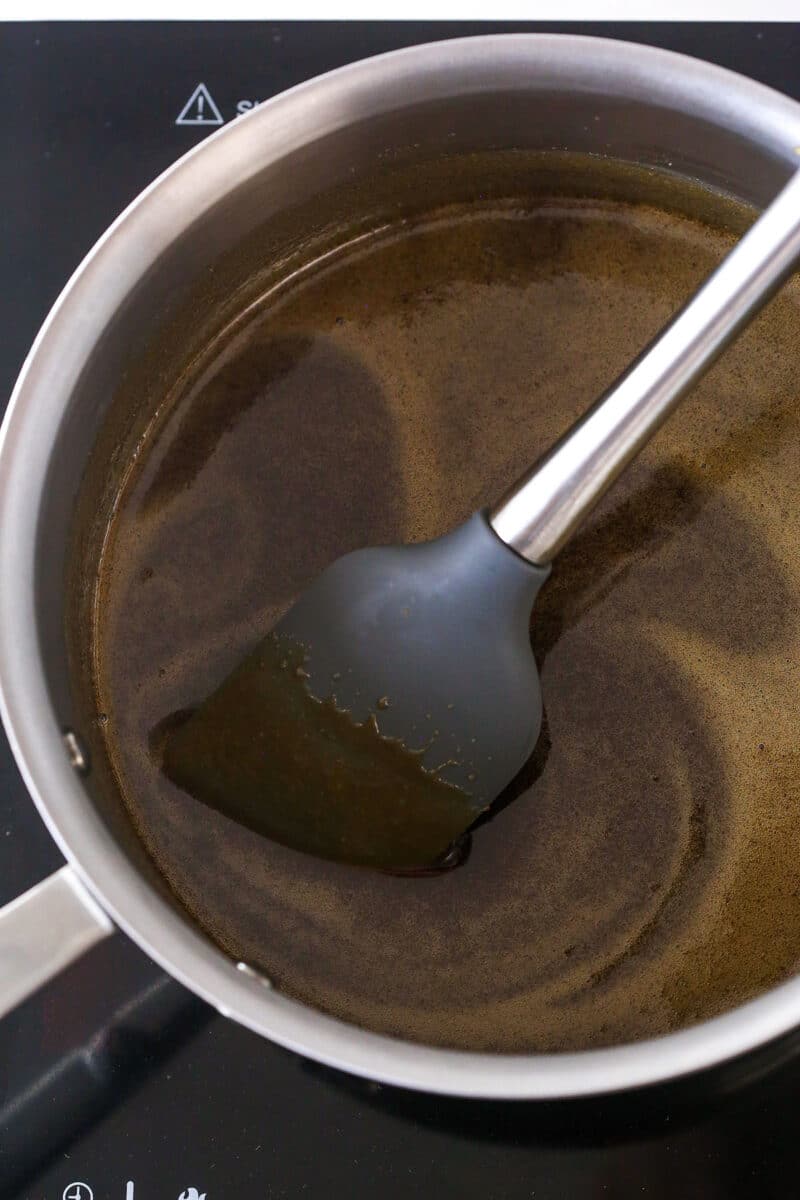
Combine the brown sugar and 6 tablespoons of water. Cook over low heat until the sugar is completely dissolved. Remove from heat and stir in 1/4 cup heavy cream.
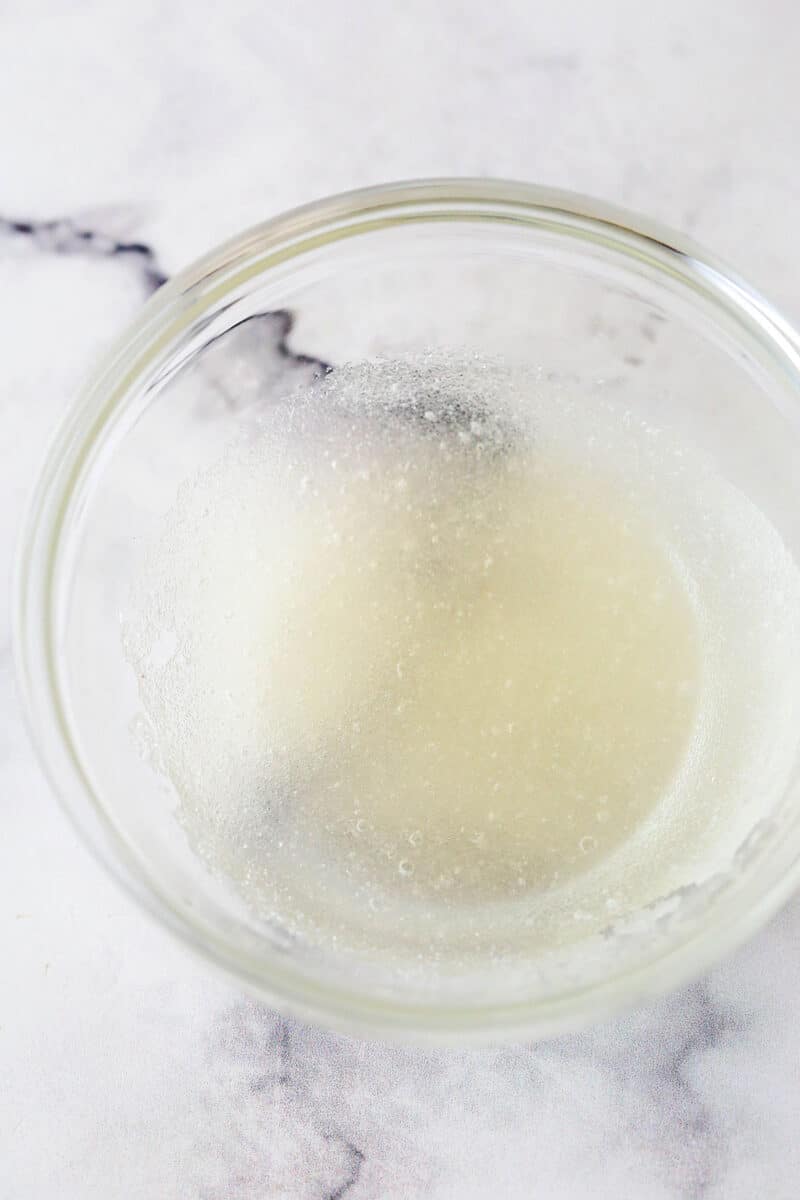
Stir together the gelatin and one tablespoon of cold water. Set aside.
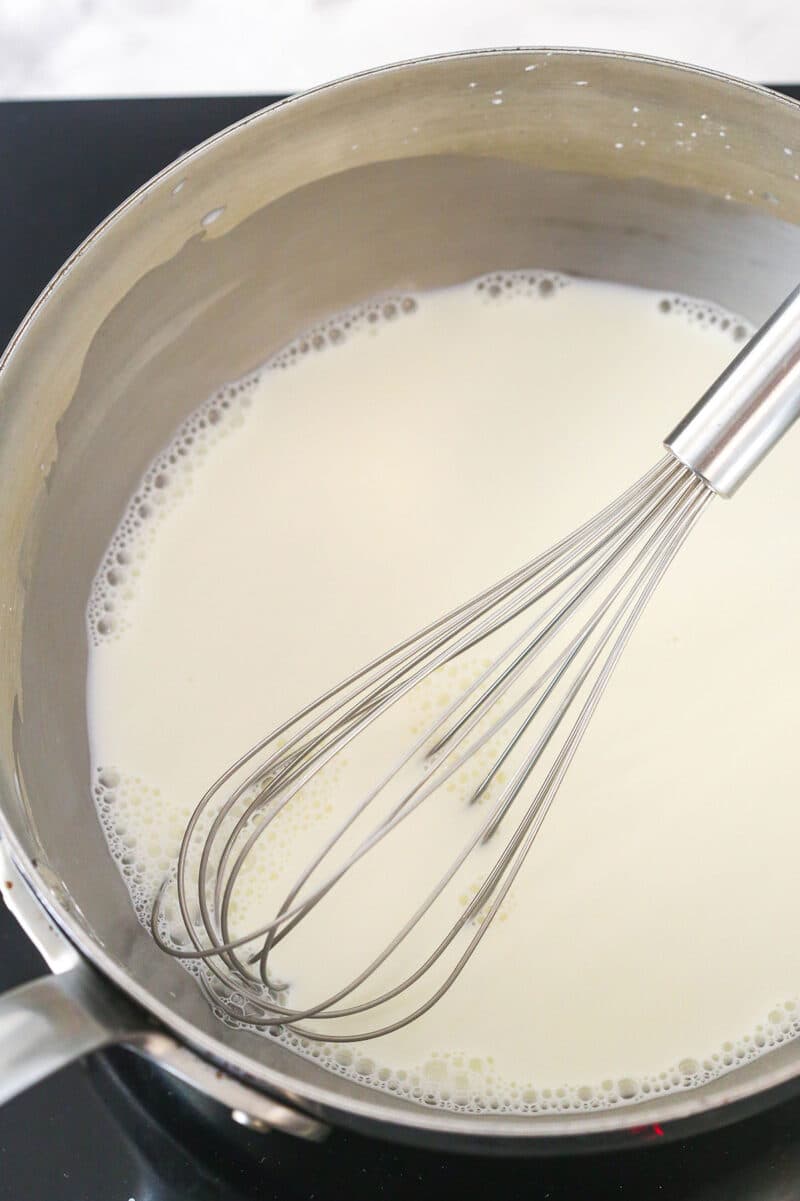
In a medium saucepan, whisk together the cornstarch and salt. Whisk in half of the milk until the cornstarch is dissolved. Whisk in the remaining milk and heavy cream. Cook over medium heat, whisking constantly, until warm.
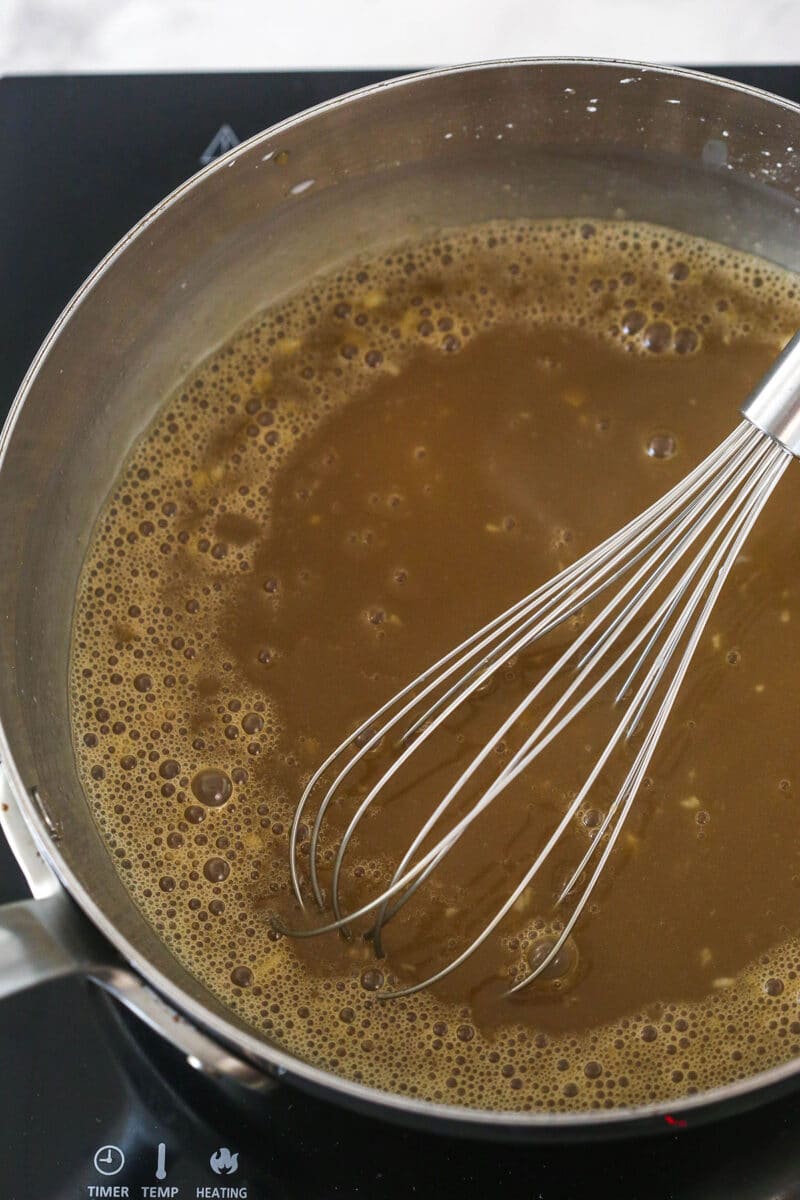
Pour the brown sugar mixture into the milk mixture. Cook over medium-low heat until it just begins to boil, whisking continuously.
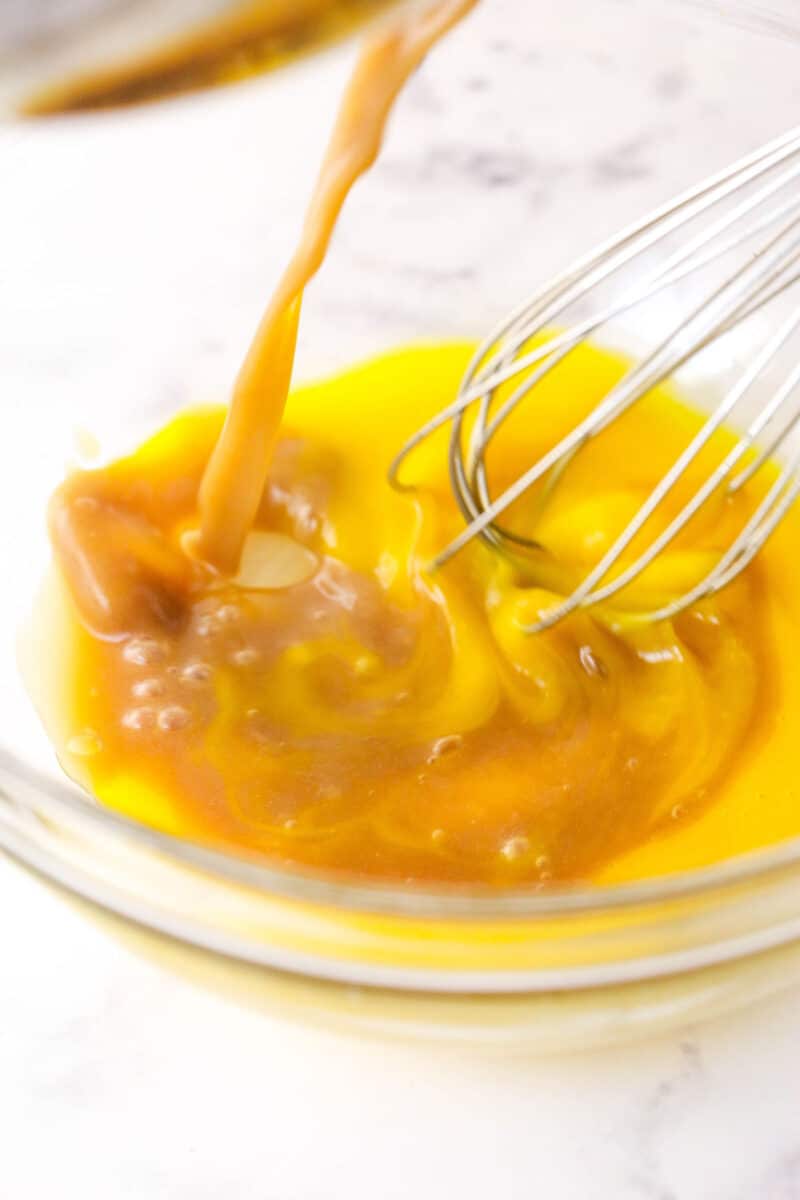
Gradually pour a quarter of the butterscotch mixture into the egg yolks, whisking constantly. Whisk in another quarter of the butterscotch mixture, and then whisk the egg mixture into the remaining butterscotch mixture.
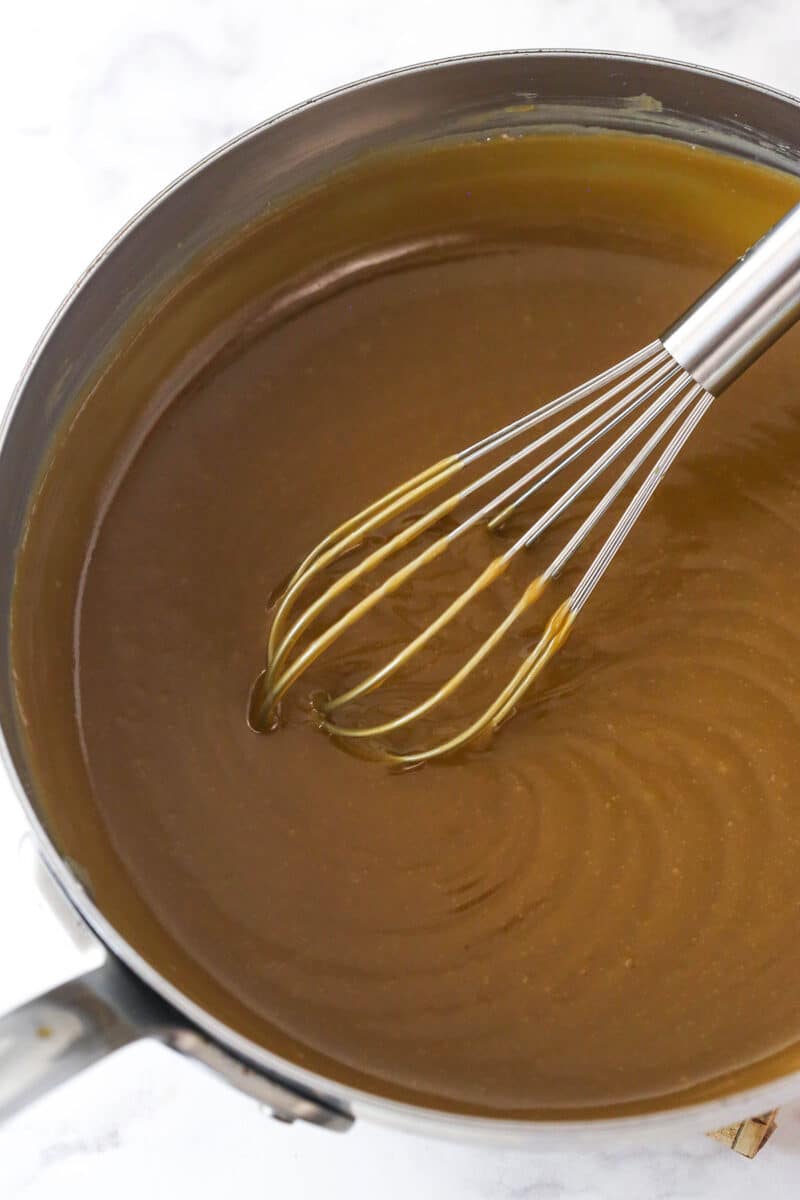
Bring it all to a boil over medium-low heat, whisking constantly. Boil for 1½ minutes. Remove from heat and stir in the butter. Microwave the gelatin for 5-10 seconds (until melted) and then stir it into the filling.
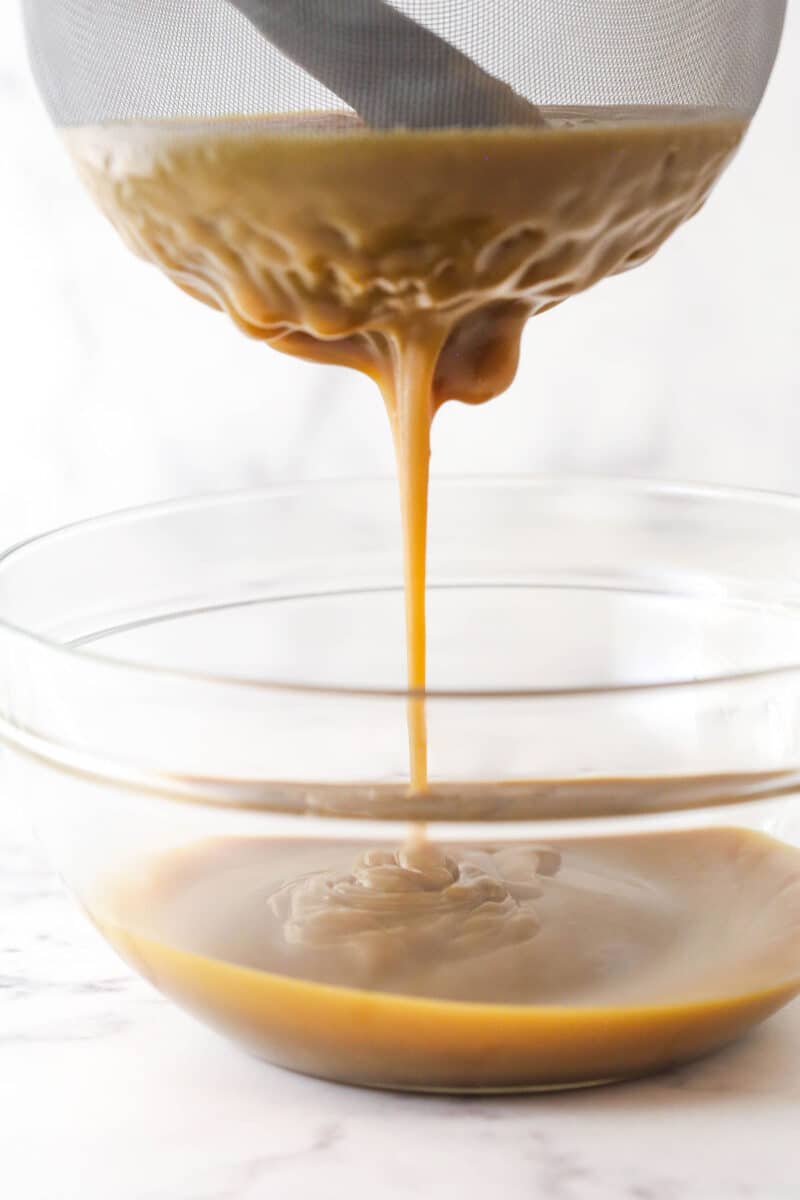
Pour through a mesh sieve to remove any lumps.
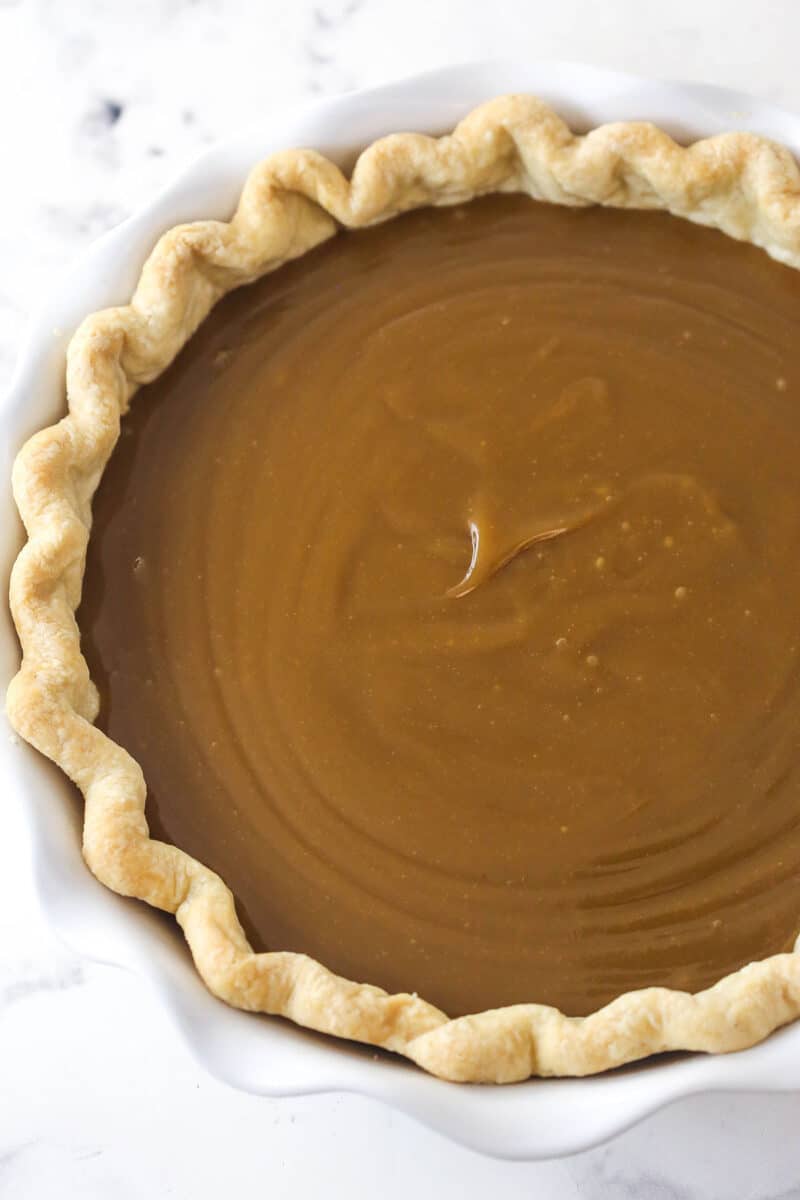
Pour the filling into the pie crust.
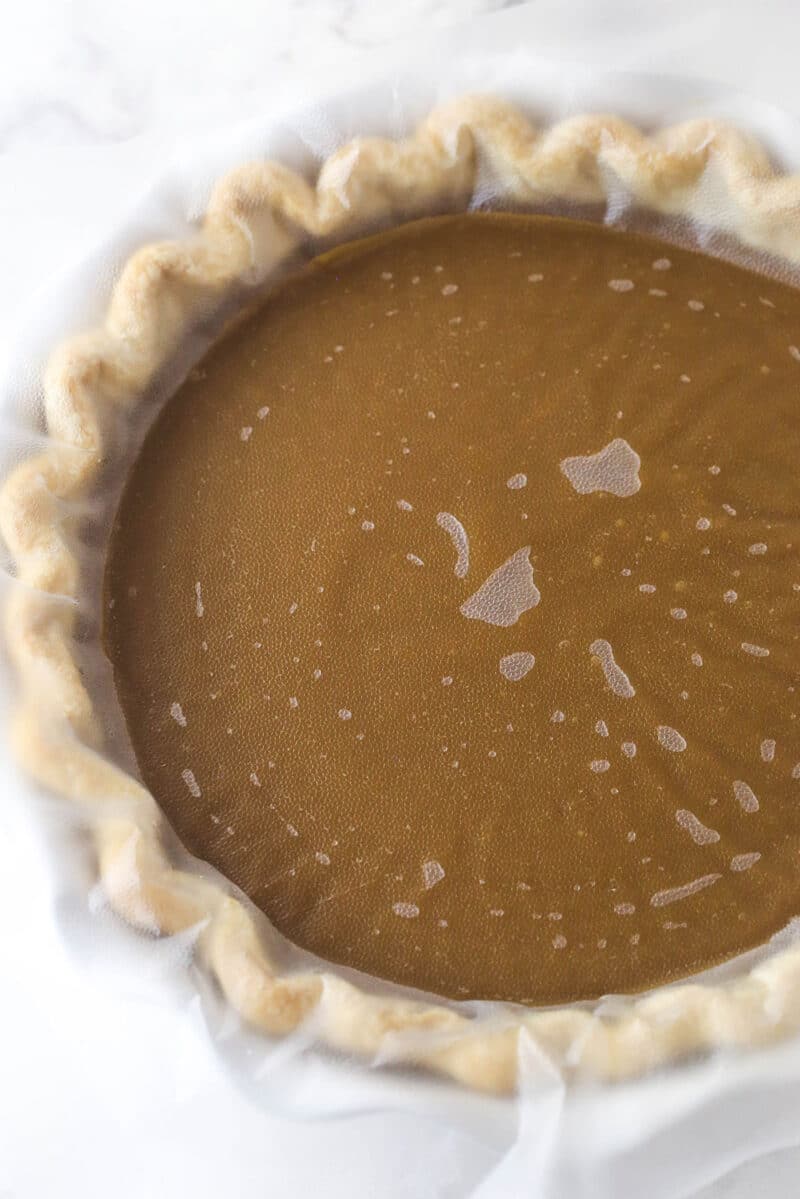
Cover with plastic wrap, and chill in the fridge for 4-6 hours.
Make whipped cream and finish

Remove the plastic wrap from the pie when set.

Whip the heavy whipping cream, powdered sugar, and vanilla on high speed until stiff peaks form, then spread on top of pie. Add toffee bits, if using.
Perfect Your Pie Crust
Pie crust isn’t hard to make, but there are some things to keep in mind if you want it perfectly flakey.
- Keep things cold. Not only do you want to start with COLD butter, but you want to keep it as cold as possible up until you pop the crust in the oven to par-bake (this is what gives you your flakey layers, as mentioned above). So you also want to use ice-cold water.
- Don’t over-handle. The heat from your hands and/or over-mixing can melt the butter, so mix/handle the dough only as much as you have to.
- Chill the dough. Refrigerate the dough for at least 1 hour before rolling it out to help keep the butter cold.
- Dock the crust. Be sure to prick the crust with a fork before blind baking. This allows steam to escape evenly, so the crust cooks evenly and doesn’t bubble up.

Tips for Pie Success
I did SO much trial and error to get this pie right. Pay close attention to these tips and tricks so you can too:
- Be patient. When melting the brown sugar and warming the milk, keep the heat on the lower side, go slow, and be patient. Allow the brown sugar to dissolve completely before adding the milk mixture to avoid a gritty texture. Don’t let it boil.
- Whisk constantly. You’re going to be whisking a lot here. From the time you start heating the milk, through tempering the eggs and boiling the filling, keep that whisk going. This will help you achieve a smooth, evenly cooked filling.
- Don’t over-boil. Don’t boil the filling for too long at the end. The cornstarch can start to break down and thin out, resulting in a runny pie.
- Clear wrap hack. Press clear wrap into the filling before chilling the pie. This will prevent an unpleasant film from forming on top.
- Don’t skip the chill. This pie needs 4-6 hours in the fridge before serving. The filling will be relatively thin when you add it to the pie crust, but it will thicken to a more pudding-like consistency as it chills.
- Cold heavy cream. Start with cold heavy cream (for the whipped cream). If it’s too warm, it won’t whip up and hold volume properly.

How to Store
- Refrigerator. Cover leftover pie with clear wrap, store in an airtight cake carrier (like this one) or arrange slices in a single layer in an airtight container. It’ll keep in the fridge for up to 5 days.
- Freezer. Leave the whipped cream off, wrap the entire pie in a double layer of plastic wrap, and seal it in a freezer bag. You can store it in the freezer for up to 3 months. When you’re ready to enjoy, let the dessert thaw in the fridge, add some fresh whipped cream, slice, and serve.
More Delicious Pie Recipes
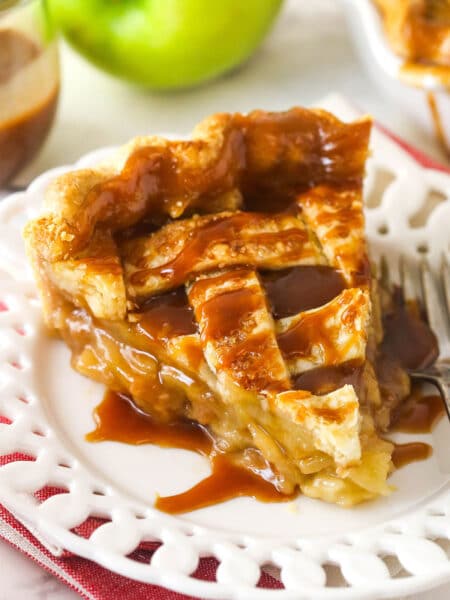
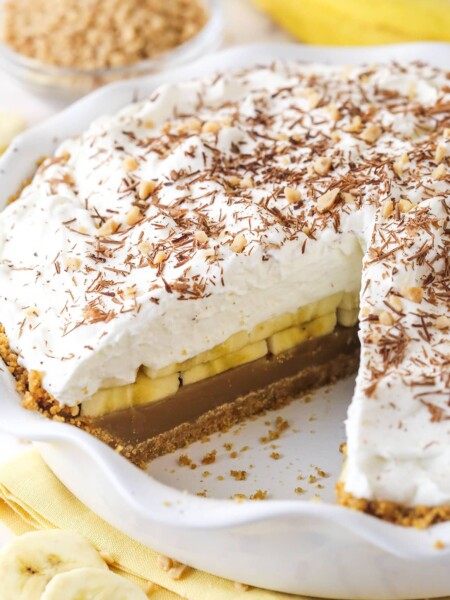
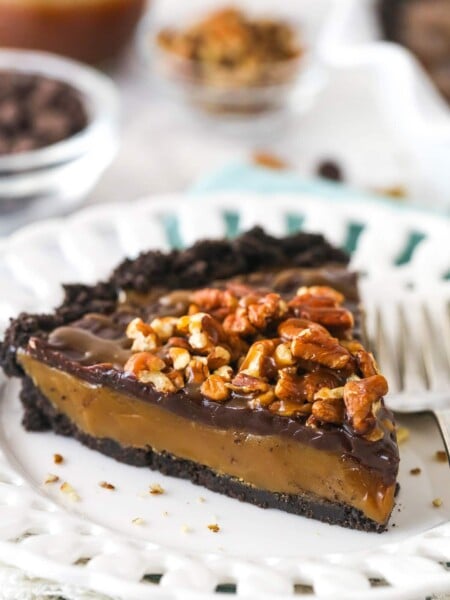

Butterscotch Pie
save this recipe
Enter your email & we’ll send it to your inbox. Plus get new recipes from us every week!
Ingredients
Crust
- 1 ¼ cups (163g) all-purpose flour (divided)
- ½ teaspoon salt
- ½ cup (112g) cold unsalted butter (cut into 1/2 inch cubes)
- 2-4 tablespoons ice water
Filling
- 6 large egg yolks
- 2 cups (450g) dark brown sugar (packed)
- 7 tablespoons (90ml) water (divided)
- ¾ cup (180ml) heavy whipping cream (divided)
- ⅓ cup (43g) cornstarch
- ¾ teaspoon salt
- ¾ cup plus 2 tablespoons (210ml) whole milk
- 1 ½ teaspoons powdered gelatin
- 1 tablespoon (14g) unsalted butter
Whipped Cream
- ⅔ cup (160ml) heavy whipping cream (cold)
- 3 tablespoons (22g) powdered sugar
- ½ teaspoon vanilla extract
- Toffee bits (optional)
Instructions
Make the crust
- NOTE: I make the crust with a food processor because it’s quicker and easier, but you can also do it by hand by adding the cubed butter to all of the flour and salt and cutting the butter into the flour until it’s all combined and the largest pieces of butter remaining are about the size of peas. Then add the water and continue with the rest of the instructions.
- Add 3/4 cup (98g) of flour and salt to a food processor and pulse together 2 to 3 times.
- Scatter the cubed butter over the flour and process until a crumbly dough forms, about 15 seconds. The flour should all be coated – none of the flour should be dry.
- Add the remaining 1/2 cup (65g) of flour and pulse a few times until everything is evenly distributed. The doughy pieces should break up and it should look sandy. There shouldn’t be a bunch of big pieces remaining. A few are fine, but it should be mostly evenly distributed.
- Move the mixture to a medium mixing bowl and add 2 tablespoons of the ice water. Start with 2 tablespoons and add from there. Using a rubber spatula, gently fold everything together. The crumbs should begin to form larger clusters. If you pinch some of the dough and it holds together nicely, it’s ready. If the dough falls apart, add 1-2 more tablespoons of water and continue to press until dough comes together.
- Work just enough for it to come together, then shape into a disc. Wrap disc in plastic wrap and refrigerate for at least an hour or up to 2 days.
- When ready to bake the crust, place the pie crust onto a piece of parchment paper. Cover the crust with another piece of parchment paper and roll it out with a rolling pin.
- Peel one piece of the parchment paper off and use the other piece of parchment to lift the pie crust and drape it over a 9-inch pie plate. Carefully peel off the second piece of parchment paper, then shape your pie crust. “Dock” the crust by pricking the crust with a fork to allow steam to escape evenly. This helps the crust not bubble up and cook unevenly.
- Refrigerate the crust for 2-3 hours or freeze for about 20 minutes You want to be sure the crust is very cold.
- Preheat oven to 350°F (180°C) and line the pie crust with parchment paper. Be sure the parchment paper presses all the way against the crust so that it’s flush. Fill the pie crust with pie weights, dry rice or beans.
- Bake for 20-25 minutes, or until the crust just begins to brown. Remove the parchment paper and pie weights and bake for another 5-10 minutes, or until lightly golden brown. Remove from the oven and set aside while you cook the filling.
Make the filling
- Whisk the egg yolks together in a large heatproof bowl until smooth. Set aside.
- In a stainless saucepan, combine the brown sugar with 6 tablespoons of water. Stir with a silicone spatula while cooking over low to medium-low heat until the sugar is dissolved, about 15 minutes or so. Be careful not to boil or burn it, turn down the heat if needed. Let it melt slowly. If there’s a little grittiness left, it’s ok. It’ll continue to melt in the remaining steps.
- Remove from heat and stir in 1/4 cup of heavy cream. Set aside.
- Add the powdered gelatin powder to the remaining one tablespoon of cold water and stir so it’s all moistened. Set aside while it blooms and firms up.
- In a medium saucepan, whisk together the cornstarch and salt. Add half of the milk, whisking until the cornstarch is dissolved, then add the remaining milk and remaining ½ cup of heavy cream. Place over medium heat, whisking constantly, until the milk mixture is warm.
- Pour the butterscotch mixture into the milk mixture and continue cooking, on medium-low to medium heat, whisking continuously, until it just begins to boil, about 5-7 minutes. Don’t speed this process up.
- Gradually pour about a quarter of the butterscotch mixture into the egg yolks, whisking constantly, to temper the eggs. Add another quarter of the butterscotch mixture to the eggs, whisking constantly. Pour the egg mixture into the saucepan with the remaining butterscotch mixture.
- Bring caramel mixture to a boil over medium-low to medium heat, whisking constantly, about 5-7 minutes. Once at a rolling boil, boil for about 1½ minutes. Remove from heat and stir in the butter until it’s melted and incorporated.
- Heat the gelatin in the microwave for 5-10 seconds, until melted. Don’t boil. Pour the melted gelatin into the butterscotch mixture and gently stir to combine.
- Pour through a mesh sieve to remove any lumps, then add to the pie crust.
- Cover with plastic wrap and chill in the fridge for at least 4-6 hours, or overnight, to set.
Make whipped cream and finish
- Add the heavy whipping cream, powdered sugar and vanilla extract to a large mixer bowl and whip on high speed until it reaches stiff peaks.
- Remove the pie from the fridge and remove the plastic wrap. Spread the whipped cream evenly on top of the pie.
- To decorate, you can sprinkle with some toffee bits, if desired. Refrigerate until ready to serve. Pie is best if stored covered or in an air-tight container and eaten within 4-5 days.
Nutrition
The nutrition facts provided are calculated using a third-party tool and are estimates only. Actual nutritional content may vary based on the ingredients and brands you use, as well as portion sizes. For accurate results, please consult a registered dietitian or nutritionist.













I like it
My absolutely mandatory ingredient for butterscotch is muscovado sugar. Where I live, there’s no noticeable difference in taste among the various “darknesses” of brown sugar, because of the manufacturing process. Muscovado, on the other hand, has a wonderful distinct flavour that screams Butterscotch even by just smelling it. Thanks for reminding me of this super delicious dessert 🧡
Interesting! You could certainly give that a try. I would just mention my note in the ingredients about super dark brown sugars – take a quick peek at that.